Posts Tagged ‘rabies’

Bats, Foxes, and Bobcats

May 29th, 2013

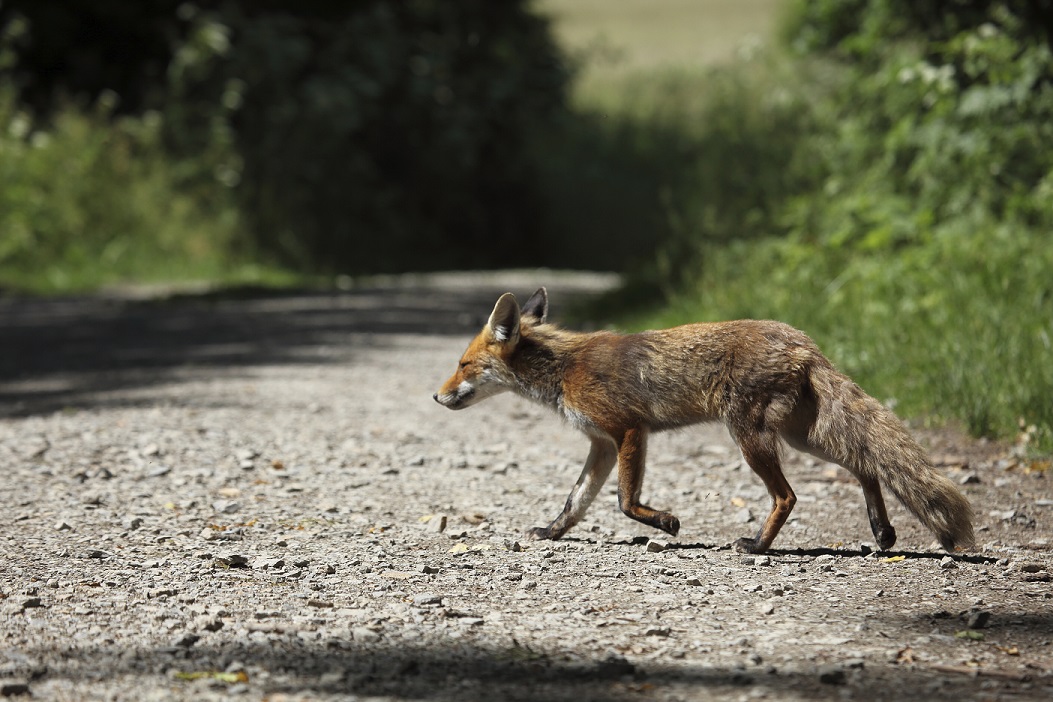
Every year we get reports of wild animals with bizarre behaviors like approaching people rather than running away, charging vehicles, latching on to arms of joggers and refusing to let go, even walking into a bar.  In many cases, these animals are found to be rabid. Bats are usually our most frequent reservoirs for rabies in AZ…  but we also see rabies in skunks and foxes.  Our state lab does a great job of testing animals for rabies and getting rapid results back to local health departments and healthcare providers to coordinate treatment when someone has been exposed to the rabid animal. 

Last year 60 animals tested positive for rabies in Arizona, including 43 bats. This year 14 animals have tested positive for rabies, half of them bats.  Almost half were identified in the first week of May, so our rabies season is definitely underway. We usually see an increase in rabid bats between March and October, so now is a good time to remind people, especially kids, to leave bats and other wild animals alone. 

While rabies is 100% fatal disease once symptoms appear (actually 2 people have lived, ever) it can be treated if people seek healthcare as soon as they have come into contact or are bitten by a suspect animal. We’ve got lots of resources to help local health departments and providers make decisions about positional rabies exposures, including a rabies control and bite management manual and a rabies risk assessment, which can help providers determine whether someone should receive rabies post-exposure treatment.

The 3 Bears

June 26th, 2012

The 3 bears submitted by Fish & Game to our State Lab ended up being negative for the deadly rabies virus. These bears are thought to be connected to the bear attacks, which happened in and around Payson recently.

If separate DNA test results that were sent by Fish & Game for testing match the bears we tested to the attacks, then folks that were exposed to these 3 bears won’t need a series of Rabies vaccines or immunoglobulin. Rabies is pretty much 100% fatal if an exposed person doesn’t get a vaccine in time.


Bear Brains

June 25th, 2012

Some of our Laboratory scientists (Kathryn Fitzpatrick, Alexandra Bhatti, Heather Bickley and Charles Martin) are busy right now testing the brains of the 2 bears that were destroyed over the weekend to see if they had rabies.  You might have heard about the bear attacks, which happened in and around Payson recently. On Sunday, a Tempe man was attacked by a bear in his tent in Ponderosa Campground which is about 12 miles E. of Payson on Hwy. 260 (my family camps there every Halloween).  Last Friday a bear attacked a guy sleeping in his cabin under construction near Payson.  Last month a bear attacked a woman also at Ponderosa. 

It’s important to know if the bears were infected because if they were, then the people that were attacked definitely need a rabies vaccine and immunoglobulin. If the bears don’t have rabies then the patients don’t need the vaccine.  Rabies is pretty much 100% fatal if an exposed person doesn’t get a vaccine in time.  Also, by testing the DNA from the saliva etc. from the bears and matching it to the residue left after the attacks, we can tell whether Fish & Game got the right bears.  By the way- if you’re my age, you might think that the rabies vaccine and immunoglobulin is a series of shots with real long needles in the stomach.  It is a series of shots- but it’s not in the stomach anymore (but the immunoglobulin is real expensive- about $10K). 

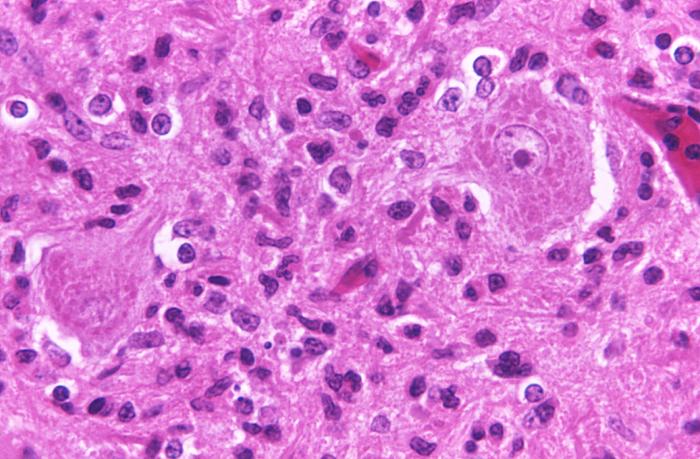
Here’s how the lab test works.  We get the heads of the animal from Fish & Game and our team of scientists extract the brain tissue.  We use what’s called a fluorescent antibody stain on the brain tissue to see if the antibodies latch onto rabies viruses.  If they latch on- the antibodies “light up” and our lab scientists can confirm under a microscope that the rabies virus was in the brain tissue.  We’ll have results by morning. 

By the way- it would be rare for a bear to be infected with rabies because they’re not a common “reservoir” like foxes or bats.  But it can happen- especially if a rabid fox attacked the bear awhile back. 


Neglected Global Tropical Disease Initiative

February 8th, 2012

Last week marked an important milestone toward better controlling 10 neglected tropical diseases by 2020. The Bill & Melinda Gates Foundation, the World Bank, 13 pharmaceutical companies, the U.S., U.K. and U.A.E. governments and other global health organizations announced a new, coordinated push to defeat diseases like Dengue, rabies, blinding trachoma, Buruli ulcer, endemic treponematoses (yaws), leprosy (Hansen disease), Chagas disease, sleeping sickness, leishmaniasis, cysticercosis dracunculiasis (guinea-worm disease),echinococcosis, foodborne trematode infections, lymphaticfilariasis, onchocerciasisriverblindness), schistosomiasis (bilharziasis), soiltransmitted helminthiases (intestinal worms).  Believe it or not- 1.4 billion people worldwide affected by the diseases above- most of whom are among the world’s poorest. 

An event at the Royal College of Physicians this week kicked off the new collaboration, which will focus on prevention efforts expanding existing drug donation programs to meet demand through 2020; share expertise and compounds to accelerate research and development of new drugs; and provide more than $785M to support research efforts and strengthen drug distribution and implementation programs. 

You can see an introductory video and the this week’s event in London on the http://www.unitingtocombatntds.org/ website.  The Executive Summary of the initiative is called Accelerating work to overcome the global impact of neglected tropical diseases- A roadmap for implementation.

Bats, Rabies, & Schools

May 4th, 2010

Bats are one of three rabies reservoirs in AZ – the others being skunks and foxes.  Our skunk rabies season often peaks during winter & spring (although last year – it went all year). Our bat season goes late-March through early-October.  Most (but not all) of the 28 species of bats in AZ do migrate south to warmer climates.  When the bats do return, we get into “bat season”  – which certainly has begun. So, we’re officially in rabies bat season.  We’ve had several bats sent to our state laboratory for testing- and 5 have been rabid so far.

For some reason, grounded bats often seem to end up at schools as curious elementary school kids (usually boys) drag them into classrooms and playgrounds.  It’s just the beginning of bat season, and we’ve already had 2 bat exposure incidents at AZ schools.  We’re sending a state-wide press release today to remind people to leave bats and other wild creatures alone, and call attention to rabies prevention education resources, including the recently posted 14 minute ADHS video “Bats and Rabies at Schools Video.  The video and other resources for schools and school administrators are posted on our “Bats in Schools” page.

Bats, Rabies, & Schools

May 4th, 2010

Bats are one of three rabies reservoirs in AZ – the others being skunks and foxes.  Our skunk rabies season often peaks during winter & spring (although last year – it went all year). Our bat season goes late-March through early-October.  Most (but not all) of the 28 species of bats in AZ do migrate south to warmer climates.  When the bats do return, we get into “bat season”  – which certainly has begun. So, we’re officially in rabies bat season.  We’ve had several bats sent to our state laboratory for testing- and 5 have been rabid so far.

For some reason, grounded bats often seem to end up at schools as curious elementary school kids (usually boys) drag them into classrooms and playgrounds.  It’s just the beginning of bat season, and we’ve already had 2 bat exposure incidents at AZ schools.  We’re sending a state-wide press release today to remind people to leave bats and other wild creatures alone, and call attention to rabies prevention education resources, including the recently posted 14 minute ADHS video “Bats and Rabies at Schools Video.  The video and other resources for schools and school administrators are posted on our “Bats in Schools” page.