Posts Tagged ‘WIC’

New WIC Website

April 1st, 2013

We’re happy to unveil the new Arizona WIC Program website, which has been redesigned with a fresh new look that is more user friendly. Last year the WIC webpage had more than 76,000 unique visitors with nearly 350,000 page views- making it one of our most popular sites.  The redesigned site includes a Find a Clinic feature, a newly released WIC Needs Assessment, and an easy way to report complaints, abuse or fraud. 

The Arizona WIC Program provides nutrition education and breastfeeding support services, supplemental nutritious foods, and referrals to health and social services for low income pregnant, breastfeeding, and postpartum women, infants and children under 5.  WIC currently serves approximately 64% of the potentially eligible population in Arizona and reaches more than 330,000 women, infants, and kids each year. Special thanks to Jennifer Tweedy, Jesse Lewis, Rose Halberg, Karen Sell and lots of folks from our Bureau of Nutrition and ­Physical Activity who worked to redesign the site.

Sequestration and Our Mission

March 12th, 2013

No doubt the word “ Sequestration” is front and center in your vocabulary these days.  This is just a quick note to forecast how it might impact our mission.  For starters… the main impacts from federal sequestration (i.e. the federal budget reduction for some programs) will be related to the services that we provide and the planning that we do related to our federal cooperative agreements and grants.  The primary agencies that award us funding are within HHS (CMS, HRSA, CDC, SAMHSA) and USDA (WIC).  Not all federal programs are subject to the federal budget reduction that will go into effect shortly. 

For example, the behavioral health services that we provide via Medicaid are largely exempt from the reductions… but most of our cooperative agreements and federal grants are subject to the reductions. We receive a total of about $255M in federal funds that look like they’ll be subject to reductions for the remainder of this federal fiscal year.  WIC is the biggest chunk, at about $161M (or 63% of our total grant funds affected). 

How we manage these reductions will vary depending on how much flexibility the parent federal agency gives us.  As we make these decisions, we’ll consider grant variables…  like how much of the award we’ve spent so far this fiscal year and whether the grant is mainly service dollars or strategic planning etc.  For some programs we may be able to identify under-performing areas of the grant or agreement and focus our adjustments there.  

For example: Karen Sell’s WIC team has done a fair amount of planning already to mitigate the immediate and even mid-term impact…  like changing the food package starting July 1 (adopting less expensive brands) and identifying some current unspent funds.  We won’t need to put WIC applicants on a waiting list for at least a month…  but depending on how things go, we may need to start a list later in the year. 

I’ve asked the executive management team to work with each of the programs that look like they’ll be affected and start the planning process for making the reductions- focusing on identifying ways that we can make reductions that will minimize impacts in the field (like the way WIC will be moving to less expensive food brands).  Anyway…  stay tuned.  Things at the federal level look like they’re still in flux.  The more nimble and creative we are the better off our mission will be.

Our Most Popular ADHS Website

February 14th, 2013

Guess which one of our ADHS Websites consistently has the most hits.  Our influenza pages during flu season?  Medical marijuana during our rulemaking?  Questions about WIC eligibility?  Nope.  It’s our Genealogy website.  The site has had more than 5,100,000 queries in the last 2 years.

Our Vital Records team has been keeping data on birth and death certificates since 1855.  A few years ago, our easy to use Genealogy website was put together so folks can do research on their family history.   The data on the site includes AZ births before 1938 and deaths before 1963.  The public records statute says that birth certificates need to be at least 75 years old and death certificates 50 years ago in order to be loaded on the site.  The information was extracted from photo reproductions of the original certificates by volunteers from the Mesa Regional Family History Center.

We don’t have a budget top maintain the site… but we recently put up a feature so that folks can donate funds to the ADHS Public Genealogy Website for future enhancements.

Informed Consent Website Up & Running

November 26th, 2012

Last legislative session the Governor signed HB 2036- which amends state law regarding abortions. Some parts of the law are pending legal challenges, but the parts requiring us to develop a website were unaffected- and our new informed consent site just went up.  The website lists agencies and services that are available to assist women throughout their pregnancy, including information about adoption.  The information is listed to make it easy for women to find local resources.  Many of our public health programs are listed, like WIC, breastfeeding support, and home visiting programs.  The website also includes information describing fetal development and info describing various abortion methods and medical risks associated with the procedures. 

It’s important that providers are aware of the website because the law requires AZ health care providers to give a woman considering an abortion the opportunity to review the information. A “Potential Resources Submission Form” is posted in case agencies are interested in listing additional resources on the site.

The Road to Lifelong Health Begins with Breastfeeding

August 6th, 2012

The first week of August is World Breastfeeding Week and it has been for 20 years.  This year’s theme is The Road to Lifelong Health Begins with Breastfeeding.  Those long-term benefits apply to both mothers and babies.   When babies are fed human milk, they are more likely to avoid obesity, less likely to die from SIDS, and have a lower risk of many diseases including several cancers and type 2 diabetes.  Mothers get immediate and long-term benefits from breastfeeding, including a lower risk of breast and ovarian cancer and a lower risk of postpartum depression.

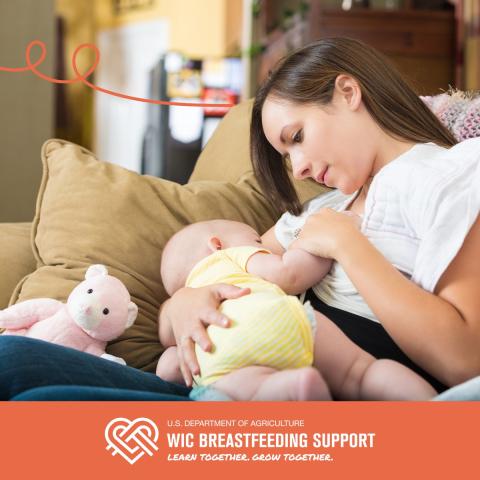
While this may be breastfeeding awareness week – we promote breastfeeding all year long in Arizona.   ADHS provides resources to breastfeeding mothers such as a 24-hour Breastfeeding Hotline at 800-833-4642.  Each month, the hotline takes hundreds of calls from parents with questions about breastfeeding techniques, medications, going back to work, and more.  Other breastfeeding support includes Arizona Baby Steps to Breastfeeding Success – our partnership to promote breastfeeding-friendly maternity care practices.   ADHS also offers a certification for Breastfeeding-Friendly Childcare Centers.  Last, but not least, the Arizona WIC program is the largest breastfeeding support resource in the state, providing mothers and babies with access to skilled lactation help, breast pumps, and more. 


Arizona is not alone in recognizing that breastfeeding is one of the best preventative care measures.  Healthy People 2020 cites the need for increasing the rate of breastfeeding and improving breastfeeding support in hospitals. The group that Joint Commission recently made breastfeeding one of its core measures for maternity care hospitals.  Last year, the Surgeon General issued a Call to Action to Support Breastfeeding, which detailed ways for health providers to increase the level of support provided to new mothers.

The Push to Stop Preterm Births

July 2nd, 2012

On June 18, we held a news conference with the Arizona March of Dimes and the Arizona Perinatal Trust to officially launch a new campaign to reduce preventable preterm births.  We got great coverage this week, including a FOX News interview  that aired in several other cities across the country.  We’ve joined a national challenge issued by the President of the Association of State and Territorial Health Officials and pledged to set a goal of reducing premature births by 8% by 2014.  This would mean 800 more babies would make it to full term.

Why the focus on prematurity? Many babies die because they’re born too soon.  In 2010, almost 200 babies died due to prematurity, the leading cause of deaths for newborns.  Even babies born a few weeks early have high odds of learning disabilities, vision & hearing loss and cerebral palsy. The Healthy Babies are Worth the Wait  campaign stresses that if the pregnancy is healthy, it’s best to let labor begin on its own rather than scheduling an early delivery.

Until recently, it’s been an accepted practice for parents-to-be and doctors to schedule elective (non-medically necessary) inductions or c-sections just for the convenience of the parents’ schedule, or the doctor’s schedule, or because a date holds a special meaning for the family.  Because of the hard work of the Arizona Perinatal Trust (APT) promoting the March of Dimes 39-week Toolkit this practice may soon be a thing of the past.  90% of all APT-certified hospitals have already agreed to put a stop to allowing elective inductions and c-sections prior to 39 weeks.  This will go a long way to reducing preterm births, but there’s more that we can do.

In the past decade, mounting scientific evidence has concluded that if pregnancy outcomes are going to improve, it’s real important that women and men are as healthy as possible before conception.  We call this preconception health, and the concept is simple.   Healthy people are more likely to have healthy babies.  Prenatal care is important, but it’s not magic.   We can’t expect even the best prenatal care to undo the damage that may have been sustained through years of unhealthy behaviors and stressful environments.  It is not a substitute for being healthy, especially when about half of all pregnancies are unplanned.

Our interventions include implementing evidence-based practices to get moms to stop smoking, practice good oral health, improve physical activity and nutrition and behavioral health- all are part of our Preconception Health Strategic Plan and our Every Woman Arizona educational materials, grants to implement preconception health strategies, and home visitation programs that address many of the things that lead to prematurity.  Our WIC program and clinics also work with young moms in their reproductive years to improve their health.  Maintaining a healthy weight before pregnancy is really critical.  Women who are obese are at higher risk for infant death, premature births and several birth defects (brain, spinal and some heart defects) and babies born large for gestation. Obese mothers are at greater risk of experiencing gestational diabetes, high blood pressure etc.- associated with preterm births.

Most of us know what we need to do to be healthy, but sometimes we lack motivation to make those healthy choices for ourselves.  But the choices we make today are not just for ourselves – they are choices for our kids & the next generation.  Check out our new Healthy Babies webpage for more information about the campaign and view the new March of Dimes public service announcement.


Implementing Our Strategic Plan- Address Public Health Workforce Needs

April 25th, 2012

Dietitians are a core public health asset- and one in short supply to boot.  We’re trying to do something about that shortage with our new “WIC Track” initiative.  We’re partnering with the Maricopa County Department of Public Health Dietetic Internship to offer a “WIC Track” internship. It’s open to any eligible (have completed a Bachelor’s degree in Dietetics) WIC employee that’s worked for at least a year. The competitive process includes an application, a portfolio of prior assessed learning, and an interview.  

We’re pleased to announce our four new candidates: Rachel Molina, Mountain Park Health Center; Caitlin Howard, Pima County WIC; Carrie Wright, Pinal County WIC; and Kathryn Baldwin; Adelante Healthcare. They’ll begin their internship in August of 2012.

Milk Research & Policy Change Cuts 7B Calories a Year in AZ

February 24th, 2012

Congrats to our Women Infant & Children’s program who did some research and implemented some simple policy changes that reduced the consumption of 7 Billion calories annually in AZ.  How?  After we did a little research, we came up with a way to change our WIC policy… convincing people to replace whole milk with 1% or fat free milk (for kids over 2).  The policy change reduced fat by nearly 900 million grams and calorie intake by more than 7 Billion per year. Let’s take a look behind the scene. 

A few years ago the Arizona Nutrition Network did some research on milk preferences among our WIC recipients. We found that folks thought lower fat equals lower nutritional value- which is why they didn’t buy low fat milk.  Next, we developed a social marketing campaign to encourage Arizonans to “Go Low, All the goodness without the fat” and drink 1% or skim milk.  The Arizona WIC program promoted the messages in our WIC clinics…  and the “Go Low” social marketing campaign improved the success of the policy change in WIC.  The result- 7 Billion fewer fat calories are being consumed by our WIC recipients every year. 

Now for the sequel.  A couple of years ago we began encouraging WIC participants to buy fresh fruits and vegetables at farmers markets and grocers with their vouchers. Knowing how successful the “Go Low” campaign was, we partnered with the Arizona Nutrition to promote fruits and vegetables… but this time, the policy change didn’t achieve the expected results.  We did a little more research and found out that folks wanted frozen and canned fruits and vegetables more than fresh (shelf life)- so we added canned and frozen fruits and veggies to our list of foods families can buy in WIC.  In the first 3 months we had a huge increase in the purchase of fruits and vegetables.  WIC participants are now purchasing $1M of fresh, frozen, and canned fruits and vegetables monthly.

So what did we learn in all this policy change?  Number 1- it’s critical to do research to guide your public health interventions and to measure results to find out whether your interventions are successful, and Number 2-  meet your target audience where they are, and be practical.

What’s Preconception Health- and Why’s it Important?

November 7th, 2011

Being born too soon is the number one killer of infants in Arizona and in the nation.  Death rates from prematurity are declining but babies born too soon (before 37 weeks) often face medical, developmental and social challenges as they get older. More than 8,000 babies in Arizona were born too soon last year.   This week the March of Dimes released the 2011 Premature Birth Report Card that grades States on their premature birth rates.  While Arizona was average- there was good news related to the reduction in the percentage of uninsured women and the number of women who smoke.   

Some of the known factors impacting prematurity include having twins/triplets, having a chronic disease such as diabetes, high blood pressure, being obese, smoking, and alcohol or illegal drug use.  One of our main approaches to reducing prematurity rates is to improve the health of women before they get pregnant- called preconception health.   Prenatal care is still important- but poor health practices during pregnancy will usually trump good prenatal care.   

Our interventions include implementing evidence-based practices to get moms to stop smoking, improve physical activity and nutrition and behavioral health- and all are part of our Preconception Health Strategic Plan which includes Every Woman Arizona educational materials, grants to six local communities to implement preconception health strategies, and home visitation programs that address many of the factors that can lead to prematurity.  Our WIC program and clinics also work with young moms in their reproductive years to improve their health.  We also work with the Arizona March of Dimes and the Arizona Perinatal Trust to encourage hospitals to adopt policies designed to ensure that elective inductions aren’t approved before 39 weeks gestation.

Raising Arizona Babies

September 19th, 2011

Do you know someone who’s pregnant and needs help finding low-cost prenatal care? Someone looking for post-partum depression resources; help with breastfeeding; low-cost dental care; or the nearest WIC clinic?  One great resource that can help is our Pregnancy & Breastfeeding Hotline.  The Hotline (1-800-833-4642) is a statewide service funded by our Title V Maternal and Child Health Block Grant and it helps thousands of callers every year with a variety of maternal and child health issues- like the importance of folic acid- and providing lots of referrals for a variety of community resources. 

The Pregnancy & Breastfeeding Hotline also supports AHCCCS’s Baby Arizona program.  Baby Arizona is a faster, simpler way of getting prenatal care before a pregnant woman’s AHCCCS application process is complete. Prenatal care providers across the state agree to see pregnant women while their eligibility is being determined. Once a women goes to the Baby Arizona provider she chooses, the provider helps her apply and pre-enroll her in a health plan. That way, women begin prenatal care at no cost while their eligibility is still being processed.  It’s a great way to facilitate early entry into prenatal care- increasing the likelihood of a healthy birth outcome.  By the way, when a pregnant woman applies for AHCCCS she’s considered a family of 2 (or more if there are multiples)- meaning that she’s not in the “childless adult” category- and wouldn’t be subject to the enrollment freeze for childless adults.