Posts Tagged ‘tuberculosis’

New Year, New MEDSIS

January 14th, 2013

Over the past two years, folks in ITS and Epidemiology and Disease Control have been working together to enhance our state’s electronic communicable disease surveillance system called MEDSIS.   This week the new version of MEDSIS went live. Major enhancements include the integration of tuberculosis reporting, case management and surveillance; expanded case management capabilities for all diseases; and additional functionality to better meet the needs of all users. This system isn’t just used by ADHS staff- it’s used by folks across the healthcare system. 

All 15 county health departments and four tribal public health organizations use MEDSIS to monitor cases of infectious disease and manage their case investigations; infection preventionists at hospitals enter infectious disease cases to satisfy our requirements for reporting selected infectious diseases; and laboratories electronically report positive test results directly into the system. There’s even a Spanish version of MEDSIS to allow us to share bi-national cases with our counterparts in Sonora to improve public health on both sides of the border. Thanks to all of those involved in making MEDSIS a success including Raghu Ramaswamy, Ravikumar Pitti, Sara Imholte, Lloyd Kalicki, Srinivasa Venkatesan, Paula Mattingly, Michael Conklin, Javed Mukarram, Arup Sinha, Teresa Jue, Jessica Rigler, and Shoana Anderson.

Another Tool for our Laboratory Toolbox

August 9th, 2011

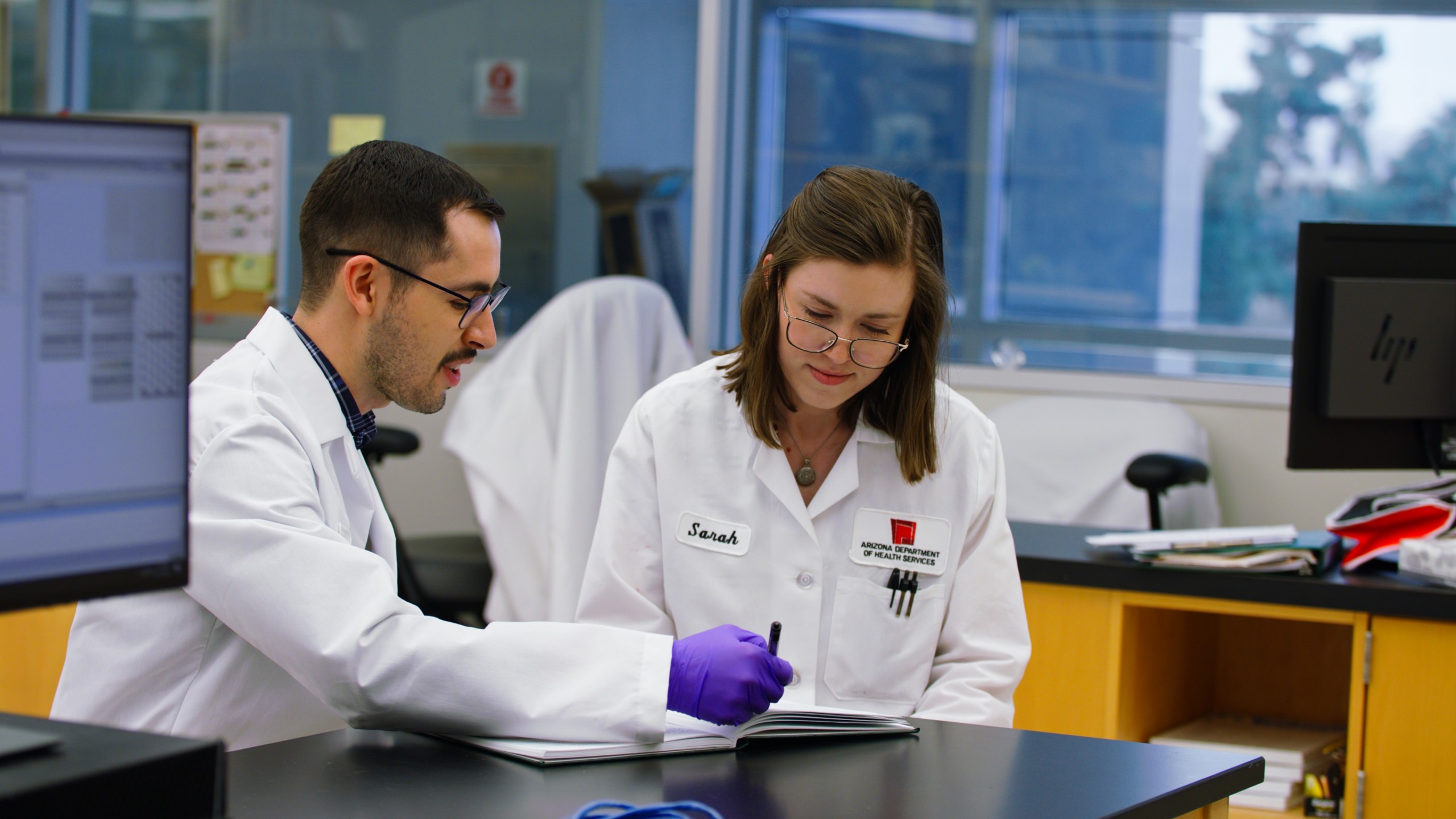
New testing equipment at the state lab is going to help us with flu tracking this fall and dramatically speed up testing for Tuberculosis.  The instrument called the Gene Xpert looks for DNA mutations – we can tell if a TB case is resistant to certain antibiotics.  For instance, on specific mutation is a marker for rifampin resistance.  It used to take weeks of culture growth to find that marker, now we can do it in a matter of hours.  Working with County health partners, we hope to enhance surveillance to help get rid of TB .

The Gene Xpert, purchased with federal grant money, will also help us detect and differentiate Influenza A & B using nucleic acid (genetic material) amplification techniques so we know which strains of flu are circulating in the state as well as help us detect cases in institutional settings.  Other uses for the Gene Xpert  include surveillance for various hospital-acquired infections including Clostridium difficile, methicillin-resistant Staph aureus (MRSA), RSV and Metapneumoviruses.

Who is Bob Koch?

June 7th, 2011

Robert Koch was a German physician that’s considered one of the primary founders of microbiology- setting the foundation for loads of public health interventions that have drastically improved our quality of life.  He was the first scientist to verify the Germ Theory of Disease (in 1876) by showing that anthrax is caused by a bacteria (the previous theory was that disease was spread by “bad air”).  Koch later discovered that bacteria cause tuberculosis and cholera.

He went on to develop what became known as “Koch’s Postulates” – which consist of 4 criteria that establish a causal relationship between a microbe and disease.  These principles led to large advances in identifying the organisms that were responsible for major public health issues at the time- diptheria, typhoid, pneumonia, gonorrhea, leprosy, plague, tetanus, and syphilis.

His most important work was with tuberculosis (called consumption at the time).  Between 1700 and 1900 TB is thought to have caused nearly 1 billion deaths.  Koch’s discovery that the TB was caused by a bacteria led to public health interventions that helped limit the spread of TB… and eventually led to the development of medications to kill the bacteria.  You can read more about his story on the Official Website of the Nobel Prize.

New TB Diagnostic Test on Horizon?

September 29th, 2010

One of the major challenges for global control of tuberculosis is that the current diagnostic tests are very slow and can require significant laboratory infrastructure.  The tests are particularly difficult to manage in developing countries and are more complicated for folks with HIV.  It’s also difficult to test for drug sensitivity.   The challenge is that early detection is essential to interrupt transmission.

However, a new rapid (2-3 hour) test may be on the horizon.  Researchers published an article in the New England Journal of Medicine this month that demonstrates promising results.  The new test (called MTB/RIF) correctly identified more than 98% of patients with “smear-positive tuberculosis” and 72% of patients with “smear-negative tuberculosis”.  The test also have very few false positives.  Importantly, the new MTB/RIF test correctly identified (97%) of patients that had rifampin-resistant or -sensitive TB.  More work will need to be done before the test replaces the current slow and labor intensive tests, but these are encouraging results that could provide a valuable new tool in the global TB fight.

Vaccines, Homeless Count, Cardiac Care & Tribal Preparedness

January 29th, 2010

Hi…

Leverage

The Bill and Melinda Gates Foundation http://www.gatesfoundation.org/Pages/home.aspx is one place that understands leverage.  The foundation announced this morning (in Davos, at the World Economic Summit) that their foundation will commit $10 billion over the next 10 years to help research, develop and deliver vaccines for the world’s poorest countries http://www.gatesfoundation.org/vaccines/Pages/decade-of-vaccines.aspx.  Vaccine development and delivery is the number-one priority at the Gates Foundation because if the impact that they have on children’s lives.

A model developed by the Institute of International Programs at the Johns Hopkins Bloomberg School of Public Health suggests that we could prevent the deaths of some 7.6 million children under 5 from 2010-2019. The foundation also estimates that an additional 1.1 million children could be saved with the rapid introduction of a malaria vaccine beginning in 2014, bringing the total number of potential lives saved to 8.7 million.

If additional vaccines are developed and introduced in this decade—such as for tuberculosis—even more lives could be saved. The new funding announced today is in addition to the $4.5 billion that the Gates Foundation has already committed to vaccine research, development and delivery to date across its entire disease portfolio since its inception.

Investments like this are critical for the people in developing nations.  While vaccines for illnesses in developed countries are profitable, preventative treatment and vaccines for diseases that are prevalent in developing nations are not as profitable- putting them at a disadvantage when it comes to research and development.  Investments like this help to turn the tide- and have a remarkable impact.

Counting the Homeless

Thanks to all of you that participated in this year’s “Count the Homeless” event.  Each year, Teams count homeless to secure federal aid including the City of Phoenix, our Behavioral Health team, RBHAs, the PATH Outreach program, ADES, and the MAG Continuum of Care Regional Committee on Homelessness conduct an annual count of homeless men, women, and children sleeping on the streets in Maricopa County.  On Tuesday this week, over 350 volunteers canvassed streets, parks, vehicles, allies, and other gathering places where homeless people camp; to conduct this year’s street count.   The count went around the clock.

Homeless Street Count is a requirement for receiving federal homeless assistance funding from the U.S. Department of Housing and Urban Development (HUD) and the Substance Abuse and Mental Health Services Administration (SAMHSA). More than $200 million funding has been awarded to Maricopa County, over the past 11 years from these two federal agencies for housing subsidy, outreach, case management and support services for homeless assistance programs.

Each year the point-in-time count provides valuable data on the number of people experiencing homelessness.  Last year, per MAG, 2,918 people were counted on the streets, representing an overall increase of 20 percent more homeless than the previous year.  The number of homeless families increased by 300% (as a result of the economic and housing crisis) and the number of youth on their own increased by nearly 250%. The information gathered from the street count helps set priorities for addressing the needs of people experiencing homelessness.

Volunteer participation is critical to conducting a successful street count.  Once again employees from ADHS/DBHS volunteered to complete this year’s Homeless Street Count.   I sincerely thank them for helping to make a difference in the lives of people who have no place to sleep at night in Arizona.  Thanks to the ADHS volunteers including Paige Finley, Brenda Robbins, Linda Cram, Idalia Brown, John Gallagher, Sylvia Dodge, Amy Sather, Adam Robson, Dave Bonney, Jessica Moore, and Dr. Tim Flood, this year’s event was a success.

Tribal Preparedness Strategic Plan

After much hard work by Michael Allison the Arizona Tribal Public Health Emergency Preparedness Coordinators developed and finalized their Strategic Plan for 2010-2013.This plan has been posted on our ADHS Native American web site. The direct link is http://www.azdhs.gov/phs/tribal/TribalPreparedness.htm. As far as we know this is the first such statewide plan developed by tribal nations and most likely will serve as a model for other tribes throughout the nation.

Nursing Home Ratings

You might have seen a news report this week that stated that stated that 20% of nursing homes rated consistently poor in quality according to data released Thursday by Medicare.  The ratings are derived from inspections, complaint investigations and other data collected mostly in 2008 and 2009.  Information about the program is posted at Nursing Home Compare and it allows you to Compare the quality of the nursing Homes you’re considering using CMS’s Five-Star Quality Ratings, health inspection results, nursing home staff data, quality measures, and fire safety inspection results.  For another frame of reference, you can check our licensing website where you can conduct a Facility Search to find how local places have done on their latest survey.

Cardiac Care Centers

About two years ago we invented the concept of developing Cardiac Care Centers in Arizona.  By following simple protocols like lowering a patient’s body temperature when they are being treated, hospitals can become part of our voluntary consortium.  We are proud to welcome Carondelet St. Joseph’s Hospital, Carondelet St. Mary’s Hospital and Tucson Heart Hospital to the Arizona Cardiac Center Consortium.  There are now 30 Arizona hospitals recognized and operational:

You can see the full List of Arizona Cardiac Receiving Centers on our http://www.azshare.gov/Info4CAC.htm website.

We have entered a new era of providing complete cardiac arrest care in Arizona and your efforts are saving more lives than ever before.  Our website is continuously updated and we encourage everyone to visit www.azshare.gov for more information on the Arizona Cardiac Center Consortium.

Annual Reports Galore

Did you know that various state statutes require us to produce several annual reports on various topics every year?  The topics and reports include:

Annual Report of the Incidence and Reported Causes of Stillbirths

Tobacco Education & Prevention Program Biennial Evaluation Report

Designation of Arizona Medically Underserved Areas

Division of Behavioral Health Services & Arizona State Hospital Annual Report

Arizona Child Fatality Review Team Annual Report

Smoke-Free Arizona Annual Report

Annual Report on Substance Abuse Treatment Programs

Of course, there are several more reports that we put together, but these are the ones that are required by statute.  We just completed our new annual report page, which is posted at: http://azdhs.gov/diro/reports.

Department Blog

I’m learning all kinds of new things in this job, like what a “blog” is.  It is kinda like my weekly updates but it’s a chronological accumulation of the updates, plus I can add things through the week.  Blogs also let people comment on the stuff too.

OK, since blogs are good, and people like them, we started one for the department.  It’s called the Director’s Blog and it’s posted on our home page on the link that says Visit the Director’s Blog. The actual URL is at: http://directorsblog.health.azdhs.gov/.  We don’t have my updates from the past year posted there, but as the weeks go by we will keep adding them to the blog.

Thank you for your professionalism and work ethic over the past year.  We’re a darn good team- and our accomplishments and successes over the past year are a testament to your hard work, creativity, focus, professionalism, positive attitude, and your commitment to the folks of Arizona.

Thanks…

will

Vaccines, Homeless Count, Cardiac Care & Tribal Preparedness

January 29th, 2010

Hi…

Leverage

The Bill and Melinda Gates Foundation http://www.gatesfoundation.org/Pages/home.aspx is one place that understands leverage.  The foundation announced this morning (in Davos, at the World Economic Summit) that their foundation will commit $10 billion over the next 10 years to help research, develop and deliver vaccines for the world’s poorest countries http://www.gatesfoundation.org/vaccines/Pages/decade-of-vaccines.aspx.  Vaccine development and delivery is the number-one priority at the Gates Foundation because if the impact that they have on children’s lives.

A model developed by the Institute of International Programs at the Johns Hopkins Bloomberg School of Public Health suggests that we could prevent the deaths of some 7.6 million children under 5 from 2010-2019. The foundation also estimates that an additional 1.1 million children could be saved with the rapid introduction of a malaria vaccine beginning in 2014, bringing the total number of potential lives saved to 8.7 million.

If additional vaccines are developed and introduced in this decade—such as for tuberculosis—even more lives could be saved. The new funding announced today is in addition to the $4.5 billion that the Gates Foundation has already committed to vaccine research, development and delivery to date across its entire disease portfolio since its inception.

Investments like this are critical for the people in developing nations.  While vaccines for illnesses in developed countries are profitable, preventative treatment and vaccines for diseases that are prevalent in developing nations are not as profitable- putting them at a disadvantage when it comes to research and development.  Investments like this help to turn the tide- and have a remarkable impact.

Counting the Homeless

Thanks to all of you that participated in this year’s “Count the Homeless” event.  Each year, Teams count homeless to secure federal aid including the City of Phoenix, our Behavioral Health team, RBHAs, the PATH Outreach program, ADES, and the MAG Continuum of Care Regional Committee on Homelessness conduct an annual count of homeless men, women, and children sleeping on the streets in Maricopa County.  On Tuesday this week, over 350 volunteers canvassed streets, parks, vehicles, allies, and other gathering places where homeless people camp; to conduct this year’s street count.   The count went around the clock.

Homeless Street Count is a requirement for receiving federal homeless assistance funding from the U.S. Department of Housing and Urban Development (HUD) and the Substance Abuse and Mental Health Services Administration (SAMHSA). More than $200 million funding has been awarded to Maricopa County, over the past 11 years from these two federal agencies for housing subsidy, outreach, case management and support services for homeless assistance programs.

Each year the point-in-time count provides valuable data on the number of people experiencing homelessness.  Last year, per MAG, 2,918 people were counted on the streets, representing an overall increase of 20 percent more homeless than the previous year.  The number of homeless families increased by 300% (as a result of the economic and housing crisis) and the number of youth on their own increased by nearly 250%. The information gathered from the street count helps set priorities for addressing the needs of people experiencing homelessness.

Volunteer participation is critical to conducting a successful street count.  Once again employees from ADHS/DBHS volunteered to complete this year’s Homeless Street Count.   I sincerely thank them for helping to make a difference in the lives of people who have no place to sleep at night in Arizona.  Thanks to the ADHS volunteers including Paige Finley, Brenda Robbins, Linda Cram, Idalia Brown, John Gallagher, Sylvia Dodge, Amy Sather, Adam Robson, Dave Bonney, Jessica Moore, and Dr. Tim Flood, this year’s event was a success.

Tribal Preparedness Strategic Plan

After much hard work by Michael Allison the Arizona Tribal Public Health Emergency Preparedness Coordinators developed and finalized their Strategic Plan for 2010-2013.This plan has been posted on our ADHS Native American web site. The direct link is http://www.azdhs.gov/phs/tribal/TribalPreparedness.htm. As far as we know this is the first such statewide plan developed by tribal nations and most likely will serve as a model for other tribes throughout the nation.

Nursing Home Ratings

You might have seen a news report this week that stated that stated that 20% of nursing homes rated consistently poor in quality according to data released Thursday by Medicare.  The ratings are derived from inspections, complaint investigations and other data collected mostly in 2008 and 2009.  Information about the program is posted at Nursing Home Compare and it allows you to Compare the quality of the nursing Homes you’re considering using CMS’s Five-Star Quality Ratings, health inspection results, nursing home staff data, quality measures, and fire safety inspection results.  For another frame of reference, you can check our licensing website where you can conduct a Facility Search to find how local places have done on their latest survey.

Cardiac Care Centers

About two years ago we invented the concept of developing Cardiac Care Centers in Arizona.  By following simple protocols like lowering a patient’s body temperature when they are being treated, hospitals can become part of our voluntary consortium.  We are proud to welcome Carondelet St. Joseph’s Hospital, Carondelet St. Mary’s Hospital and Tucson Heart Hospital to the Arizona Cardiac Center Consortium.  There are now 30 Arizona hospitals recognized and operational:

You can see the full List of Arizona Cardiac Receiving Centers on our http://www.azshare.gov/Info4CAC.htm website.

We have entered a new era of providing complete cardiac arrest care in Arizona and your efforts are saving more lives than ever before.  Our website is continuously updated and we encourage everyone to visit www.azshare.gov for more information on the Arizona Cardiac Center Consortium.

Annual Reports Galore

Did you know that various state statutes require us to produce several annual reports on various topics every year?  The topics and reports include:

Annual Report of the Incidence and Reported Causes of Stillbirths

Tobacco Education & Prevention Program Biennial Evaluation Report

Designation of Arizona Medically Underserved Areas

Division of Behavioral Health Services & Arizona State Hospital Annual Report

Arizona Child Fatality Review Team Annual Report

Smoke-Free Arizona Annual Report

Annual Report on Substance Abuse Treatment Programs

Of course, there are several more reports that we put together, but these are the ones that are required by statute.  We just completed our new annual report page, which is posted at: http://azdhs.gov/diro/reports.

Department Blog

I’m learning all kinds of new things in this job, like what a “blog” is.  It is kinda like my weekly updates but it’s a chronological accumulation of the updates, plus I can add things through the week.  Blogs also let people comment on the stuff too.

OK, since blogs are good, and people like them, we started one for the department.  It’s called the Director’s Blog and it’s posted on our home page on the link that says Visit the Director’s Blog. The actual URL is at: http://directorsblog.health.azdhs.gov/.  We don’t have my updates from the past year posted there, but as the weeks go by we will keep adding them to the blog.

Thank you for your professionalism and work ethic over the past year.  We’re a darn good team- and our accomplishments and successes over the past year are a testament to your hard work, creativity, focus, professionalism, positive attitude, and your commitment to the folks of Arizona.

Thanks…

will