Posts Tagged ‘Valley Fever’

CDC’s Valley Fever Article Spotlights AZ

April 2nd, 2013

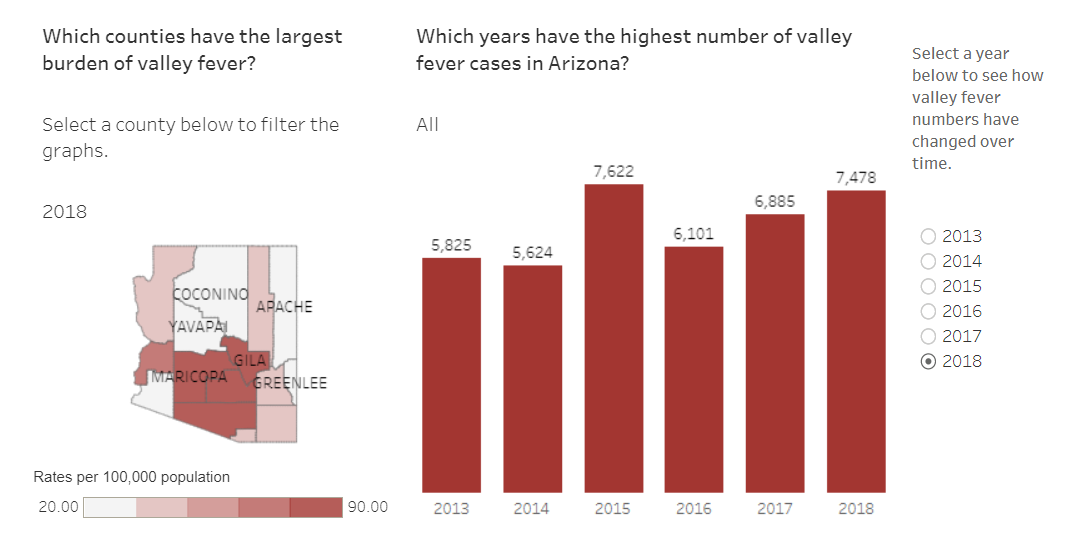
Valley Fever has been making news across the country today. A new report in this week’s CDC’s weekly epidemiology report shows that Valley Fever numbers have gone up substantially in AZ over the last 10 years.  Part of the increase is probably due to the fact that Valley Fever became reportable a few years ago- but no doubt part is because of better awareness of the disease among clinicians and the public. 

The report (coauthored by our own Clarisse Tsang) highlights the important role that AZ plays in understanding Valley Fever.  Working with the California Department of Public Health and the CDC, we helped uncover more information about who is testing positive for Valley Fever.  The report shows that people 60 or older are more likely to test positive in Arizona.  In California the cases tend to be younger with the largest group between 40 and 59 years old.  

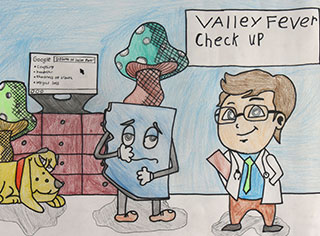
The report also shows that about 2/3 of the reported cases in the country are right here in Arizona.  The national attention comes at a great time – since many snowbirds are returning home for the summer.  Anyone who’s spent time in the Desert Southwest needs to watch out for  Valley Fever symptoms… if you’re tired and have had a cough and fever for a couple of weeks, ask your doctor to see if you might need a Valley Fever test.

Valley Fever Season Peaking

January 8th, 2013

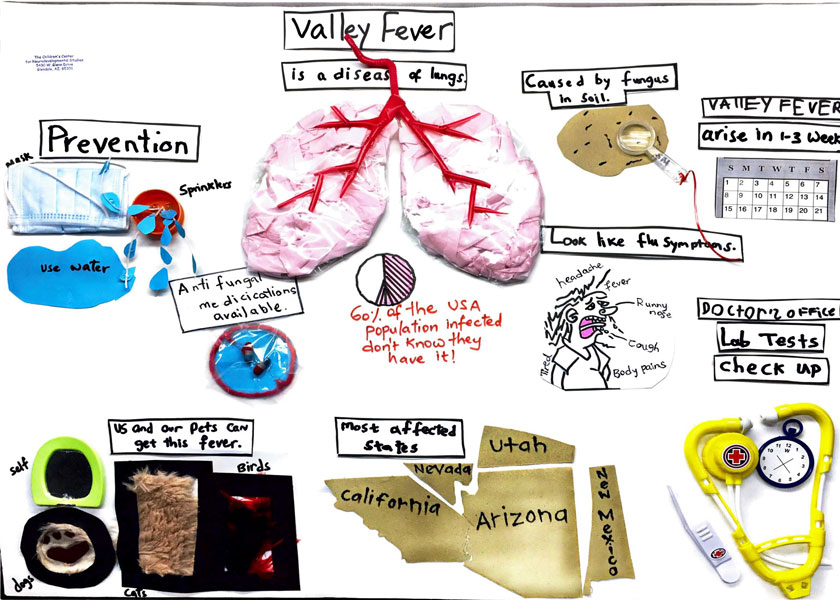
Valley Fever typically peaks in late fall and early winter with a minor peak from June to August (refer to the 2007-2011 Valley Fever Report). Those who’ve been in Arizona for a while may know that Valley Fever is a lung infection caused by a fungus that is common in the soil here. In most cases, people with Valley Fever have very mild symptoms like cough, fatigue and shortness of breath that they may confuse with the common cold. Sometimes people can have serious disease including meningitis (brain infection) and pneumonia (severe lung infection).  People can have symptoms for a long time or may need to be hospitalized–especially the elderly or those with weak immune systems. 

Arizona’s numbers for Valley Fever have increased significantly over the last decade. This increase could be because more people that have not been exposed to Valley Fever before are moving to or visiting the state and also because doctors and the public are more aware about Valley Fever and are testing more for it.  In addition, some folks think that increased exposure to dust, like being around construction or standing outside in a dust storm is maybe one of the reasons for the increase in Arizona. Our numbers this year have been lower than last year, and this may be due to the mild monsoon season this past summer. 

To help address this Arizona disease, we’ve been collaborating with the University of Arizona’s Valley Fever Center of Excellence to provide a free online training for clinicians in addition to a host of other interventions designed to raise awareness.   Our Office of Border Heath has also been working with colleagues from Sonora Secretaria de Salud Publica and other border states to collaborate and share our experiences.  Epidemiologists from Sonora have come to Arizona to participate in trainings and learn more about our surveillance system.  Last year, the CDC and Mexico’s federal partners conducted a training which enabled Sonora’s State laboratory to test for Valley Fever.  Together Arizona and Sonora will continue to work to better understand the burden of Valley Fever in the region.  For additional information, please visit: www.valleyfeverarizona.org.


Valley Fever Awareness Week!

November 9th, 2012

 Those who have been in Arizona for a while may know that Valley Fever is a lung infection caused by a fungus that is common in the soil here. In most cases, people with Valley Fever have very mild symptoms like cough, fatigue and shortness of breath that they may confuse with the common cold. Some people, really not too many, end up with serious disease including meningitis (brain infection) and pneumonia (severe lung infection.) People can have symptoms for a long time or may need to be hospitalized– especially the elderly or those with weak immune systems.

We have been partnering with county health departments and the Valley Fever Center for Excellence to monitor this uniquely western disease for a number of years and have done a great job increasing public knowledge about the risk factors of this disease (see our Coccidioidomycosis/Valley Fever home page). Valley Fever Awareness Week starts this Saturday, November 10th with a free Continuing Medical Education (CME) course that has been co-sponsored by ADHS and the Valley Fever Center for Excellence. The week also features a luncheon in Tucson and a reception at the new Valley Fever Center in Phoenix.  Find out more.

The Answer is Blowin’ in the Wind

September 19th, 2012

Another AZ monsoon season has come and gone.  The seasonal winds blow more than dust in the air, they stir up questions and concerns about Valley Fever. Those who have been in Arizona for a while may know that Valley Fever is a lung infection caused by a fungus that’s common in our desert soil (below 4,000 feet).  In most cases, people with Valley Fever have mild symptoms that they may confuse with the common cold, such as cough, fatigue and shortness of breath. However, some people can have serious disease including meningitis (brain infection) and pneumonia (severe lung infection). People can have symptoms for a long time or may need to be hospitalized- especially the elderly or those with weak immune systems. 

We’ve been partnering with county health departments and the U of A’s Valley Fever Center for Excellence to monitor this uniquely western disease for years and have done a lot to increase public knowledge about the risk factors of this disease. For the past decade, we’ve seen consistent increases of Valley Fever and we aren’t sure why- except that more people are being tested because of better awareness.  Some folks think that increased exposure to dust like being near construction or more fungus in the soil or standing outside in a dust storm may be some of the reasons for the increase in Arizona. 

To better prevent and control this disease, our epidemiologists are working to find out more about possible connections between dust storms and Valley Fever.  They conduct interviews with those who have been sick and review hospital records. In addition, they collaborate with our Public Health partners to help educate doctors and the public on how to better identify symptoms and when to test for Valley Fever.

Sonoran Public Health Department & ADHS Snag the Paul Fannin Award

June 11th, 2012

 The Secretario de Salud Publica & the ADHS jointly received the Arizona Mexico Commission’s Paul Fannin award for our public health collaborations last Friday night.  This is a top award for the Commission- with the award going to “… an organization that has demonstrated acts of goodwill and support toward the development of the Arizona-Sonora relationship.”  It’s named after the AMC’s founder, Governor Paul Fannin.  This is the first Fannin award that has gone to binational recipients.  ASU and UA got a joint award as did ADOT and the Yuma Port Authority a few years ago…  but this is the first one with binational recipients. 


We were jointly recognized for our awesome collaboration on things like valley fever surveillance and interventions, real-time infections bi-national disease reporting, TB case and treatment coordination, collaboration during the H1N1 pandemic, laboratory science teamwork, teen pregnancy and substance abuse prevention, collaboration on assisted living standards, and much more.  Thanks to all of you who have made our relationship with Salud Sonora a success!


Arizona Mexico Commission Progress

February 10th, 2012

I’m writing this from my hotel room in Rocky Point- after a long day (and night) of the inter Plenary Session.  The 2 day conference started Thursday and goes through tonight.  We meet twice a year- it’s basically an opportunity for us to form partnerships across the border and to develop regional approaches to things like valley fever surveillance, burn patient infrastructure, substance abuse, TB, border first aid, farmworker health, and Sonora’s efforts to provide licensing and quality assurance services for assisted living in Sonora (and how we can partner with them as they set up their program). 

During last summer’s Session we signed a bi-national Declaration to develop regional surveillance for valley fever.  We’ve made a lot of progress in the last 6 months, and tomorrow we’ll be following up on that initiative at Sonora’s public health laboratory, checking out the lab instruments and equipment that we were able buy (with federal funds) and indefinitely post in Hermosillo in their lab. We’ll also be setting up some joint training sessions. There are lots of other examples of what we do through the Commission on health- this is just an example. 

The Arizona Mexico Commission was started by then Arizona Governor Paul Fannin in 1959 to improve partnering between Arizona and Sonora in a wide range of areas.  It’s evolved over the years to become a premiere and unique cross-border nonprofit organization whose mission is to improve the well-being and quality of life for residents of Arizona by promoting a strong, cooperative relationship with Mexico and Latin America through advocacy, trade, networking and information.  The Commission has 14 bi-national committees that act as industry and community advocates in partnership with the Commission Sonora-Arizona (from Sonora, Mexico) to facilitate cross-border trade, business and community networking and bi-national information sharing.  Our link is through the Health Services Committee.

Click here to see some of the public health facilities and an ambulance they use on the beach.

Valley Fever Week

November 4th, 2011

This is Valley Fever Awareness Week- an annual event to provide awareness  of coccidioidomycosis (also known as Valley Fever)- the second most commonly reported infectious disease in Arizona.  Events for the general public include a “Learn about Valley Fever – Ask the Doctor Your Questions” held in Tucson on Sunday, Nov. 6 and the Walk for Valley Fever in Sun City West on Sunday, Nov. 6.  Healthcare providers can receive continuing medical education in Tucson on Saturday, Nov. 5:  “Coccidioidomycosis for the PCP” and “Advanced Clinical Aspects of Coccidioidomycosis”.  To find out more about valley fever awareness week events visit: http://www.vfce.arizona.edu/

Our epidemiology staff work closely with the Valley Fever Center for Excellence to promote education and awareness.  The Center is based at the U of A and will be opening a center in Phoenix in January.  Check out our home-grown video that’s designed help people understand the disease and how to talk to their doctors about it. To read more about valley fever and what has been done during past valley fever awareness weeks, please visit my blog.  I also wrote a piece about the effects that the large dust storms may have on valley fever, which by the way, we’re still investigating…

Building a Healthier Border

October 28th, 2011

You can think of the border public health advocacy network as a binational matrix of public health partners that collaborate to improve conditions along the US-Mexico border.  The network includes national organizations like the U.S.-Mexico Border Health Commission along with state based partnerships like the Arizona-Mexico Commission and the annual U.S.-Mexico Border Governor’s Conference.  Community based binational partnerships are also a key component for setting public health priorities and implementing effective interventions.  The acronym, COBINAS, stands for Consejos Binacionales de Salud, or Binational Health Councils, in English.  Our partnerships span the full width of public health- from infectious disease work (like TB control), to substance abuse, physical activity & nutrition (like Cinco Pasos), tobacco cessation, environmental disease work (likeValley Fever), prescription drug misuse, lab capacity- even developing regional licensing standards. 

As part of my job as the Director, I’m a member of the U.S.-Mexico Border Health Commission, whose mission is to provide international leadership to optimize health along the U.S.-México border.  The Commission is comprised of the federal secretaries of health, the lead health officers of the ten border states, and prominent community health professionals from both nations. As a member, I help to educate folks (including policy-makers) about the unique challenges at the border through outreach efforts and conduct joint collaborative public health initiatives with public and private partners in the border health community.  The primary goal of the Arizona Delegation is to strengthen and support bi-national public health projects and programs along the Arizona-Sonora border.  

I was fortunate to be able to spend a couple of days this week for a meeting of the U.S.-Mexico Border Health Commission Arizona and Sonora Delegation Outreach Offices.  The COBINAS workshop meetings (in Magdelena de Kino, Sonora) developed community priorities and updated program developments within the binational health councils.  We’ll also be using their input as we develop our work plans through the November 7, 8 US-Mexico Border Health Commission meeting, as well as the December Arizona-Mexico Commission, and next year’s U.S.-Mexico Border Governor’s Health Worktable joint resolutions.  By the way, the 3 local COBINAS for the AZ-Sonora region are San Luis Rio Colorado, Sonora/Yuma County; Ambos Nogales; and Noreste de Sonora/Cochise County, Arizona and the Tohono O’odham Nation/Western Pima County/Sasabe, Caborca, and Sonoyta, Sonora binational community health council.

Border Health Partnerships

July 12th, 2011

A few weeks ago I blogged about the June plenary session of the Arizona Mexico Commission called Arizona & Sonora: Gateway for Innovation.  The conference provided an opportunity to move forward a bi-national agenda supported by Arizona and Sonora.  The health committee discussed regional approaches to valley fever surveillance, burn patient infrastructure, substance abuse, TB, border first aid services and Sonora’s upcoming efforts to provide licensing and quality assurance services for assisted living in Sonora (and how we can partner with them as they set up their program).

 A couple of weeks ago I was in Washington DC working on another border partnership called the US-Mexico Border Health Commission.  The Commission was created in July 2000 and is comprised of the federal secretaries of health, the health officers of the 10 border states and appointed community health professionals from both nations. The Commission provides a unique opportunity to bring together the two countries and its border states to solve border health problems.

 Each year the Commission establishes strategic objectives.  This year’s priority areas include TB, physical activity and nutrition, infectious disease and public health emergencies, access to care, data collection, and academic alliances.  We develop action items for each of the strategic objectives.  Through the Commission, each of our border states are able to directly communicate with our respective federal agencies so that we can better align federal priorities with our border strategic objectives.  A couple of weeks ago we were able to meet with several sub-cabinet agency decision-makers as well as several members of the House of Representatives and made real progress toward synchronizing federal policy with our strategic objectives for the border.

Exceptional Dust Storm

July 8th, 2011

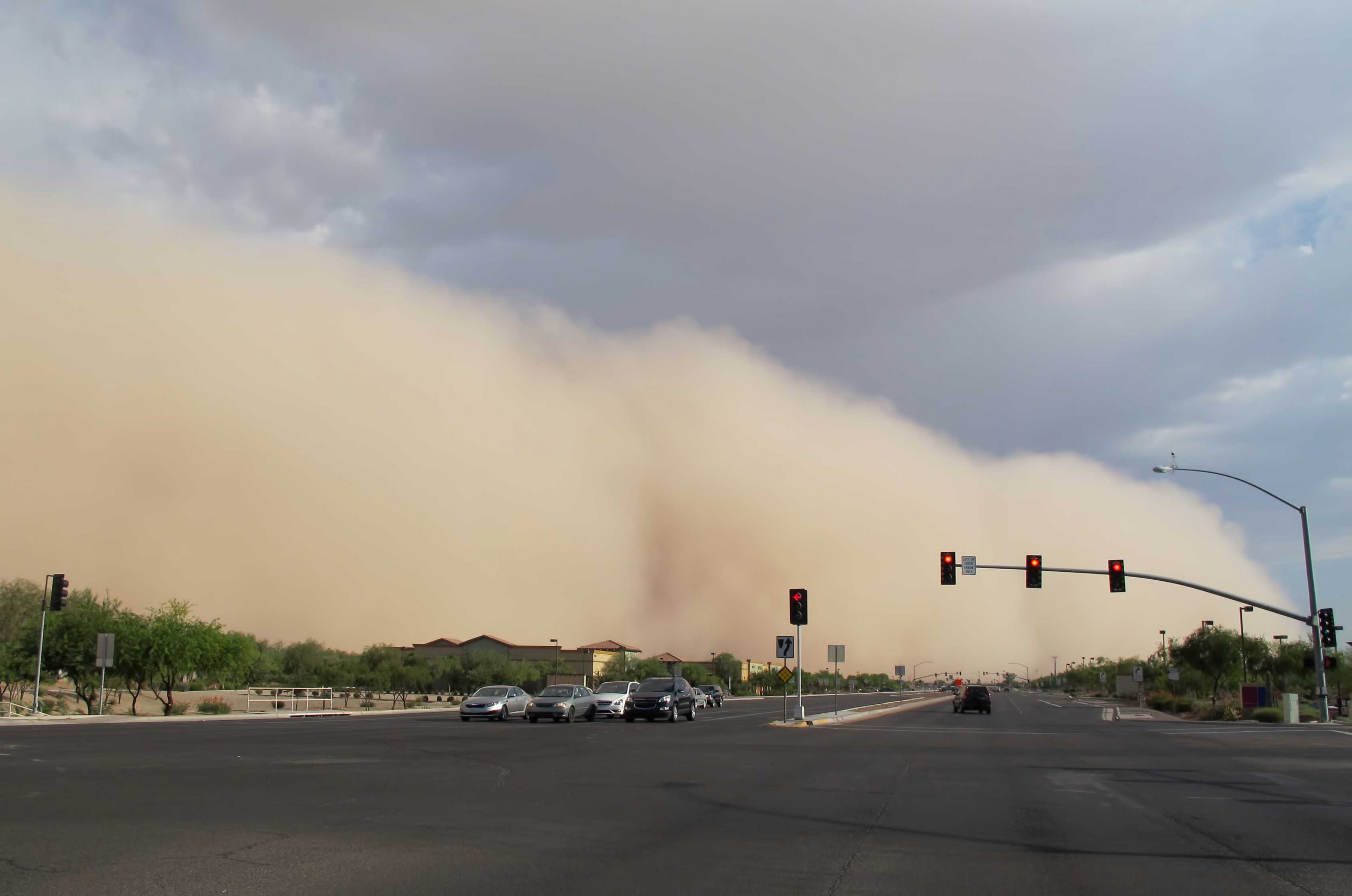
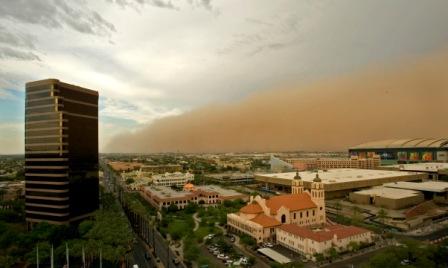
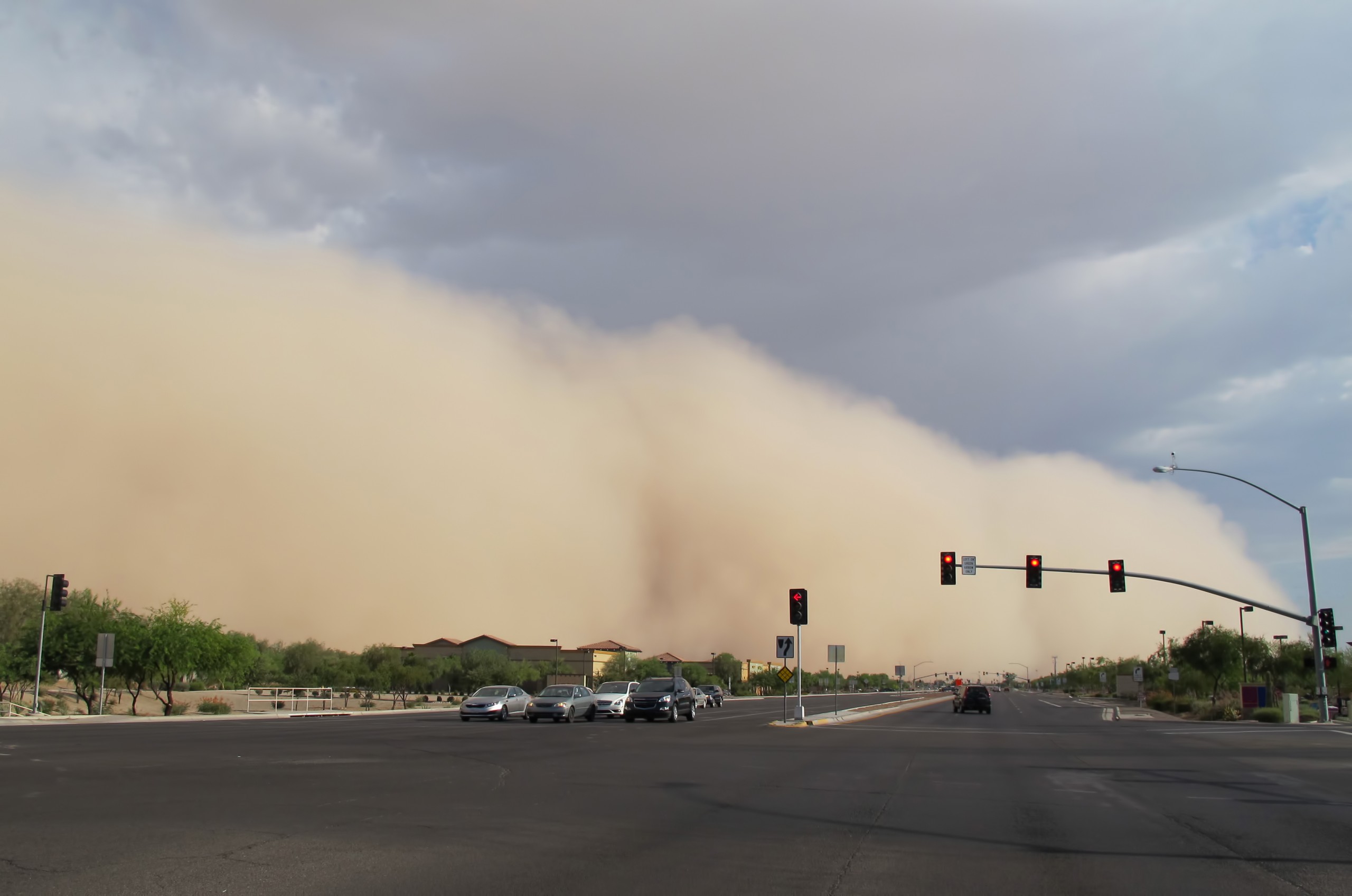
This week’s giant dust storm (technically called a haboob) blew through the valley leaving dust hovering in the air for days.  The ADEQ said one Phoenix testing station recorded an astronomical reading of over 6,000 micrograms per cubic meter (of PM 10) on Tuesday evening (the federal EPA standard is 150 averaged over a day).  PM 10 is a measurement of the concentration of particles in the air that are smaller than 10 microns in size.  We’re most interested in particles smaller than 10 microns because they actually make it into the lungs (larger particles get trapped in your throat and nose and don’t make it to the lungs where the damage can be done).

The dust storm also blew in concerns about Valley Fever.  Valley Fever is caused by a fungus and its spores that grow in the top layers of the desert soil (below 4,000 feet elevation).  Strong winds may be able to disrupt it and pick up the fungus. ADHS does a little research into Valley Fever cases by interviewing and reviewing case files of those who have been diagnosed.  We have a video on our website to help people understand the disease and how to talk to their doctors about it.  The truth is that we don’t really know for sure whether dust storms actually make people sick with Valley Fever- but we’ll be following our surveillance data after this extraordinary event to see whether the storm had an impact on rates.  To learn more, visit the ADHS valley fever website at www.valleyfeverarizona.org.