
Posts Tagged ‘Pregnant’

New Program Helps Women Improve Overall Health

May 13th, 2013

Minority populations often have poorer health outcomes than non-minority populations… but our new Power Me A2Z is doing something to change that.  Power Me A2Z empowers women to take steps to promote good health for their families and their future children. It offers women a free 90-day supply of vitamins with folic acid and tools to help women be healthy.  

All women need folic acid in their bodies before they get pregnant to help prevent birth defects.  Plus it acts as a beauty aid to make hair shine, nails grown, and skin glow.  Power Me A2Z is a perfect example of uniting our communities by empowering women to take charge of their health and advancing health equity for current and future generations. Visit the Power Me A2Z website to learn more about this exciting program.

Whooping Cough Booster & Pregnancy

April 4th, 2013

Whooping cough (pertussis) is a growing problem in the US and Arizona.  There were 41,880 cases and 14 infant deaths from pertussis in the US last year…  which is the largest number of cases since the vaccine became available in the 50s.  In Arizona there were 988 cases in 2012 and there’s a pretty substantial outbreak going on right now in Colorado City.  Anyone can get infected with whooping cough, but infants are most likely to die from it and family member – especially the infant’s mother – are the most likely to give it to infants. 

New data shows that a mother’s antibodies against pertussis are short-lived.  Therefore, giving pregnant women a booster shot in one pregnancy might not provide protection for the next.  In fact, new recommendations from the CDC’s Advisory Committee on Immunization Practices say that every pregnant woman should get a pertussis booster during every pregnancy.  Places to find vaccines can be found at The Arizona Partnership for Immunization (TAPI) website.

New WIC Website

April 1st, 2013

We’re happy to unveil the new Arizona WIC Program website, which has been redesigned with a fresh new look that is more user friendly. Last year the WIC webpage had more than 76,000 unique visitors with nearly 350,000 page views- making it one of our most popular sites.  The redesigned site includes a Find a Clinic feature, a newly released WIC Needs Assessment, and an easy way to report complaints, abuse or fraud. 

The Arizona WIC Program provides nutrition education and breastfeeding support services, supplemental nutritious foods, and referrals to health and social services for low income pregnant, breastfeeding, and postpartum women, infants and children under 5.  WIC currently serves approximately 64% of the potentially eligible population in Arizona and reaches more than 330,000 women, infants, and kids each year. Special thanks to Jennifer Tweedy, Jesse Lewis, Rose Halberg, Karen Sell and lots of folks from our Bureau of Nutrition and ­Physical Activity who worked to redesign the site.

Show Your Love

February 14th, 2013

Valentine’s Day isn’t just a day of romance, flowers and candy.  The CDC Preconception Health and Health Care Initiative launched a campaign asking all women of childbearing age to Show Your Love by taking good care of themselves.  It’s a national initiative to educate women and couples on the importance of preconception health. Preconception health refers to a woman’s health during the years she can have a child.  A mother’s health before she gets pregnant can affect the health of her baby.  

Women who’d like to become pregnant are urged to “Show Your Love” to your future baby by adopting healthy behaviors now.   Women who are not planning a pregnancy now are encouraged to “Show Your Love” to themselves so they’ll be healthy and have a fulfilling future.  About half of all pregnancies in our country are unplanned, which increases the chances of having a poor birth outcome such as preterm birth, low birth weight, high birth weight, or stillbirth.  Many women become pregnant when they’re not in the best health or while engaging in behaviors that could harm a pregnant woman or her baby.  It makes sense to be healthy at all stages of life. 

The Show Your Love website includes posters, educational videos, TV PSAs and health checklists for use by health care providers and community partners who want to educate the women and couples they work with about the importance of preconception health.  Preconception health is impacted by a number of health issues addressed by various ADHS programs – chronic disease, oral health, nutrition, physical activity, smoking, STD’s, immunizations and mental health.  The Bureau of Women’s and Children’s Health website includes additional preconception health tools. Also, please feel free to email the Bureau at: preconceptionhealth@azdhs.gov .

Folic Acid Awareness Week

January 11th, 2013

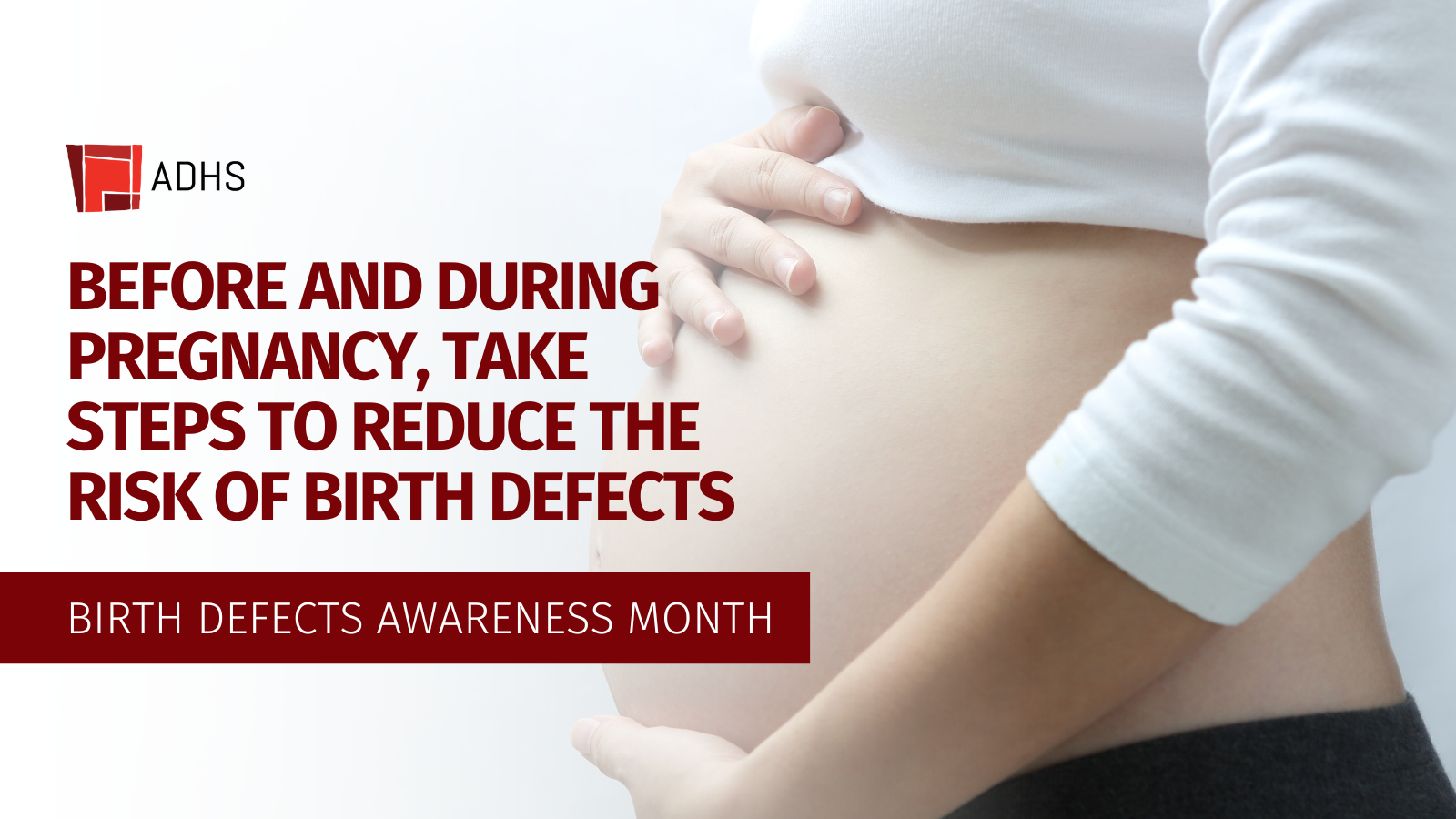
Taking a daily multivitamin can save babies lives by preventing birth defects.   Folic acid is a B vitamin can prevent up to 70% of neural tube defects (including spina bifida and anencephaly).   An average of 52 babies are born with neural tube defects in Arizona each year. 

The easiest way for women of childbearing age to get the needed 400 micrograms (mcg) of folic acid each day is to take a multivitamin with folic acid.  While folic acid is found in foods like green, leafy vegetables, beans, and cereals, many people don’t eat enough of those foods to get all the folic acid needed to protect against birth defects.  It’s especially important that all women of childbearing-age take folic acid before getting pregnant.  Neural tube defects occur very early on in pregnancy, often before a woman is even knows she’s pregnant.  Given that about half of pregnancies are unplanned, taking a multivitamin with folic acid is an easy solution to reducing the risk of birth defects. 

This is National Folic Acid Awareness Week and it’s a great time to share the message about the importance of folic acid in preventing birth defects.  For educational materials and a Fact Sheet about spina bifida, please contact Tim Flood, MD at the ADHS, Arizona Birth Defects Monitoring Program.  You can also find more information about folic acid on our ADHS Folic Acid Education Program site.   

Next month we’ll be launching a new initiative to get more young women to take multivitamins with folic acid. Watch for lots of new and exciting ways to encourage young women to take their multivitamin with folic acid every day.


‘Tis the Season to Be Vaccinated…

December 19th, 2012

The CDC’s Advisory Committee on Immunization Practices released issued new recommendations to encourage pregnant women to get the whooping cough (pertussis) vaccine (Tdap) during their pregnancy.  Since most kids get whooping cough from a close family member, vaccinating parents (and teens) is one of the best ways to prevent infants, especially those who are too young to be fully protected from this life threatening infection.  Whooping cough cases have been increasing in AZ again this year, with over 900 cases as of a couple of weeks ago…  103 more than during the same time last year and 4 times more than we have in a typical year. 

There are many things contributing to the high rate of whooping cough in AZ and nationally. Symptoms are non-specific during the first two weeks- usually just a cough that won’t go away. Providers might not identify the case until weeks later when cough intensifies and the more classic signs like “whoop” are noticed. Even then, doc’s may not be able to diagnose it if the sick person looks fine during the office visit (if they’re between coughing fits). Whether the doctor is able to diagnose the patient or not, the person may have already infected others and the disease continues to spread. 

This leads to school or community outbreaks, especially in areas with low vaccination rates. This year, one outbreak has been ongoing since May.  Routine vaccination – given as DTaP in children or Tdap in adults – is important for preventing future outbreaks from occurring.  Talk to your doctor about pertussis vaccine – particularly if you spend a lot of time with babies.  Remember, the best gift for your children this holiday is to get vaccinated!

Informed Consent Website Up & Running

November 26th, 2012

Last legislative session the Governor signed HB 2036- which amends state law regarding abortions. Some parts of the law are pending legal challenges, but the parts requiring us to develop a website were unaffected- and our new informed consent site just went up.  The website lists agencies and services that are available to assist women throughout their pregnancy, including information about adoption.  The information is listed to make it easy for women to find local resources.  Many of our public health programs are listed, like WIC, breastfeeding support, and home visiting programs.  The website also includes information describing fetal development and info describing various abortion methods and medical risks associated with the procedures. 

It’s important that providers are aware of the website because the law requires AZ health care providers to give a woman considering an abortion the opportunity to review the information. A “Potential Resources Submission Form” is posted in case agencies are interested in listing additional resources on the site.

Prematurity Report Card

November 13th, 2012

The March of Dimes just released its annual report card marking how well states are doing in the battle to lower the percentage of babies born prematurely.  Being born too soon can cause long-term disabilities in children including cerebral palsy, developmental delay, respiratory problems and vision and hearing problems.  Sadly, prematurity is also the leading cause of infant death in Arizona.  In 2011, 199 Arizona infants died from being born too soon.

This year we launched a Healthy Babies initiative and pledged to reduce prematurity 8% by 2014.  We’ve been working hard with our partners, especially the March of Dimes Arizona Chapter and the Arizona Perinatal Trust to implement strategies, like reducing elective deliveries before 39 weeks.  We now know how important those last weeks of pregnancy are to a developing baby.  A baby’s brain at 35 weeks weighs only two thirds of what it will weigh at 39-40 weeks. 

The report card shows Arizona’s prematurity rate declined from 12.7% in 2009 to 12.1% in 2011.  This is a 4.7% reduction, meaning we are a little over half way there to meeting our goal of an 8% reduction.  The progress is good, but there’s more work to do.

One of our main leverage points in the battle to reduce prematurity is the multi-agency system of home visiting programs for pregnant women and families with young children.  The system – known as Strong Families Arizona – offers many home visiting programs that can help a pregnant woman learn about her pregnancy and her baby.  The home visitor can also teach a family about safe sleep for baby.  Click on this link to see if you are eligible for home visiting and if it is available in your neighborhood. 

Preterm birth can happen to anyone and most women who have a premature birth have no known risk factors.  We do know about half of premature births are as a result of preterm labor.  There are things that women can do to help their health and lower the risk of having a premature baby such as quit smoking and avoid alcohol or drugs; see your health care provider for a medical checkup before pregnancy; maintain a healthy weight; work with your health care provider to control diseases such as high blood pressure or diabetes; get prenatal care early, as soon as you think you may be pregnant, and discuss concerns during pregnancy with your health care provider.

Women’s Services Expansion Kick In

September 20th, 2012

Several prevention-related health services will be covered without cost sharing in new health plans as of a couple of weeks ago as a result of the Affordable Care Act.  The changes are designed to help lower costs and outcomes for a variety of preventative women’s services.  Previously, some insurance companies didn’t cover some of the new preventive services, while some women had to pay deductibles or co-pays.  The new rules in the health care law requiring coverage of these services take effect at the next renewal date. 

Some of the new services include: 1) Well-woman visits; 2) Gestational diabetes screening for pregnant women; 3) Domestic violence screening and counseling; 3) Breastfeeding support, supplies, and counseling; and 4) Sexually transmitted infections and HIV counseling for sexually-active women.  The list of required services are based on recommendations from the Institute of Medicine, which relied on independent physicians, nurses, scientists, and other experts as well as evidence-based research to develop its recommendations. These preventive services will be offered without cost sharing beginning today in all new health plans.  Group health plans and issuers that have maintained grandfathered status and certain nonprofit religious organizations (like churches and schools) aren’t required to cover the new services.

The Push to Stop Preterm Births

July 2nd, 2012

On June 18, we held a news conference with the Arizona March of Dimes and the Arizona Perinatal Trust to officially launch a new campaign to reduce preventable preterm births.  We got great coverage this week, including a FOX News interview  that aired in several other cities across the country.  We’ve joined a national challenge issued by the President of the Association of State and Territorial Health Officials and pledged to set a goal of reducing premature births by 8% by 2014.  This would mean 800 more babies would make it to full term.

Why the focus on prematurity? Many babies die because they’re born too soon.  In 2010, almost 200 babies died due to prematurity, the leading cause of deaths for newborns.  Even babies born a few weeks early have high odds of learning disabilities, vision & hearing loss and cerebral palsy. The Healthy Babies are Worth the Wait  campaign stresses that if the pregnancy is healthy, it’s best to let labor begin on its own rather than scheduling an early delivery.

Until recently, it’s been an accepted practice for parents-to-be and doctors to schedule elective (non-medically necessary) inductions or c-sections just for the convenience of the parents’ schedule, or the doctor’s schedule, or because a date holds a special meaning for the family.  Because of the hard work of the Arizona Perinatal Trust (APT) promoting the March of Dimes 39-week Toolkit this practice may soon be a thing of the past.  90% of all APT-certified hospitals have already agreed to put a stop to allowing elective inductions and c-sections prior to 39 weeks.  This will go a long way to reducing preterm births, but there’s more that we can do.

In the past decade, mounting scientific evidence has concluded that if pregnancy outcomes are going to improve, it’s real important that women and men are as healthy as possible before conception.  We call this preconception health, and the concept is simple.   Healthy people are more likely to have healthy babies.  Prenatal care is important, but it’s not magic.   We can’t expect even the best prenatal care to undo the damage that may have been sustained through years of unhealthy behaviors and stressful environments.  It is not a substitute for being healthy, especially when about half of all pregnancies are unplanned.

Our interventions include implementing evidence-based practices to get moms to stop smoking, practice good oral health, improve physical activity and nutrition and behavioral health- all are part of our Preconception Health Strategic Plan and our Every Woman Arizona educational materials, grants to implement preconception health strategies, and home visitation programs that address many of the things that lead to prematurity.  Our WIC program and clinics also work with young moms in their reproductive years to improve their health.  Maintaining a healthy weight before pregnancy is really critical.  Women who are obese are at higher risk for infant death, premature births and several birth defects (brain, spinal and some heart defects) and babies born large for gestation. Obese mothers are at greater risk of experiencing gestational diabetes, high blood pressure etc.- associated with preterm births.

Most of us know what we need to do to be healthy, but sometimes we lack motivation to make those healthy choices for ourselves.  But the choices we make today are not just for ourselves – they are choices for our kids & the next generation.  Check out our new Healthy Babies webpage for more information about the campaign and view the new March of Dimes public service announcement.