
Posts Tagged ‘food safety’

2012 Environmental Health Annual Report

December 5th, 2012

I started my career in public health inspecting restaurants, motels and the like in the mid- 1980s.  My area was right around here down toward South Mountain-  and I inspected the cafeteria in the basement of the Executive Tower and the cafeteria that used to be on the 4th floor of the 1740 building.  It doesn’t seem like that was 25 years ago- but life is funny that way.  

Our core environmental health responsibilities include administering the statewide public health sanitation program for food safety, bottled water, hotels and motels, children’s camps, public schools, and public and semi-public swimming pools.  We delegate the actual inspection work to the county health departments.  Statewide, there are about 208 Sanitarians employed by the counties to inspect the restaurants and food stores in AZ.  

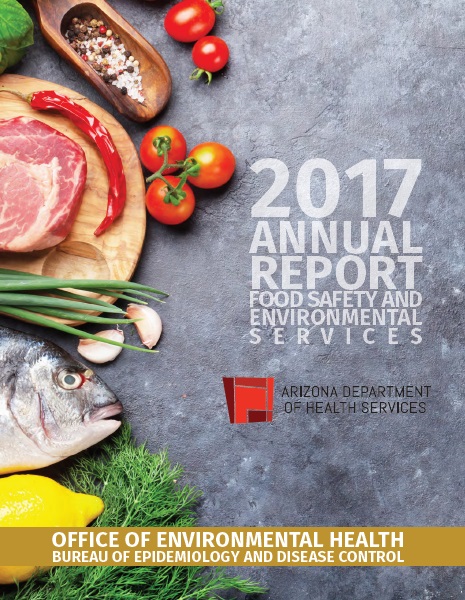
We finished our 2012 statewide Annual Report last week.  Last fiscal year the system completed about 64,000 food safety inspections among the 33,300 food establishments in AZ.  The report gives us an annual benchmark about basic performance measures like inspections but also inspection distribution.  For example, our statewide goal is to do 2 inspections per year at each food establishment…  but we separate facilities into complex, moderate and limited categories with the goal of inspecting complex places more frequently than simple ones.  That’s because the public health return on our time investment is higher in places with complex menus or that serve high-risk populations (like assisted living centers).

Referee a Safe Super Bowl Party

February 2nd, 2012

When it comes to the Super Bowl, defense matters. When it comes to planning a Super Bowl XLV party, good defense against foodborne illness matters even more.

Food Safety Playbook

Fans should follow the food safety play book at the Super Bowl parties that they host. Large gatherings can increase the chance of becoming ill, but by following these rules all fans can enjoy the game and their food, safely. 

Illegal use of Hands

Avoid penalties for “illegal use of hands.” Unclean hands are one of the biggest culprits for spreading bacteria, and finger foods at parties are especially vulnerable. Chefs and guests should wash their hands with soap and warm water for 20 seconds before and after handling food. Also, be sure to clean eating surfaces often, and wash serving platters before refilling them with fresh food. 

Off sides

Think of your party fare as two different teams – uncooked versus ready – to – eat foods. Prevent “encroachment” at all costs and keep each team in its own zone. The juices from raw meat can contain harmful bacteria that contaminate other food. Use one cutting board for raw meat and poultry and another one for cutting veggies or foods that will not be cooked. If you use only one cutting board, wash it with hot soapy water after preparing each food item. 

Equipment Violations and Holding

Call a “time out” and use a food thermometer to be sure meat and poultry are safely cooked. Remember that internal temperature, not meat color, indicates doneness. Steaks should be cooked to 145°F, ground beef should be cooked to 160°F, and all poultry should be cooked to 165°F.

 “Holding” may be one of the most likely offenses your referee encounters if your party lasts late into the night. Never hold foods for more than two hours at room temperature. Refrigerate or freeze leftovers promptly to block offensive bacteria from multiplying. The same rules apply for cold foods. If cold food has been sitting out for more than two hours, do not eat it. When in doubt, throw it out of the game and your party. 

False Start

When it comes to foodborne illness, there is not opportunity for an instant replay. To avoid these infractions, make sure you understand the rules completely. 

Special Teams

One of the best resources available before kickoff is USDA’s virtual representative, “Ask Karen,”available at AskKaren.gov. Food safety coaches are available Monday through Friday from 10 a.m. to 4 p.m. ET on the “Ask Karen Chat” and by phone at the USDA’s Meat and Poultry Hotline, 1-888-MPHotline (1-888-674-6854). Recorded messages are available 24 hours a day.

If you would like a printable copy of this, please visit our website.

100 Years of AZ Public Health Lab Science

January 27th, 2012

I thought it would be fun to give some perspective on public health and the Department’s activities 100 years ago as we approach our Centennial in a few weeks.  

Our AZ Public Health Laboratory is celebrating its 100th birthday shortly- just like the State.  Our Lab was one of the first parts of state government- it created by the first State Legislature in 1912…  and was called the “Pure Food and Drug Laboratory”.  It was at U of A’s in Old Main.  The earliest work of the laboratory was focused on food safety.  For example, they discovered that some canned peas had been artificially colored with copper sulfate and the presence of absinthe in saloons.  They also discovered that some dairies were adding formaldehyde to milk to prevent spoilage. 

Steve Baker in the Lab has been working late over the last couple of weeks to put together a photo collage of early Lab work and some short stories. The full collage isn’t ready yet- but you can check out their starter Lab history web-page which has a picture of the 1912 Lab.

Annual Statewide Environmental Health Report

December 29th, 2011

I started my career in public health inspecting restaurants, motels and the like in the mid- 1980s.  My area was right around here down toward South Mountain-  and I inspected the cafeteria in the basement of the Executive Tower and the cafeteria that used to be on the 4th floor of the 1740 building.  It doesn’t seem like that was 25 years ago- but life is funny that way. 

Our department’s core environmental health responsibilities include administering the statewide public health sanitation program for food safety, bottled water, hotels and motels, children’s camps, public schools, and public and semi-public swimming pools.  We delegate the actual inspection work to the county health departments.  Statewide, there are about 170 Sanitarians employed by the counties to inspect the restaurants and food stores in AZ. We finished our statewide FY ’11 Annual Report last week.  Last fiscal year the system completed about 75,000 food safety inspections among the 34,000 food establishments in AZ.

Arizona’s Food Safety Network

October 11th, 2011

The Listeria monocytogenes outbreak has captured the public’s attention these days- so I thought I’d do a piece on Arizona’s food safety network. Let’s start at the farm & ranch.  The Arizona Department of Agriculture is responsible for ensuring that the base of the food safety pyramid is solid in Arizona.  They have several divisions that are responsible for everything from Arizona farm-grown fruits and vegetables to livestock and poultry.  They also work with the USDA & the FDA to ensure that imported foods are safe and from an approved source.  So, basically, the AZ Dept. of Agriculture is responsible for food safety from the farm or ranch until the food hits the wholesaler or “jobber’s” warehouse. 

Once foods hit the middleman- it’s our job to ensure that food is safely handled until it makes it to your plate at a restaurant or leaves the grocery store in your cart. While our environmental health shop has the overall responsibility for ensuring that your food is safe from the warehouse to you- it’s our partnerships with the local health departments and departments of environmental services that make the system work.  We use the framework outlined in state law and our food safety rules to help guide the counties to make effective decisions in the field.  You can see a more detailed summary of the statewide activities in our latest annual food safety report (the new report is due out in a month or so). 

We delegate our food safety authority to the local health departments who use our authority do the actual inspections for restaurants and food retailers.  But, some of the counties actually act on their own- using authority granted from their board of supervisors.  For example, Maricopa County Environmental Services acts under their county authority rather than using our statewide authority.  All the inspections are done by people called Registered Sanitarians, who are required to have at least 30 hours of college credits in the natural sciences and pass a registration test

Of course, no food safety network would be complete without a robust foodborne illness surveillance system including the laboratory capacity to identify and track foodborne illnesses.  This part of the network also includes collaboration with the local health departments.  Physicians and private labs that identify or diagnose foodborne illness infections report that info to their local health department.  By pulling together the statewide data- we’re able to identify trends and sources- and along with the CDC’s resources, the public health system provides the feedback loop to the food safety network- allowing the system to track down and stop sources.

AZ Public Health Laboratory Capacity

December 21st, 2010

A few years ago it became pretty clear that we were facing some budget reductions.  At the time, we had no idea that our budget reductions would be as extensive as they turned out to be.  However, we did know that if we were going to maintain our laboratory capacity to protect the folks of AZ, we’d have to diversify our funding sources.  We looked toward the federal government primarily (mostly the FDA), but also toward places like the Arizona Biomedical Research Commission.  We’ve been quite successful on both fronts in the laboratory, and we’ve been able to just about break even in terms of capacity after our steep state budget reductions.

A couple of weeks ago our Lab found out that we’ve been awarded a new cooperative agreement from the USDA Food Safety Inspection Service, which is part of the Food Emergency Response Network.  The new grant will support the development of new methods and validation of new technologies to rapidly detect pathogens like Salmonella and E. coli in food allowing for more rapid recalls in instances where food is contaminated.  We recently used some of these technologies to isolate E. coli from certain kinds of cheese.

Our new funding will also cover training activities as part of the FERN Regional Training Program where laboratory professionals and National Guard Civil Support Teams from other states come to Arizona to be trained on new state of the art instruments and methods developed to detect not only dangerous pathogens in food but also toxins and poisons in food. Finally, we were one of the few states selected to participate in developing methods to detect melamine in pig tissues as part of an ongoing USDA surveillance program for melamine in the food supply. Thanks to laboratory staff  who participate in these very important FERN programs as we have been able to secure this funding and more importantly contribute to better food safety not only in Arizona but across the nation.

Annual Statewide Environmental Health Annual Report Published

November 3rd, 2010

I started my career in public health working as a county Sanitarian doing inspections of restaurants, motels and the like in the mid- 1980s.  My area was right around here down toward South Mountain  and I inspected the cafeteria in the basement of the Executive Tower and the cafeteria that used to be on the 4th floor of the 1740 Adams DHS building .  It doesn’t seem like that was 25 years ago, but life is funny that way.  Anyway, I guess it’s both a blessing and a curse for the folks in environmental health that I started my career that way, because I know all about their stuff.

Our core environmental health responsibilities include administering the statewide public health sanitation program for food safety, bottled water, hotels and motels, children’s camps, public schools, and public and semi-public swimming pools.  We delegate the actual inspection work to the county health departments.  Statewide, there are about 170 Sanitarians that are employed by the counties that inspect the roughly 34,500 restaurants and food stores in AZ. We just finished our FY ’10 Annual Report. Last fiscal year the Sanitarians completed about 72,000 food safety inspections and about 95,000 overall inspections (including school grounds, swimming pools, trailer parks, motels and hotels.)

How Do You Take Your Eggs?

August 27th, 2010

Cooked all the way through, I hope. I’m certain that you heard about the national egg recall this month.  I’ll try to put it in perspective.  Epidemiologists across the country and at the CDC found a nationwide outbreak of Salmonella that has made a few hundred people sick.  The investigation found that people that ate raw or undercooked eggs were at most risk.  A trace back to the source found that eggs produced by Wright County Egg and it “voluntarily” recalled about 400 million shell eggs.  The FDA and state agriculture departments have been monitoring the recall and auditing retail stores, wholesalers and distributors to make sure the recalled shell eggs are being removed from the market.  Many of the recalled eggs are being sent to facilities to be pasteurized (which will destroy the bacteria).  By the way, when eggs get contaminated like this it’s usually because rats (who often carry salmonella) get into the chicken feed.

Eggs with clean, uncracked shells occasionally contain Salmonella. That’s why we always recommend that people cook their eggs until both the yolk and the white are firm. Scrambled eggs are OK as long as they’re not runny. Casseroles and other dishes containing eggs should be cooked to 160°F.  If you still want to eat foods that call for raw or undercooked eggs (like Caesar salad dressing and homemade ice cream), you should buy pasteurized egg products (they’re usually in cartons).  AZ restaurants that serve recipes that contain raw or undercooked eggs are required to let you know that the food can make you sick.

You may hear that this event provides evidence that the nation’s food safety and epidemiology network is inadequate.  I would say quite the opposite.  The very fact that the public health system identified the outbreak and source shows that epidemiology works.  Before we had a good public health network, including solid laboratories, people just got sick from something, nobody noticed, the food was never identified and nothing was done.  To be sure, the farmer should have kept the chicken feed clean and prevented this, but that doesn’t mean the network is bad.