
Posts Tagged ‘whooping cough’

Whooping Cough Booster & Pregnancy

April 4th, 2013

Whooping cough (pertussis) is a growing problem in the US and Arizona.  There were 41,880 cases and 14 infant deaths from pertussis in the US last year…  which is the largest number of cases since the vaccine became available in the 50s.  In Arizona there were 988 cases in 2012 and there’s a pretty substantial outbreak going on right now in Colorado City.  Anyone can get infected with whooping cough, but infants are most likely to die from it and family member – especially the infant’s mother – are the most likely to give it to infants. 

New data shows that a mother’s antibodies against pertussis are short-lived.  Therefore, giving pregnant women a booster shot in one pregnancy might not provide protection for the next.  In fact, new recommendations from the CDC’s Advisory Committee on Immunization Practices say that every pregnant woman should get a pertussis booster during every pregnancy.  Places to find vaccines can be found at The Arizona Partnership for Immunization (TAPI) website.

Campaign to Get Health Care Workers Immunized

March 18th, 2013

Believe it or not only 27% of health care workers are up to date with their whooping cough booster… yet health care personnel can be infected with it by their patients, and then pass it on to other patients, family, and the community.  The Arizona Partnership Against Pertussis, a coalition of seventeen health care organizations spearheaded by the March of Dimes, is leading a campaign to challenge health care facilities to achieve 100% pertussis immunization rate among their staff. 

Organizations that get to 100% will receive a Certificate of Participation, be recognized on their webpage, and be entered into a random drawing to receive an iPad or one of five $100 gift cards.  If an organization’s staff is already 100% immunized, the organization can still participate in the contest and promote 100% pertussis-free work places by filling out and submitting the form to certify that their organization has achieved 100% pertussis immunization rate.   

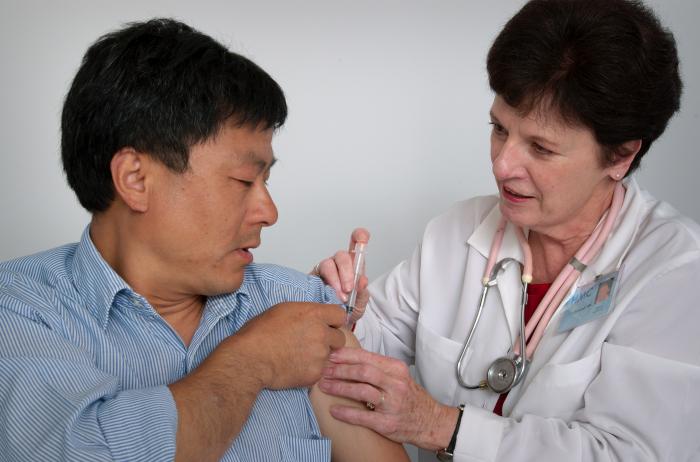
Health care personnel have a responsibility to protect their patients as well as themselves.  It’s not too late to participate in the contest.  Even if your organization doesn’t participate in the contest, be sure to encourage every health care worker to receive a Tdap vaccine.

Annual Preparedness “Reportcard”

January 15th, 2013

Every year a group called the Trust for America’s Health puts out a ‘Report Card” regarding what they believe is an assessment of each state’s readiness for a public health emergency.  They use various measurements that they can find and grade each state against each other.  The implication is that states that do poorly won’t be able to execute in a public health emergency and the ones that do well will do fantastic.  The problem is that they usually pick measuring sticks that have little to do with real public health readiness, things that public health systems have little control over, or both.  Sometimes the points are awarded for things that are cosmetic.  I don’t have any objection to outside entities scoring and passing judgment on states’ preparedness…  but I do object when the criteria they use has little to do with the conclusions they draw. 

For example- in this year’s report AZ lost 3 out of a total of 10 possible points because our whooping cough vaccination rates are 86% (rather than 90%), there’s a $5 co-pay for flu shots under the state Medicaid program, and the fact that AZ doesn’t have a comprehensive global warming action plan.  Using those criteria- are you ready to conclude that our state’s public health preparedness network is unable to effectively respond to a public health emergency?  (That’s a rhetorical question). 

Safeguarding the public’s health is more important than ever.  Whether the threat is a disease outbreak, environmental hazard or natural disaster, the public health system works 24 hours a day, 7 days a week to keep Arizonans safe.  Each year, the CDC evaluates state and local public health preparedness programs in a detailed report that measures what really matters.  This year’s installment is entitled 2012 State-by-State Report on Laboratory, Emergency Operations Coordination, and Emergency Public Information and Warning Capabilities.  This document outlines each state’s ability to perform key laboratory functions, engage in emergency operations, and develop and distribute public health messages.  While Arizona wasn’t perfect in this year’s CDC report- we did pretty darn good. 

For example, our Lab tests thousands of biological and chemical samples each year, and is a cornerstone of our public health system.  As a part of the Laboratory Response Network, we’ve consistently demonstrated its ability to detect high-threat biological agents like anthrax. Our lab team works long hours to test samples from suspicious packages and provide accurate results to our first responder community. As the report indicates, one area for improvement is our turn-around-times for pulsed-field gel electrophoresis testing- a technique used to identify organisms that commonly cause food borne illness.  We’re working to improve these turn-around-times by ensuring we have the right staffing and resources needed to meet these bench marks.  

Another capability addressed in this year’s CDC report is Emergency Operations Coordination.  ADHS has participated in dozens of exercises and drills over the past several years to prepare our staff for public health emergencies.  For the 3rd year in a row, our staff met the 60 minute target for Emergency Operations Center activation.  Similarly, our staff successfully demonstrated our ability to develop and distribute public health messages in a timely manner.  These examples illustrate our ability to manage public health emergencies and safeguard the public’s health during a disaster.  

For our employees that work in preparedness throughout Arizona’s public health system- the work is never done.  But I’m proud to say that we’ve achieved all of our emergency preparedness targets, and nearly all of the lab requirements for this year’s report.  Thanks to all of our preparedness staff for their hard work and dedication.  Well done.

‘Tis the Season to Be Vaccinated…

December 19th, 2012

The CDC’s Advisory Committee on Immunization Practices released issued new recommendations to encourage pregnant women to get the whooping cough (pertussis) vaccine (Tdap) during their pregnancy.  Since most kids get whooping cough from a close family member, vaccinating parents (and teens) is one of the best ways to prevent infants, especially those who are too young to be fully protected from this life threatening infection.  Whooping cough cases have been increasing in AZ again this year, with over 900 cases as of a couple of weeks ago…  103 more than during the same time last year and 4 times more than we have in a typical year. 

There are many things contributing to the high rate of whooping cough in AZ and nationally. Symptoms are non-specific during the first two weeks- usually just a cough that won’t go away. Providers might not identify the case until weeks later when cough intensifies and the more classic signs like “whoop” are noticed. Even then, doc’s may not be able to diagnose it if the sick person looks fine during the office visit (if they’re between coughing fits). Whether the doctor is able to diagnose the patient or not, the person may have already infected others and the disease continues to spread. 

This leads to school or community outbreaks, especially in areas with low vaccination rates. This year, one outbreak has been ongoing since May.  Routine vaccination – given as DTaP in children or Tdap in adults – is important for preventing future outbreaks from occurring.  Talk to your doctor about pertussis vaccine – particularly if you spend a lot of time with babies.  Remember, the best gift for your children this holiday is to get vaccinated!

That Stubborn Whooping Cough

July 31st, 2012

Whooping Cough is making headlines again – with more than 18,000 cases in the U.S. and 600 cases so far this year in AZ.  You might wonder why we continue to have lots of whooping cough cases in the US and AZ when the other vaccine preventable diseases are real rare (e.g. measles, mumps etc.). 

Creating a vaccine for whooping cough is different than a vaccine for measles.  Whooping cough is a bacteria and measles is a virus – and that’s a big difference when it comes to making a vaccine that lasts.  That’s partly because virus generally have a pretty specific and predictable protein coat on their surface that makes it easier to create a vaccine that generates antibodies specific to the virus coat- like a lock and key.  Bacteria, on the other hand, are much larger and pose a bigger challenge when making a vaccine because the cell wall is way more complicated than a simple virus protein coat.  As a result- vaccines against viruses are generally more protective and last longer.  Likewise, when you get sick from whooping cough you’ll have temporary natural immunity- but you can still get it again (unlike some viruses such as measles). 

Anyway- it’s important to keep up the battle against whooping cough because of the danger it poses to babies.  We had one baby die earlier this year in Arizona.  Babies are just too young to fight the disease – they don’t have the immunity and they don’t have the ability to cough like children and adults do.  So it’s important for us to make sure that everyone around them has been vaccinated.  I talked about the importance of “cocooning” and our cocooning intervention strategies last summer in my Whooping it Up blog post.

A New Kind of Whooping Cough?

March 28th, 2012


A team of Aussie scientists  from the U of New South Wales believe that a new kind of Whooping Cough bacteria (Bordetella pertussis) has slipped past the protective effects from the current “acellular” vaccine- contributing to an increase in cases being found Down Under.  Their study was published this week in the latest The Journal of Infectious Diseases.  This doesn’t look like a public health issue yet here…  but bears watching.

Whooping it Up

August 30th, 2011

When it comes to microbes- the whooping cough (pertussis) is a contrarian.  Unlike most other pathogens- it does better in the summer than the winter.  While most other infectious diseases are on the wane right now- whooping cough is whooping it up.  We’ve been seeing an increase in whooping cough cases in Arizona this summer- but not enough top call it an outbreak.   

Our public health interventions have focused on educational pushes to encourage folks (especially teenagers and adults) to get their “TDaP” booster (which includes the whooping cough vaccine).  Whooping cough causes a severe and persistent coughing in anybody, but our biggest concern is that it can be deadly in infants who are too young to be vaccinated.  In fact, more than 85% of all deaths from whooping cough are among kids less than 6 months old.  That’s why we’ve also focused on our “cocooning” initiative. 

Infants are usually infected with whooping cough from people who are in close contact with them like parents, siblings, grandparents, and babysitters.   Because of this, we’re encouraging families and health care providers use a strategy to protect infants called “cocooning.” By immunizing everyone who comes in contact with infants, it prevents those people from getting infected and provides a cocoon of protection around the infant.  Last month’s Arizona Vaccine News was dedicated specifically to whooping cough and provides more details about cocooning.

National Infant Immunization Week

April 23rd, 2011

Immunizations have been the most effective public health intervention of all time (followed by proper sewage treatment and garbage disposal).  We celebrate our successes and sharpen our focus on doing an even better job executing this important intervention every year during National Infant Immunization Week-  which is next week.  Our overall objective is to encourage parents and healthcare providers to do their very best to protect babies from preventable diseases.  This year’s events highlight the need to do better protecting infants from whooping cough (pertussis) by encouraging everyone to get up to date with the Tdap booster.  Pertussis has been on the upswing in AZ over the last year or so- and we’re trying to use our public health tools to help sharpen our focus. You can check out next week’s events in our media release.

Whooping Cough Just Across the River

November 24th, 2010

California has had 6,400 + cases of whooping cough (pertussis) and 10 infant deaths so far in 2010, which is the highest number of cases they’ve had since the age of immunizations began (about 60 years ago).  Meanwhile, Arizona has had 361 cases and no deaths in 2010 compared to 277 cases in all of 2009.  Even with California’s much higher population, their rate is much higher than ours.  We don’t know exactly why it’s exploding across the river, but it might have something to do with the fact that we require middle-schoolers (who often spread the disease among each other and to little kids) to be vaccinated against whooping cough, California did not.  Late this summer, the California legislature passed a law requiring 7th graders and above to get a pertussis booster starting next year.  Of course it could be alot of other factors too.  As an aside, check out a new article in Science that explains the changing epidemiology of pertussis.

Whooping Cough (aka Pertussis)

July 2nd, 2010

Whooping cough (pertussis) is a vaccine preventable disease that causes a severe and chronic cough.  It’s a nuisance for adults and adolescents, but it’s potentially lethal for infants.  California is having a serious outbreak right now with 4 times the normal number of cases this year.  Our numbers are up too, but nothing like in California.  So far this year, we’ve had 152 cases vs. 82 last year at this time, so while we’re up from last year, our epidemiologists haven’t called it an outbreak yet.

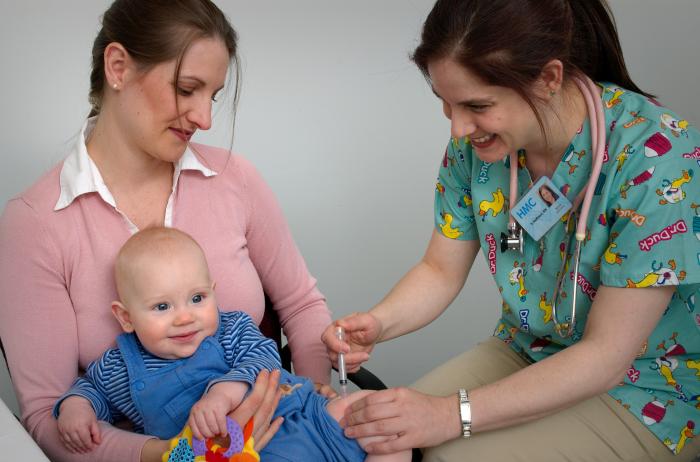
Infants should get their first pertussis shot at two months of age, but aren’t adequately protected until after their 3rd shot at 6 months old.  So it’s really important to make sure that the people around the infant aren’t sick with the whooping cough.  We had a pretty bad outbreak about 6 years ago and found that a lot of the infants were getting sick from parents, adolescent siblings and babysitters whose immunity had waned.  That’s why we added a pertussis booster shot for 6th – 8th graders.  California hasn’t added that requirement yet, so we’re better off than CA is in terms of that intervention.

We’re keeping a close eye on this (as are the counties)  and various counties are investigating additional public health interventions to slow the spread.  Most of the strategies are around the concept of “cocconing” which simply means doing things to make sure that everyone that takes care of infants gets a booster shot.