Posts Tagged ‘newborn screening’

50 Years of Newborn Screening

January 29th, 2013

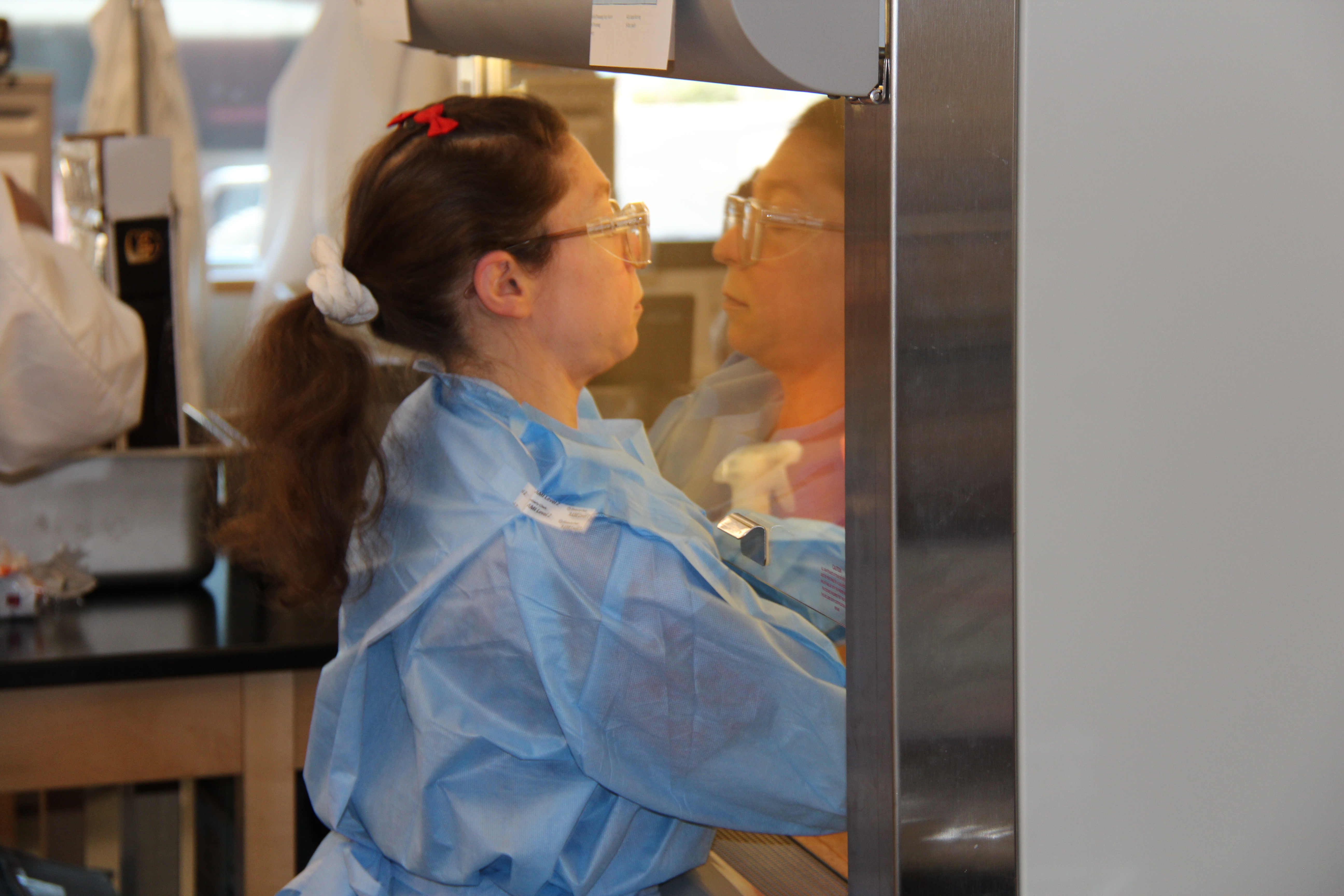
Last year we welcomed about 87,000 newborns to Arizona.  Our Newborn Screening Program (in our State Lab) ensures that each are tested for 28 inherited disorders and hearing problems.   The goal is to help kids avoid illness, developmental delays and even death.  Teamwork, communication and coordination are critical in making this program effective.  A quick look at the numbers reveals how monumental this screening task really is.

On any given day our newborn screening team receives and tests from 600 to 1,500 bloodspot samples for each of the 28 disorders. Our demographics team verifies the results and confirms all of the data associated with each sample as well as ensuring that lab results are sent out to the health care provider.  Our case management team follows up on about 140 potentially positive results (including hearing) each week, coordinates the confirmation test and works with pediatricians, clinical specialists and families.


The end result?  Because of the dedication and commitment of each member of the Team, hundreds of families have the opportunity for their newborn to receive the early treatment, intervention and support services that will allow them to lead normal lives.  Of course, none of this would be possible without the gasoline that runs the engine, the billing department brings in the money that keeps this effective machine helping families every day.

The first state-mandated newborn screening programs began in Massachusetts, Oregon, and Delaware 50 years ago this week.  Now, 97% of U.S. newborns are screened by state public health labs like ours.  The Association of Public Health Laboratories is partnering with the CDC to launch a year-long public awareness campaign to celebrate this milestone. The campaign website includes a calendar of events and informational resources for expectant parents, healthcare providers, and health decision-makers.

Public Health Budget

May 9th, 2012
 The Governor signed the budget this week – here’s a look at how some of it affects public health:

Behavioral Health Services for folks that don’t Qualify for Medicaid

The budget that was just signed includes about $39M in new funding for services for folks with a serious mental illness that don’t qualify for Medicaid.  With it, we’ll be able to provide some services like supported employment and housing, peer and family support, living skills training, and health promotion to help folks along their Recovery journey.  We’ll also be expanding the list of medications for the folks with a serious mental illness so it matches the list for folks that qualify for Medicaid.  Our behavioral health team has already begun working closely with the RBHAs, providers, and members/families to plan for the most effective use of this funding.

Newborn Screening

Our newborn screening program has been running in the red for the last couple of years- despite the fact that we’ve squeezed just about every efficiency out of the program and are collecting more than 95% of our service fees.  The current screening fee is $30 for the 1st (hospital) screen and $40 for the 2nd (which happens in the pediatric office a couple of weeks after birth).  These fees haven’t been raised in several years- meanwhile the instruments and reagents we use have become increasingly expensive.  We’ve been supplementing the program with Title V funds that really should be used for other more effective purposes. The budget that was just signed allows us to set new fees for the 2nd screen in Rule…  and we’ll be starting that process shortly.

County Contribution toward Hospital Patients and Residents

The “Budget Reconciliation Bill” or BRBs included specific instructions regarding how much counties are obligated to pay (50%) for the patients and residents at the Hospital and ACPTC (the sexually violent person’s unit).

ASH Administration building

Hospital Operating Fund

Despite all our efforts to reduce overtime, cut shift overlap, streamline services and other efficiency measures- our hospital operating fund was headed for big trouble next fiscal year- partly because the Hospital Fund (which had provided funds to operate the Hospital) went dry. The state budget that was just signed rescued us from needing to cut our staffing ratio’s to below Licensing standards (which would have put us in jeopardy of losing Medicare and Medicaid funds).  Whew.

Spotlight: Newborn Screening

September 21st, 2010

Last year Arizona welcomed about 98,000 newborns to our world.  Our Newborn Screening Program (in the State Laboratory) ensures that each newborn is tested for 28 inherited disorders and hearing problems.   The goal is to help kids avoid illness, developmental delays and even death.  Teamwork, communication and coordination are to critical in making this program effective, thus benefiting both newborns and their families. A quick look at the numbers reveals how monumental this screening task really is.

On any given day our newborn screening team receives and tests from 600 to 1,500 bloodspot samples for each of the 28 disorders. Our demographics team verifies the results and confirms all of the data associated with each sample as well as ensuring that lab results are sent out to the health care provider.  Our case management team follows up on about 140 potentially positive results (including hearing) each week, coordinates the confirmation test and works with pediatricians, clinical specialists and families.

The end result?  Because of the dedication and commitment of each member of the Team, hundreds of families are afforded the opportunity for their newborn to receive the early treatment, intervention and support services that will allow them to lead normal lives.  Of course, none of this would be possible without the gasoline that runs the engine, the billing department brings in the dough that keeps this effective machine helping families every day.  Well done.

ADHS Status

July 21st, 2010

We’ve got a lot to be proud of over the last year and an half.  It’s been hard, I know because of all of the budget reductions and the lower staffing level.  On the other hand, we’ve got an incredible mission and we’re doing a good job.  I often tell people that we work in the most interesting agency in state government.  Why?  Because we touch the lives of Arizonans in dozens of different ways everyday.  We:


  • Make sure that Arizonans are healthy and protected from infectious diseases like the flu and foodborne illnesses- and prevent diseases in the first place through our Vaccine for Children Program  


  • Provide families with young kids access to nutritious blend of foods www.azwic.gov.


  • Make sure that the kids at Child Care facilities are safe and sound and that they get some exercise thanks to our Empower Pack program.


  • Help save lives by doing things like developing Cardiac Arrest Centers and Primary Stroke
    Centers across the state that are dramatically improving outcomes for folks that have a cardiac arrest or a stroke and are leading the national shift to continuous chest compression CPR from the old compression/breathing method .


  • Are building a new Trauma System from the ground up- which saves lives every day.


  • Are leading the state’s anti tobacco efforts like the prevention activities in our youth tobacco campaign (called Venomocity)  and helping thousands of Arizonan’s Kick the Habit through our www.ashline.com services.


  • Are improving the performance of the state’s mental health system by giving choice and voice to folks with mental health and substance abuse needs- improving their ability to better participate in their path to Recovery from  Mental illnesses.  Over this past year, we have developed the new Nine Adult Guiding Principles to compliment our Children’s 12 Principles. We developed an RFP, went out for bid, and issued awards for all Geographic Service Areas outside of Maricopa County. We also planned for and implemented the most severe budget reductions in the behavioral health system in Arizona’s history.


  • Make a difference in hundreds of peoples lives at the Arizona State Hospital-  by helping them in their road to recovery by treating them with dignity, care and respect.


  • Run one of the state’s most well respected public health laboratories- providing the backbone for Arizona’s public health system.  For example, we find hundreds of kids with metabolic disorders and hearing and helped their doctors conduct interventions to help them avoid serious complications from their condition through our newborn screening program. 


  • Administer the Office of Children with Special Healthcare Needs (OCSHCN) program, which includes the Children’s Rehabilitative Services (CRS) program.  CRS provides family-centered medical treatment, rehabilitation, and related support services for children under age 21 with qualifying chronic and disabling conditions such as congenital heart disease,  neuromuscular conditions, spina bifida, cleft lip, cerebral palsy, and many others.


  • Test 1000s of biological samples for all kinds of viruses and bacteria including H1N1, tuberculosis, West Nile virus, rabies, and literally dozens of other diseases so that counties and doctors can help slow the spread of disease and help people get better in our Public Health Microbiology program.


  • Ensure that hundreds of clinical and environmental laboratories across the state are doing things right and providing good results through our Laboratory Licensure & Certification program.


And that’s just a fraction of the incredibly interesting and important things that we do.  Do you have any doubt now that this is the most fascinating place to work in state government?


We’re successful at all of these things because of your commitment to the folks of Arizona and to each other.  It takes a wide range of help from everyone including our IT, Human Resources, Rules, Procurement, Auditing, Financial Services and other Operations Teams to make these things happen.


Thank you all for rowing in the same direction.  I really appreciate your can-do attitude.  Thanks…  and make sure that you take the time to thank the folks around you from operations that make this place tick.

A Year of Progress at ADHS

February 4th, 2010

We started on this journey together a year ago.  Thanks for being such good traveling companions.  We’ve been through a lot.  We’ve had challenges, fears, anxiety, good times, laughs, & fun.  We’ve sacrificed some of our programs, but we’ve made a great deal of progress too.  Overall- the year was a net plus.  I say that because we maximized our progress in areas that we have control.

We’ve made a great deal of progress in many areas and have just done a plain old good job with most everything this year.  I jotted down a few things the came to mind below.  We:

  • Overhauled the WIC program to focus on a much more nutritious blend of foods www.azwic.gov, and started a nationwide movement to change the food stamp program (SNAP) from a calorie program to a nutrition program;
  • Created the new Empower Pack program for preschools that improve physical activity and nutrition for our youngest- an idea that came out of our licensing fee increase;
  • Developed a network of more than 20 new Cardiac Arrest Centers and Primary Stroke
    Centers across the state that are dramatically improving outcomes for folks that have a cardiac arrest or a stroke;
  • Led the national shift to continuous chest compression CPR from the old compression/breathing method http://www.azshare.gov/;
  • Figured out a way to vaccinate underinsured kids through our Vaccine for Children Program even though our state vaccination funds were completely eliminated;
  • Began development of Arizona’s TRAUMA SYSTEM- adding 8 new Level IV Trauma Centers and 1 new nationally recognized pediatric trauma center;
  • Helped develop a state of the art on-line Outcomes Dashboard to give choice and voice to folks with serious mental illnesses in Maricopa County- improving their ability to better participate ion their path to Recovery (Download the Dashboard);
  • Made a difference in hundreds of peoples lives at the Arizona State Hospital-  by helping them in their road to recovery by treating them with dignity, care and respect;
  • Converted our licensing programs to become self sufficient, and sharpened our surveys to focus on the most important elements of care, and allowing folks to review the latest scores using our Facility Search tool;
  • Identified hundreds of kids with metabolic disorders and hearing and helped their doctors conduct interventions to help them avoid serious complications from their condition through our Newborn Screening program;
  • Tested thousands of biological samples for all kinds of viruses and bacteria including H1N1, tuberculosis, West Nile virus, rabies, and literally dozens of other diseases so that counties and doctors can help slow the spread of disease and help people get better in our Public Health Microbiology program;
  • Ensured that hundreds of clinical and environmental laboratories across the state are doing things right and providing good results through our Laboratory Licensure & Certification program;
  • Created an inter-disciplinary team from around the Department to develop an integrated tobacco prevention program together- expanding our tobacco prevention efforts way beyond it’s former borders- integrating tobacco control into programs throughout AZ’s behavioral health system.

Holy smokes… who did all this stuff?  ADHS did.  Thanks to the staff for rowing in the same direction together this year- forward.  Next year will have challenges just like this past year— but as long as we work and collaborate with one another we will  continue to press ahead and make progress next year too.  Thanks, and take a second this week to thank the folks around you, and let them know you appreciate their help this year.

Salt, BPA, CCR & the Budget

January 22nd, 2010

NaCl
It’s been no secret that the U.S. (and Arizona) diet is high in salt- and almost 90% of that salt comes from pre-processed foods (as opposed to the salt that you might add while cooking or eating).  Reducing dietary salt is an important public health target- and it’s among one of the cheapest and easiest public health interventions.  In fact, the cardiovascular benefits of reduced salt intake are on par with the benefits of population-wide reductions in tobacco use, obesity, and cholesterol levels.

A new study this week in the New England Journal of Medicine http://content.nejm.org/cgi/content/full/NEJMoa0907355 found that reducing dietary salt by 3 g per day would reduce the annual number of new cases of coronary heart disease in Arizona by up to 2,400 per year, reduce the number of strokes in AZ by up to 1,300, heart attacks by up to 2,000 and reduce the annual number of deaths from any cause by between 880 and 1,800.  All from a modest reduction in salt intake.

In fact, Japan, the UK, Finland, & Portugal have successfully reduced population-wide salt intake by using a combination of regulations on the salt content in processed foods, labeling of processed and prepared foods, public education, and by collaborating with the food industry to reduce the amount of salt that is added to foods.

The New York City Health Department has been coordinating a nationwide effort to reduce the salt in both packaged and restaurant foods by 25% over five years http://www.nyc.gov/html/doh/html/cardio/cardio-salt-initiative.shtml. Our nutrition team is exploring whether and how we can sign-on to this growing national initiative…  15 state health departments are already among the supporters.  More on this soon.

BPA
On the other end of the risk spectrum is recent concern about a chemical called bisphenol a, which is a plasticizer that’s used in some kinds of water bottles and in plastics that cover processed foods.  Previous studies have found a slight association between urinary BPA concentrations and heart disease, diabetes and liver enzymes in adult participants of the National Health and Nutrition Examination Survey.  A new study out this week published at: http://www.plosone.org/article/info:doi/10.1371/journal.pone.0008673 concluded that “Higher BPA exposure, reflected in higher urinary concentrations of BPA, is consistently associated with reported heart disease in the general adult population of the USA.”

When I heard about this new study I didn’t think much of it, because the association is weak and the risk increase is slight- and because the studies that have been conducted have shown as association- not causation.  But, when I saw my wife throwing away all of our perfectly good plastic water jugs this morning because of something she heard on the radio- I thought I should include something in this week’s update.

You can read the study yourself and do your own research, but I’m not convinced that the low levels that we’re exposed to from containers is a problem.  So, if you see me in the elevator, you will still see me with my bisphenol A containing refillable water bottle (that I fill up with tap water).

CCR
There was a very good article in the paper this week about our efforts to convert the world to using the new CCR to resuscitate adults that have a cardiac arrest.  You can read the full article at: http://www.azcentral.com/news/articles/2010/01/19/20100119cardiacdoc0119.html and you can review the new CCR method at www.azshare.gov.

Extraordinary Measures
A new movie called Extraordinary Measures will be released today.   The film is about a family’s efforts to find a cure for Pompe disease http://en.wikipedia.org/wiki/Pompe_disease (a metabolic disorder), which affects their two children.  In a sense, it’s a public health film, because it’s directly related to our newborn screening program.  There is currently no reliable newborn screening test for this disorder yet (so we don’t test for it yet), but Illinois and Missouri have been mandated to implement the test.   You can read more about Arizona’s Newborn Screening Program on our website.

Budget Requests and Bill Inquiries
Please respond quickly to any request that comes from Duane regarding budgetary or bill information.  The Legislature is now in session, and bills that impact our programs are coming out daily.  It’s critical that we look over the bills and get any feedback to Duane right away so that we can relay and suggestions to the appropriate place quickly.

As I mentioned last week, the Governor recently released her budget for FY ’11 (the fiscal year that begins on July 1, 2010).  The Agency Detail Book contains the budget proposal for the ADHS starting on Page 80.

Congrats…
…  to our team from the Arizona State Hospital that completed the PF Chang’s half marathon.  They got together last summer and started planning and training, with group runs at Papago and South Mountain Parks.  Team Captain Crystal Gilbert led the pack on Sunday when the team took off.  17 people crossed the finish line 13.1 miles later.  Team AzSH placed second in the municipal team category!

Salt, BPA, CCR & the Budget

January 22nd, 2010

NaCl
It’s been no secret that the U.S. (and Arizona) diet is high in salt- and almost 90% of that salt comes from pre-processed foods (as opposed to the salt that you might add while cooking or eating).  Reducing dietary salt is an important public health target- and it’s among one of the cheapest and easiest public health interventions.  In fact, the cardiovascular benefits of reduced salt intake are on par with the benefits of population-wide reductions in tobacco use, obesity, and cholesterol levels.

A new study this week in the New England Journal of Medicine http://content.nejm.org/cgi/content/full/NEJMoa0907355 found that reducing dietary salt by 3 g per day would reduce the annual number of new cases of coronary heart disease in Arizona by up to 2,400 per year, reduce the number of strokes in AZ by up to 1,300, heart attacks by up to 2,000 and reduce the annual number of deaths from any cause by between 880 and 1,800.  All from a modest reduction in salt intake.

In fact, Japan, the UK, Finland, & Portugal have successfully reduced population-wide salt intake by using a combination of regulations on the salt content in processed foods, labeling of processed and prepared foods, public education, and by collaborating with the food industry to reduce the amount of salt that is added to foods.

The New York City Health Department has been coordinating a nationwide effort to reduce the salt in both packaged and restaurant foods by 25% over five years http://www.nyc.gov/html/doh/html/cardio/cardio-salt-initiative.shtml. Our nutrition team is exploring whether and how we can sign-on to this growing national initiative…  15 state health departments are already among the supporters.  More on this soon.

BPA
On the other end of the risk spectrum is recent concern about a chemical called bisphenol a, which is a plasticizer that’s used in some kinds of water bottles and in plastics that cover processed foods.  Previous studies have found a slight association between urinary BPA concentrations and heart disease, diabetes and liver enzymes in adult participants of the National Health and Nutrition Examination Survey.  A new study out this week published at: http://www.plosone.org/article/info:doi/10.1371/journal.pone.0008673 concluded that “Higher BPA exposure, reflected in higher urinary concentrations of BPA, is consistently associated with reported heart disease in the general adult population of the USA.”

When I heard about this new study I didn’t think much of it, because the association is weak and the risk increase is slight- and because the studies that have been conducted have shown as association- not causation.  But, when I saw my wife throwing away all of our perfectly good plastic water jugs this morning because of something she heard on the radio- I thought I should include something in this week’s update.

You can read the study yourself and do your own research, but I’m not convinced that the low levels that we’re exposed to from containers is a problem.  So, if you see me in the elevator, you will still see me with my bisphenol A containing refillable water bottle (that I fill up with tap water).

CCR
There was a very good article in the paper this week about our efforts to convert the world to using the new CCR to resuscitate adults that have a cardiac arrest.  You can read the full article at: http://www.azcentral.com/news/articles/2010/01/19/20100119cardiacdoc0119.html and you can review the new CCR method at www.azshare.gov.

Extraordinary Measures
A new movie called Extraordinary Measures will be released today.   The film is about a family’s efforts to find a cure for Pompe disease http://en.wikipedia.org/wiki/Pompe_disease (a metabolic disorder), which affects their two children.  In a sense, it’s a public health film, because it’s directly related to our newborn screening program.  There is currently no reliable newborn screening test for this disorder yet (so we don’t test for it yet), but Illinois and Missouri have been mandated to implement the test.   You can read more about Arizona’s Newborn Screening Program on our website.

Budget Requests and Bill Inquiries
Please respond quickly to any request that comes from Duane regarding budgetary or bill information.  The Legislature is now in session, and bills that impact our programs are coming out daily.  It’s critical that we look over the bills and get any feedback to Duane right away so that we can relay and suggestions to the appropriate place quickly.

As I mentioned last week, the Governor recently released her budget for FY ’11 (the fiscal year that begins on July 1, 2010).  The Agency Detail Book contains the budget proposal for the ADHS starting on Page 80.

Congrats…
…  to our team from the Arizona State Hospital that completed the PF Chang’s half marathon.  They got together last summer and started planning and training, with group runs at Papago and South Mountain Parks.  Team Captain Crystal Gilbert led the pack on Sunday when the team took off.  17 people crossed the finish line 13.1 miles later.  Team AzSH placed second in the municipal team category!