Posts Tagged ‘handwashing’

Referee a Safe Super Bowl Party

February 2nd, 2012

When it comes to the Super Bowl, defense matters. When it comes to planning a Super Bowl XLV party, good defense against foodborne illness matters even more.

Food Safety Playbook

Fans should follow the food safety play book at the Super Bowl parties that they host. Large gatherings can increase the chance of becoming ill, but by following these rules all fans can enjoy the game and their food, safely. 

Illegal use of Hands

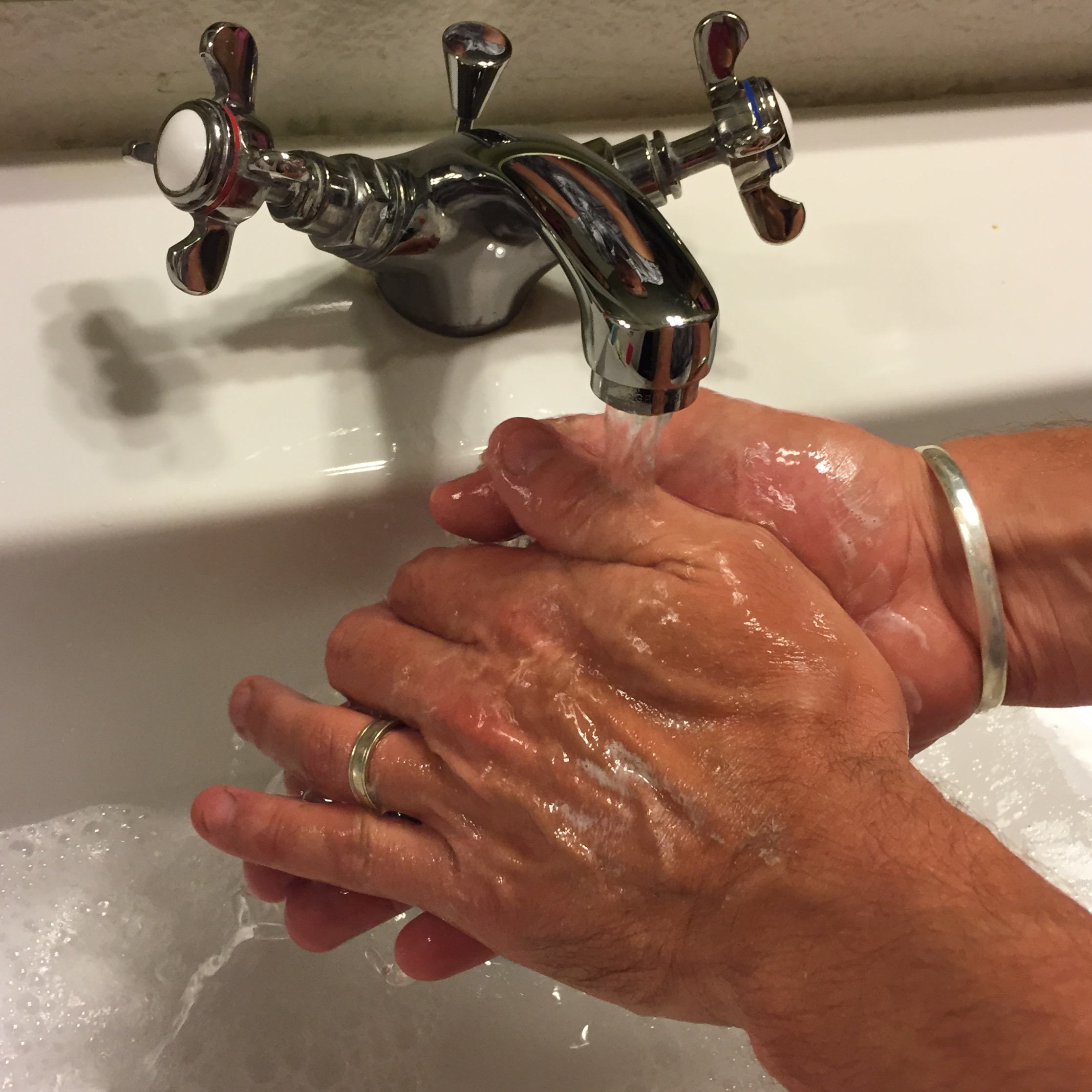
Avoid penalties for “illegal use of hands.” Unclean hands are one of the biggest culprits for spreading bacteria, and finger foods at parties are especially vulnerable. Chefs and guests should wash their hands with soap and warm water for 20 seconds before and after handling food. Also, be sure to clean eating surfaces often, and wash serving platters before refilling them with fresh food. 

Off sides

Think of your party fare as two different teams – uncooked versus ready – to – eat foods. Prevent “encroachment” at all costs and keep each team in its own zone. The juices from raw meat can contain harmful bacteria that contaminate other food. Use one cutting board for raw meat and poultry and another one for cutting veggies or foods that will not be cooked. If you use only one cutting board, wash it with hot soapy water after preparing each food item. 

Equipment Violations and Holding

Call a “time out” and use a food thermometer to be sure meat and poultry are safely cooked. Remember that internal temperature, not meat color, indicates doneness. Steaks should be cooked to 145°F, ground beef should be cooked to 160°F, and all poultry should be cooked to 165°F.

 “Holding” may be one of the most likely offenses your referee encounters if your party lasts late into the night. Never hold foods for more than two hours at room temperature. Refrigerate or freeze leftovers promptly to block offensive bacteria from multiplying. The same rules apply for cold foods. If cold food has been sitting out for more than two hours, do not eat it. When in doubt, throw it out of the game and your party. 

False Start

When it comes to foodborne illness, there is not opportunity for an instant replay. To avoid these infractions, make sure you understand the rules completely. 

Special Teams

One of the best resources available before kickoff is USDA’s virtual representative, “Ask Karen,”available at AskKaren.gov. Food safety coaches are available Monday through Friday from 10 a.m. to 4 p.m. ET on the “Ask Karen Chat” and by phone at the USDA’s Meat and Poultry Hotline, 1-888-MPHotline (1-888-674-6854). Recorded messages are available 24 hours a day.

If you would like a printable copy of this, please visit our website.

To Sample or Not to Sample…

November 22nd, 2011

…  is often the question when it comes to common indoor air quality questions or in response to a communicable disease outbreak (or diagnoses) in the workplace.  The answer is not to sample (almost without exception).  A good case study came up this week when a library and high school were closed after some environmental sampling (conducted after somebody was diagnosed with a communicable disease) found commonplace bacteria in the environment. 

When dealing with indoor environmental concerns or in response to a diagnosis of a communicable disease, the first step isn’t to sample the environment.  There are other first steps that should be taken.  For example, if somebody is diagnosed with an infectious disease in the workplace you can emphasize the importance of good handwashing among all staff and encourage everybody to stay home if they feel ill.   Environmental sampling following the diagnosis of an infectious disease in the workplace will be of little value- and will often turn up common microorganisms of no public health consequence…  and sometimes these decisions lead to poor decisions about what to do about the results. 

Most of us spend a lot of time indoors, whether it is at work, home, or school.  People are often concerned that their symptoms or health conditions are related to where they spend a lot of time.  The best approach to investigating concerns expressed by workers are common sense measures. If the concern is about indoor air quality generally- you can use helpful indoor air quality checklists or other indoor air quality assessment tools.  By looking at simple fixes first, such as changes to the air conditioning or heating system, carpet cleaning, or new cleaning products, many environmental concerns can be identified immediately. This may fix the problem immediately before having to wait for test results.

An H1N1 Retrospective

June 9th, 2010

An article in last month’s New England Journal of Medicine provides a good summary of the public’s perception of the H1N1 response in an article called The Public’s Response to the 2009 H1N1 Influenza Pandemic.  It’s a comprehensive review of data from 20 national public opinion polls conducted between April 2009 and January 2010.   Early in the pandemic (when no vaccine was available)  two thirds of Americans (59 to 67%) said that they routinely washed their hands or clean them with sanitizer more frequently; and a majority (55%) had made preparations to stay at home if they or a family member got sick.

Most people (87%) believed that the vaccine was safe (it was), but 50% of those surveyed said they weren’t  concerned that they would get sick with H1N1 in the next 12 months and  28% of people thought that they weren’t at risk for getting a serious case of H1N1 infection.  A similar percentage thought that they could get medication (antivirals) to treat it (26%), citing that as a reason to not get vaccinated.

By early November, 17% of adults had already tried to get vaccinated, but 70% couldn’t find a shot.  Only 21% of  high-priority adults tried to get the vaccine, 33% found a shot in November and only 7% of high-priority adults were actually vaccinated in November.  Parents were more motivated to vaccinate their kids than themselves and 40% of parents had had one or more of their children vaccinated by mid-January.

January 2010, 59% believed that public health officials did an excellent or good job in their overall response to the pandemic, whereas 39% believed they did a fair or poor job.  The main reason for reporting that public health did a poor job was disappointment that the vaccine wasn’t available earlier.

Clostridium difficile

April 28th, 2010

The Maricopa County Department of Public Health has discovered a pretty significant outbreak of a bacteria called Clostridium difficile this week.  This organism can cause severe diarrheal illness, and is commonly associated with antibiotic use and healthcare facilities.  Most people who come into contact with Clostridium difficile do not develop disease.  Being on long-term antibiotics can clean out the naturally occurring and helpful bacteria in the intestinal tract.  When the person is later exposed to the Clostridium difficile germ, there isn’t much competition- so it has a field day.  It also can produce a toxin which damages the upper layers of tissue- creating additional problems.

It’s spread by what we call in the business the “fecal-oral” route- meaning that it’s spread in the feces to another surface4 (i.e. hands) and then to the next person through the mouth- perpetuating the cycle.  You can view more on our updated webpage.  We’re working with our county public health partners and our licensed facilities to spread the word that this bacteria is circulating in AZ and to make sure everyone knows about the proper control measures.