Posts Tagged ‘Breastfeeding’

New WIC Website

April 1st, 2013

We’re happy to unveil the new Arizona WIC Program website, which has been redesigned with a fresh new look that is more user friendly. Last year the WIC webpage had more than 76,000 unique visitors with nearly 350,000 page views- making it one of our most popular sites.  The redesigned site includes a Find a Clinic feature, a newly released WIC Needs Assessment, and an easy way to report complaints, abuse or fraud. 

The Arizona WIC Program provides nutrition education and breastfeeding support services, supplemental nutritious foods, and referrals to health and social services for low income pregnant, breastfeeding, and postpartum women, infants and children under 5.  WIC currently serves approximately 64% of the potentially eligible population in Arizona and reaches more than 330,000 women, infants, and kids each year. Special thanks to Jennifer Tweedy, Jesse Lewis, Rose Halberg, Karen Sell and lots of folks from our Bureau of Nutrition and ­Physical Activity who worked to redesign the site.

New Electronic Birth Certificate ‘Round the Corner

December 26th, 2012

Our Vital Records shop does a lot more than manage the State’s birth and death certificate system (which we’ve been doing since 1885).  We’re also an integral part of the Nation’s Vital Statistics System, which serves as the backbone of national data sharing in public health. The data collected under the National Vital Statistics System works in partnership with the National Center for Health Statistics to produce critical information on public health topics like teenage births and birth rates, prenatal care and birth weight, risk factors for adverse pregnancy outcomes, infant mortality rates, leading causes of death, and life expectancy.  All these data are retrieved from the nation’s network of Vital Records shops like ours. 

There have been two birth certificate standards that the states are currently following – the 1989 and the 2003 standard. We’ve been one of the states that had been following the 1989 standard- but not anymore.  Beginning the first week in January, we’ll be turning the key on the new 2003 Standard.  The new Electronic Birth Registration System that we’ll be using will collect a lot more public health surveillance data.  It’s also an electronic system- which will make things much faster and efficient.  The new system will have impacts all throughout our Strategic Plan.  Here are a couple examples: 

  • A1 – Reduce Obesity – The former 1989 standard had zero data on the mother’s height and weight- meaning we couldn’t calculate the mom’s BMI.  Starting next week, we’ll be able to collect this data- which will give us better surveillance- and in turn, help us identify more targeted public health interventions- helping us to make progress in reducing critical risk factors for poor maternal and child health outcomes.
  • A2 – Reduce Tobacco Use and Substance Abuse –  The old system only captured generic measures about maternal smoking during pregnancy.  The new system will have specific cigarette smoking data before and during pregnancy- providing rich data for prevention activities- helping us to improve birth outcomes. 

Other important data elements include information on breastfeeding, whether mother received food during pregnancy from the WIC program (helping us to better evaluate our WIC program), critical medical data elements like congenital anomalies, and fertility treatments (Assisted Reproductive Technology)…  all of which provide newer opportunities for prevention.  The public health applications that the new system will provide are too long to list in a short blog like this… but they’re substantial- believe me.  We’re even going to be able to incorporate the data we’ll be collecting in the new system into our new Midwife rules. 

From a customer service perspective, the new system has improved security for fraud prevention and will provide speedier transactions for printing birth certificates at the county level.  Thanks to all the IT and vital records team that put in the endless hours to make this new application possible.

New “Empower” Standards Here

November 27th, 2012

It is hard to believe we’re in the 3rd year of our successful Empower Program. As a refresher for those of you that aren’t familiar with Empower, it’s a program that focuses on increasing healthy eating and active living, along with helping to provide smoke-free environments, in licensed child care facilities… reaching over 200,000 children throughout Arizona.  Empower is a voluntary program in which childcare licensees receive a discount on their 3-year licensing fee to become Empower centers and homes when they pledge to implement the 10 standards to Empower children to live healthier lives. The program has received national recognition from the White House and many other state and national partners. 

We’re excited to be rolling out updated 10 Empower standards beginning on 1/1/13.  We updated the standards to better impact the most significant health issues impacting Arizona’s children and families. New standards include those that will improve oral health, breastfeeding-friendly practices, training of childcare providers, and sun safety practices.  We’re committed to ensuring the successful implementation of the new standards, and we’ll be working with childcare providers throughout 2013 to learn how to apply the new standards. Licensed providers can look forward to receiving a new Empower Pack with new tools and resources to support the implementation of the new standards beginning mid-January, along with training and ongoing technical assistance.  

Thank you to all of the Licensing and Prevention Services staff (especially Adrienne Udarbe who helped lead the team) that worked so hard to update the standards…  thank you to the Stakeholders that have provided input along the way…  and thanks to our amazing “Superheroes for Health” out there in the childcares that support Arizona’s children every day!


Informed Consent Website Up & Running

November 26th, 2012

Last legislative session the Governor signed HB 2036- which amends state law regarding abortions. Some parts of the law are pending legal challenges, but the parts requiring us to develop a website were unaffected- and our new informed consent site just went up.  The website lists agencies and services that are available to assist women throughout their pregnancy, including information about adoption.  The information is listed to make it easy for women to find local resources.  Many of our public health programs are listed, like WIC, breastfeeding support, and home visiting programs.  The website also includes information describing fetal development and info describing various abortion methods and medical risks associated with the procedures. 

It’s important that providers are aware of the website because the law requires AZ health care providers to give a woman considering an abortion the opportunity to review the information. A “Potential Resources Submission Form” is posted in case agencies are interested in listing additional resources on the site.

Breastfeeding & Cannabis

September 4th, 2012

Some AZ health care providers and parents have asked questions about whether medical marijuana is safe for use while breastfeeding.  The short answer is no, because the active chemical in marijuana is passed to the baby through breast milk. For this reason, most experts, including the American Academy of Pediatrics and the CDC advise moms not to use marijuana (medical or not) while breastfeeding.   

Tetrahydrocannabinol (the psychoactive ingredient in Cannabis) stays in the body for four to six weeks.  It’s found in the urine of breastfeeding babies whose mothers use marijuana. It’s also fat soluble, which means it builds up with chronic use and can be stored in fat tissue for months. We also know that babies are much more vulnerable than adults to illness, infection, chemicals, and so on. That alone is a good reason to avoid marijuana and anything else potentially harmful that can enter your baby’s body through your milk.  

The Academy of Breastfeeding Medicine has a protocol that you can use to make breastfeeding decisions.  For more information about the effects of marijuana and other medications, go to the National Libraries of Medicine’s LactMed database. For answers to this and other breastfeeding questions, call the ADHS 24-hour breastfeeding hotline at 1-800-833-4642. 

Of course- all sorts of prescription and over-the-counter medicines are also transferred to infants in breast milk- but pediatricians are more familiar with which medicines are safe to take while breastfeeding because they’re tested by the FDA- and most medicine labels discuss breastfeeding.

Procurement Keeps our Trains Running on Time

March 2nd, 2012

OK…  everybody knows that we have all sorts of recognition weeks and months for everything from breastfeeding to mental health.  Most folks don’t know that March is Purchasing Month.  But let’s face it- none of us would be able to accomplish anything in this business without our Procurement team! 

Our Procurement shop touches every aspect of our mission… from managing critical agency solicitations and contracts to helping each of us get needed stuff and services, we depend on the Procurement Office to help us do our work.  That’s why it is easy to understand the Governor issuing a Proclamation declaring March as Purchasing Month for the State of Arizona.  The Proclamation recognizes how the purchasing and supply management profession is a significant part of quality, efficiency, profitability, and productivity for private business and government.  Government and business purchasing plays an important internal function and also plays a vital external role helping with the health of our local and national economies.  

Our procurement team is a key force in achieving our “vision” of health and wellness for all Arizonans.  Thanks ADHS Procurement team for your hard work as you help our programs to purchasing goods and services that benefit the citizens of the State while being good stewards of taxpayers’ hard-earned dollars!

Raising Arizona Babies

September 19th, 2011

Do you know someone who’s pregnant and needs help finding low-cost prenatal care? Someone looking for post-partum depression resources; help with breastfeeding; low-cost dental care; or the nearest WIC clinic?  One great resource that can help is our Pregnancy & Breastfeeding Hotline.  The Hotline (1-800-833-4642) is a statewide service funded by our Title V Maternal and Child Health Block Grant and it helps thousands of callers every year with a variety of maternal and child health issues- like the importance of folic acid- and providing lots of referrals for a variety of community resources. 

The Pregnancy & Breastfeeding Hotline also supports AHCCCS’s Baby Arizona program.  Baby Arizona is a faster, simpler way of getting prenatal care before a pregnant woman’s AHCCCS application process is complete. Prenatal care providers across the state agree to see pregnant women while their eligibility is being determined. Once a women goes to the Baby Arizona provider she chooses, the provider helps her apply and pre-enroll her in a health plan. That way, women begin prenatal care at no cost while their eligibility is still being processed.  It’s a great way to facilitate early entry into prenatal care- increasing the likelihood of a healthy birth outcome.  By the way, when a pregnant woman applies for AHCCCS she’s considered a family of 2 (or more if there are multiples)- meaning that she’s not in the “childless adult” category- and wouldn’t be subject to the enrollment freeze for childless adults.

It’s World Breastfeeding Week

August 5th, 2011

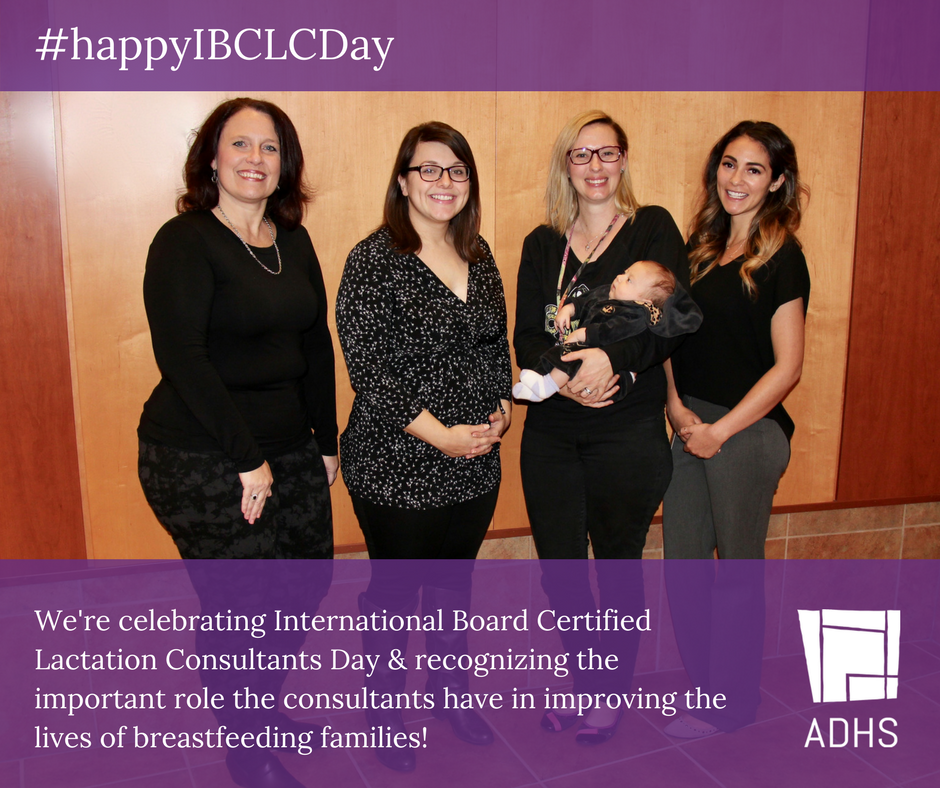
Breastfeeding is one of the foundations of public health – it protects the health of the mother and the baby.  A special week like this helps people remember the benefits and encourages folks to support mothers who want to breastfeed. CDC Vital Signs Report this week talks about reducing the change of having an overweight child goes down with each month of breastfeeding.  We know that getting a good start is critical to long-term breastfeeding success.  Our Arizona Baby Steps to Success  initiative promotes maternity care practices that are proven to increase the number of mothers who exclusively breastfeed and the length of time for breastfeeding.  21 Arizona hospitals have sent their entire maternity nursing staff through this training.  Anne Whitmire and Christia Bridges-Jones, ADHS’ own International Board Certified Lactation Consultants (IBCLC’s), have trained over 2500 nurses across the state in our Baby Steps program.

 Also this week, HHS announced that it will adopt the  Institute of Medicine recommendations to require new insurers provide 7 preventative health services to women without requiring a co-payment – including breastfeeding support, supplies, and counseling.  ADHS has been a long time leader in modeling good work place support for breastfeeding moms through our Infant at Work program, as well as providing help to Arizona moms on a 24-hour basis through our Pregnancy & Breastfeeding Hotline (1-800-833-4642).

Transforming Communities

June 8th, 2011

The CDC released their grant guidance for the upcoming Community Transformation Grants a couple of weeks ago.  The objective of the grant is to support the implementation (and evaluation) of evidence-based community preventive health activities to reduce chronic disease rates, prevent the development of secondary conditions, address health disparities, and develop a stronger evidence base for effective prevention programming.  Counties with a population of over 500,000 (Maricopa, Pima) can apply for grants on their own while smaller counties need to apply as a coalition along with their state health department.  This grant application has a funding range of between $500K – $10M per year and 50% of the funding must be subcontracted to partners.

There are two types of applications: “Capacity Building” (broad policy, environmental, programmatic and infrastructure changes); and “Implementing Interventions to Create Healthier Communities” (mandatory areas are Tobacco Free Living, Active Living and Health Eating, and Increased Use of High Impact Quality Clinical Preventive Services).  Maricopa County signed a letter of intent this week to apply for “Capacity Building”, Pima will go for “Implementing Interventions to Create Healthier Communities” and we will apply along with the other 13 counties for the Implementation grant.

We’re still in the planning stages, but our collaborative proposal with the 13 counties would focus on: 1) Increasing the availability of healthful foods in institutional settings, workplaces etc.; 2) Improving statewide nutrition and physical activity; 3) Increasing physical activity opportunities in schools; 4) Implementing policies to support breastfeeding in workplaces etc.; 5) Increasing baby friendly hospitals; 6) Incentivizing the purchase of fruits and vegetables; and 7) Increasing bicycling and walking for pleasure and transportation.

There will be objectives under each of these goals, but you get the idea.  The general approach is to use incentives and partnerships to drive change, not regulations.  Final drafts for the grant application are due July 8 and the submission deadline is July 15.

2011 Department Priorities Spotlight- Public Health Prevention

December 28th, 2010

The name of the game for Public Health Prevention in 2011 is integration and leverage.  Our Public Health Prevention Team will be focusing on the social determinants of health and working to implement policies, systems and environmental changes that make the healthy choices easy.  Here are some examples of our public health prevention priorities for the coming year:

Worksite Wellness

Perhaps one of the biggest leverage points for improving community health lies with Arizona employers.  Employers are increasingly recognizing that a healthier workforce is a more productive and efficient workforce and by applying simple public health prevention tools that can improve their productivity.  We’ll be using our Worksite Wellness Tool to help Arizona businesses to adopt wellness and health promotion activities for their employees.  The kinds of simple things we’ll be working with them on are smoking cessation, weight management, nutrition, heart disease prevention, diabetes prevention, etc.  Businesses that are self-insured (for health insurance) have double the potential gains because they’ll eventually benefit from worksite wellness with lowered premiums.

State Government Wellness

We’ll also build on our partnership with the ADOA to offer our services in augmenting the State wellness initiative and working with St. Luke’s Health Initiatives and others to make evidence based public health resources available to employers.  Included in this effort will be:

  1. Diabetes Self-Management Training -  Almost 10% of state employees have diabetes, and we’ll be partnering with ADOA to increase use of self-management (the cornerstone of treatment and care) to improve care;
  2. Launching a state-wide ”Hands Only” CPR initiative on three fronts:  Public (bystander) Awareness, Systems-Level Protocol Change (Dispatch – 911), and Worksite (employee) training;
  3. Design and launch a public awareness campaign focusing on early detection and effective disease management for Arizonans with colon, breast and cervical cancers;
  4. Expand our reach and utilization of tobacco cessation efforts via ASHline (phone and web-based services) among the behavioral health population, through partnering with some of our Regional Behavioral Health Authorities to create systems-based referrals in each behavioral health clinical site.

Nutrition & Food Stamps

We’ll also be working with other interested states and public health associations to change what foods qualify for purchase under the federal Supplemental Nutrition Assistance Program or SNAP (formerly called food stamps).   This is an idea that is getting national attention, including a recent article in the American Journal of Public Health that outlined a number of ways to improve diets of SNAP participants along with everyone else. This issue will be considered when Congress votes on the new Farm Bill in 2013. The Healthy Hunger Free Act of 2010 signed by the President this week will strengthen nutrition education provided to SNAP participants by focusing on obesity prevention and allowing public health approaches to be more fully incorporated into SNAP nutrition education activities. Visit www.eatwellbewell.org to see the nutrition education currently available to families receiving SNAP benefits in Arizona (don’t miss the videos and games).

Breastfeeding

We’ll be continuing to press our efforts to make institutional changes in maternity care practices and increase breastfeeding initiation and duration.  Arizona’s “5 Baby Steps to Breastfeeding Success” are the hospital practices that make the biggest difference. Our Breastfeeding Team is working with Arizona Perinatal Trust to train 5,100 nurses in 31 APT-certified hospitals statewide on Arizona’s 5 Baby Steps to Breastfeeding Success. All of these hospitals are committed to changing their policies to support breastfeeding. The technical assistance from ADHS is the key in mentoring the hospitals through model policy training and moving the policy from paper to action.

Health in Schools

We’ll also be using a more coordinated approach as we work with Arizona schools on various health initiatives.  Our new school coordinating committee will continue to share resources, streamline access and improve outreach for all of our programs.  The bottom line is that healthy children learn better and offering daily physical education or daily school breakfast can improve academic performance. We’ll be helping schools to complete the CDCs School Health Index assessment tool that they can use to develop a plan to improve their health-related policies and programs.  Strengthening school wellness policies, supporting farm-to-school programs, and increasing physical activity throughout the school day are all high priorities for the collaborative work.  Check out the Coordinated School Health website at http://www.healthologyaz.com/ to learn more about school health in action.

Of course there will be alot more than just these things going on in public health prevention in 2011, but this gives you a taste of what’s up.