Posts Tagged ‘baby’

New Research Reconfirms Vaccine Safety

April 8th, 2013

Fifteen years ago The Lancet published a case study that erroneously suggested that there could be a link between the MMR vaccine and autism.  That letter has long since been discredited, and back in 2010 The Lancet retracted the article.  Anti-vaccine advocates have been pointing to that long-since discredited 1998 case study to argue that there is some kind of link between vaccines and autism… even though numerous articles published in the last several years have all concluded that there is no such link.  

The Journal of Pediatrics just released another new study that again demonstrates that there’s no association between vaccines and autism development in children.  This new study looked at the number of antigens from vaccines that children receive (antigens are the things in vaccines that help our immune systems make the antibodies needed to fight disease).  This look at antigens was important because different shots have different amounts of antigens in them, so looking at the number of antigens kids received is more thorough than just looking at the total number of shots they got. 

This new study concluded that…  “These results indicate that parental concerns that their children are receiving too many vaccines in the first 2 years of life or too many vaccines at a single doctor visit are not supported in terms of an increased risk of autism.” 


Whooping Cough Booster & Pregnancy

April 4th, 2013

Whooping cough (pertussis) is a growing problem in the US and Arizona.  There were 41,880 cases and 14 infant deaths from pertussis in the US last year…  which is the largest number of cases since the vaccine became available in the 50s.  In Arizona there were 988 cases in 2012 and there’s a pretty substantial outbreak going on right now in Colorado City.  Anyone can get infected with whooping cough, but infants are most likely to die from it and family member – especially the infant’s mother – are the most likely to give it to infants. 

New data shows that a mother’s antibodies against pertussis are short-lived.  Therefore, giving pregnant women a booster shot in one pregnancy might not provide protection for the next.  In fact, new recommendations from the CDC’s Advisory Committee on Immunization Practices say that every pregnant woman should get a pertussis booster during every pregnancy.  Places to find vaccines can be found at The Arizona Partnership for Immunization (TAPI) website.

Show Your Love

February 14th, 2013

Valentine’s Day isn’t just a day of romance, flowers and candy.  The CDC Preconception Health and Health Care Initiative launched a campaign asking all women of childbearing age to Show Your Love by taking good care of themselves.  It’s a national initiative to educate women and couples on the importance of preconception health. Preconception health refers to a woman’s health during the years she can have a child.  A mother’s health before she gets pregnant can affect the health of her baby.  

Women who’d like to become pregnant are urged to “Show Your Love” to your future baby by adopting healthy behaviors now.   Women who are not planning a pregnancy now are encouraged to “Show Your Love” to themselves so they’ll be healthy and have a fulfilling future.  About half of all pregnancies in our country are unplanned, which increases the chances of having a poor birth outcome such as preterm birth, low birth weight, high birth weight, or stillbirth.  Many women become pregnant when they’re not in the best health or while engaging in behaviors that could harm a pregnant woman or her baby.  It makes sense to be healthy at all stages of life. 

The Show Your Love website includes posters, educational videos, TV PSAs and health checklists for use by health care providers and community partners who want to educate the women and couples they work with about the importance of preconception health.  Preconception health is impacted by a number of health issues addressed by various ADHS programs – chronic disease, oral health, nutrition, physical activity, smoking, STD’s, immunizations and mental health.  The Bureau of Women’s and Children’s Health website includes additional preconception health tools. Also, please feel free to email the Bureau at: preconceptionhealth@azdhs.gov .

The Push to Stop Preterm Births

July 2nd, 2012

On June 18, we held a news conference with the Arizona March of Dimes and the Arizona Perinatal Trust to officially launch a new campaign to reduce preventable preterm births.  We got great coverage this week, including a FOX News interview  that aired in several other cities across the country.  We’ve joined a national challenge issued by the President of the Association of State and Territorial Health Officials and pledged to set a goal of reducing premature births by 8% by 2014.  This would mean 800 more babies would make it to full term.

Why the focus on prematurity? Many babies die because they’re born too soon.  In 2010, almost 200 babies died due to prematurity, the leading cause of deaths for newborns.  Even babies born a few weeks early have high odds of learning disabilities, vision & hearing loss and cerebral palsy. The Healthy Babies are Worth the Wait  campaign stresses that if the pregnancy is healthy, it’s best to let labor begin on its own rather than scheduling an early delivery.

Until recently, it’s been an accepted practice for parents-to-be and doctors to schedule elective (non-medically necessary) inductions or c-sections just for the convenience of the parents’ schedule, or the doctor’s schedule, or because a date holds a special meaning for the family.  Because of the hard work of the Arizona Perinatal Trust (APT) promoting the March of Dimes 39-week Toolkit this practice may soon be a thing of the past.  90% of all APT-certified hospitals have already agreed to put a stop to allowing elective inductions and c-sections prior to 39 weeks.  This will go a long way to reducing preterm births, but there’s more that we can do.

In the past decade, mounting scientific evidence has concluded that if pregnancy outcomes are going to improve, it’s real important that women and men are as healthy as possible before conception.  We call this preconception health, and the concept is simple.   Healthy people are more likely to have healthy babies.  Prenatal care is important, but it’s not magic.   We can’t expect even the best prenatal care to undo the damage that may have been sustained through years of unhealthy behaviors and stressful environments.  It is not a substitute for being healthy, especially when about half of all pregnancies are unplanned.

Our interventions include implementing evidence-based practices to get moms to stop smoking, practice good oral health, improve physical activity and nutrition and behavioral health- all are part of our Preconception Health Strategic Plan and our Every Woman Arizona educational materials, grants to implement preconception health strategies, and home visitation programs that address many of the things that lead to prematurity.  Our WIC program and clinics also work with young moms in their reproductive years to improve their health.  Maintaining a healthy weight before pregnancy is really critical.  Women who are obese are at higher risk for infant death, premature births and several birth defects (brain, spinal and some heart defects) and babies born large for gestation. Obese mothers are at greater risk of experiencing gestational diabetes, high blood pressure etc.- associated with preterm births.

Most of us know what we need to do to be healthy, but sometimes we lack motivation to make those healthy choices for ourselves.  But the choices we make today are not just for ourselves – they are choices for our kids & the next generation.  Check out our new Healthy Babies webpage for more information about the campaign and view the new March of Dimes public service announcement.


It’s World Breastfeeding Week

August 5th, 2011

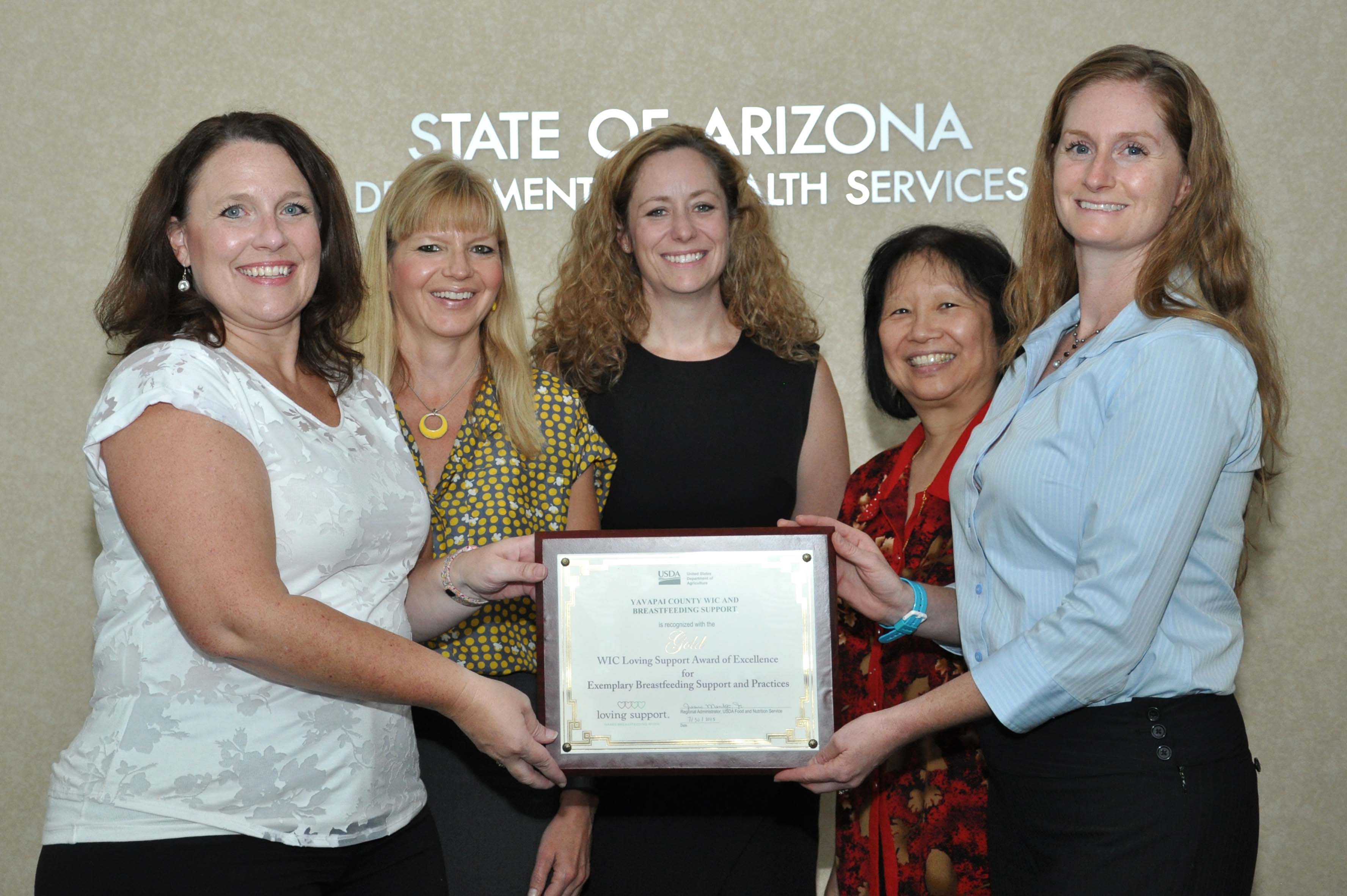
Breastfeeding is one of the foundations of public health – it protects the health of the mother and the baby.  A special week like this helps people remember the benefits and encourages folks to support mothers who want to breastfeed. CDC Vital Signs Report this week talks about reducing the change of having an overweight child goes down with each month of breastfeeding.  We know that getting a good start is critical to long-term breastfeeding success.  Our Arizona Baby Steps to Success  initiative promotes maternity care practices that are proven to increase the number of mothers who exclusively breastfeed and the length of time for breastfeeding.  21 Arizona hospitals have sent their entire maternity nursing staff through this training.  Anne Whitmire and Christia Bridges-Jones, ADHS’ own International Board Certified Lactation Consultants (IBCLC’s), have trained over 2500 nurses across the state in our Baby Steps program.

 Also this week, HHS announced that it will adopt the  Institute of Medicine recommendations to require new insurers provide 7 preventative health services to women without requiring a co-payment – including breastfeeding support, supplies, and counseling.  ADHS has been a long time leader in modeling good work place support for breastfeeding moms through our Infant at Work program, as well as providing help to Arizona moms on a 24-hour basis through our Pregnancy & Breastfeeding Hotline (1-800-833-4642).

Giving Babies a Boost

June 28th, 2010

We kicked off an initiative this month to increase the percentage of mom’s that choose to breastfeed their newborn.  The real key to success turns out to be the first couple of days after the baby is born (actually the first few hours are the most important). Our new program is called Baby Steps to Breastfeeding.  It’s a voluntary 5-point plan that we’d like hospitals to implement (for newborns and moms) before they leave the hospital.  When they implement the program they become an ADHS “Baby Friendly Hospital”.

The program is sponsored by WIC, and it’s based on the WHO’s Steps to Successful Breastfeeding.   We’ll be providing guidance, training, ongoing technical support, materials and model policies for hospitals that want to participate.  The initiative provides benefits to the participating hospitals, including marketing opportunities through our website, increased patient satisfaction and compliance with governing organizations requirements and standards. But, the biggest beneficiary will be Arizona mothers and infants, as private and public sectors work together to promote, protect and support this valuable foundation of good health.