
Posts Tagged ‘Arizona Public Health Laboratory’

Lab Team Snags National Innovation Award

October 31st, 2012

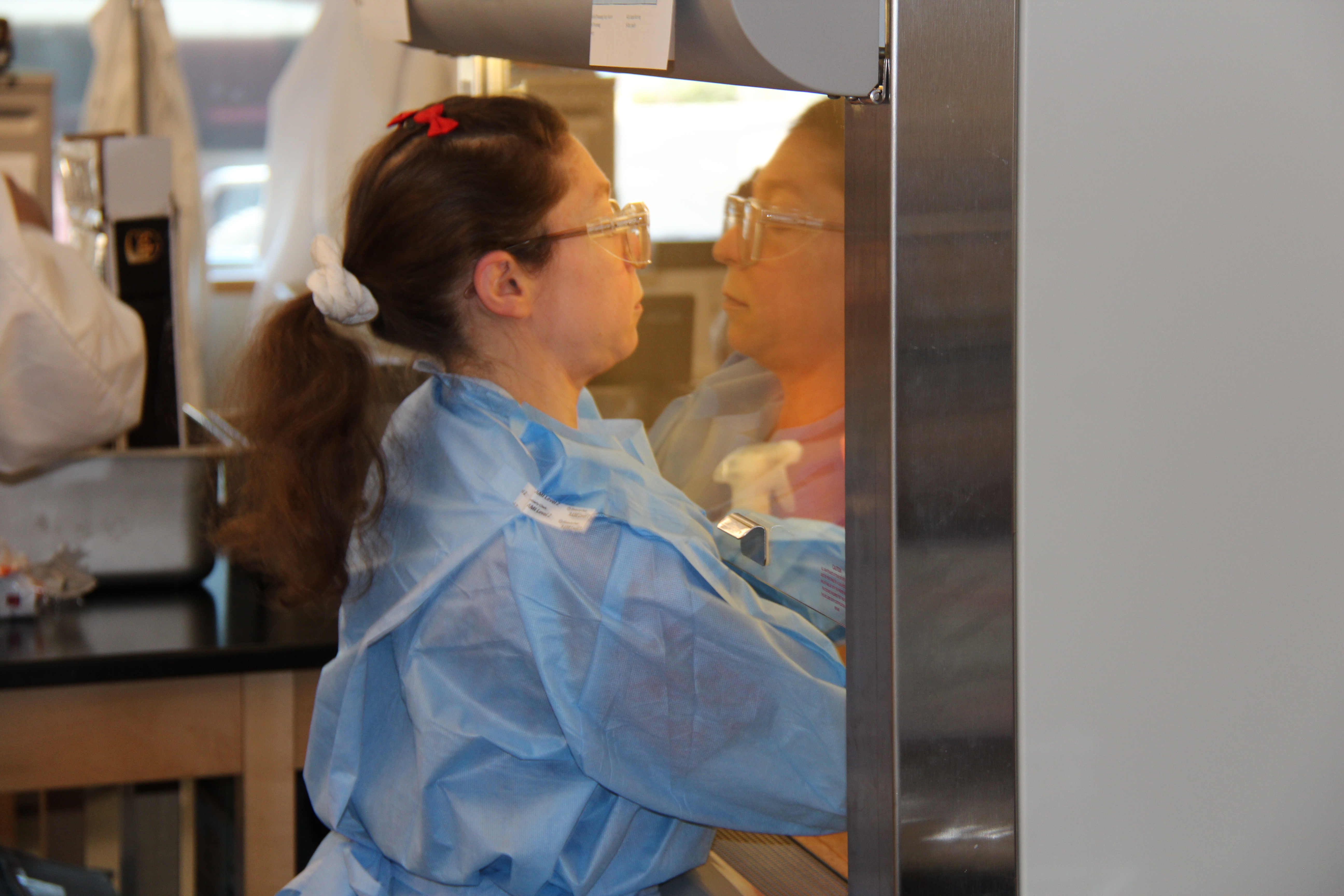
Arizona State Public Health LaboratoryYour AZ Public Health Laboratory was recognized this month at the CDC Laboratory Response Network National meeting for Innovative Collaborations with AZ’s first responders.  We were lauded for our unique approaches to training hazmat technicians on the use of handheld analytical instruments for testing chemical and biological agents in the field and demonstrating testing capabilities available at the public health lab. This is critical not just for ensuring field tests detect true hazards and are used under the right circumstances…  but also to prevent unnecessary responses from “false positives” that can happen using field tests.

A robust partnership between our Lab and AZ’s FirstResponder Community is a critical component to public health preparedness… and our Lab leads the nation in this important area of collaboration. Congrats Laboratorians!

Sonoran Public Health Department & ADHS Snag the Paul Fannin Award

June 11th, 2012

 The Secretario de Salud Publica & the ADHS jointly received the Arizona Mexico Commission’s Paul Fannin award for our public health collaborations last Friday night.  This is a top award for the Commission- with the award going to “… an organization that has demonstrated acts of goodwill and support toward the development of the Arizona-Sonora relationship.”  It’s named after the AMC’s founder, Governor Paul Fannin.  This is the first Fannin award that has gone to binational recipients.  ASU and UA got a joint award as did ADOT and the Yuma Port Authority a few years ago…  but this is the first one with binational recipients. 


We were jointly recognized for our awesome collaboration on things like valley fever surveillance and interventions, real-time infections bi-national disease reporting, TB case and treatment coordination, collaboration during the H1N1 pandemic, laboratory science teamwork, teen pregnancy and substance abuse prevention, collaboration on assisted living standards, and much more.  Thanks to all of you who have made our relationship with Salud Sonora a success!


Another Tool for our Laboratory Toolbox

August 9th, 2011

New testing equipment at the state lab is going to help us with flu tracking this fall and dramatically speed up testing for Tuberculosis.  The instrument called the Gene Xpert looks for DNA mutations – we can tell if a TB case is resistant to certain antibiotics.  For instance, on specific mutation is a marker for rifampin resistance.  It used to take weeks of culture growth to find that marker, now we can do it in a matter of hours.  Working with County health partners, we hope to enhance surveillance to help get rid of TB .

The Gene Xpert, purchased with federal grant money, will also help us detect and differentiate Influenza A & B using nucleic acid (genetic material) amplification techniques so we know which strains of flu are circulating in the state as well as help us detect cases in institutional settings.  Other uses for the Gene Xpert  include surveillance for various hospital-acquired infections including Clostridium difficile, methicillin-resistant Staph aureus (MRSA), RSV and Metapneumoviruses.

Maricopa County Measles Case

February 15th, 2011

Maricopa County Department of Public Health (and our Lab) confirmed a case of measles in an Arizona resident this week.  Measles is one of the most communicable diseases there is (next to chicken pox).  It’s a viral disease of the upper respiratory system that’s spread in the air via droplets.  Measles starts with a fever and cough, eye irritation and a unique rash.  The MMR vaccine introduced in the 1960s pretty much wiped out measles in the US.  Around WW II the US had about 900,000 cases annually, but these days its usually less than 100 or so cases per year in the US.

When cases do show up, it’s usually among people that live overseas (in endemic areas) and visit the US or among US residents that travel overseas to areas with endemic measles (about 20 million people get measles globally every year).

The primary public health interventions are to identify contacts of cases and make sure that healthcare providers know exactly what to do when a patient presents with what could be measles, like implementing standard precautions and placing suspect cases in airborne precautions as soon as possible. If a patient calls a doctor and says that they’re sick and may have been exposed to measles we encourage the doctor to make sure that patients in the waiting room won’t be exposed and that all your staff are adequately vaccinated.  Of course, the best intervention of all is to keep our vaccination rates up.