Posts Tagged ‘physical activity’

AZ Healthy Community Design Tools

April 15th, 2013

Improving the health of Arizonans is critical to improving the quality of life as well as reducing health care costs. The most effective strategies are ones that incorporate the principles of population health… which includes health outcomes as well as the determinants that influence those outcomes including the public policy that influences the social and environmental determinants. A city’s General Plan can be a large public health lever to improve those outcomes. 

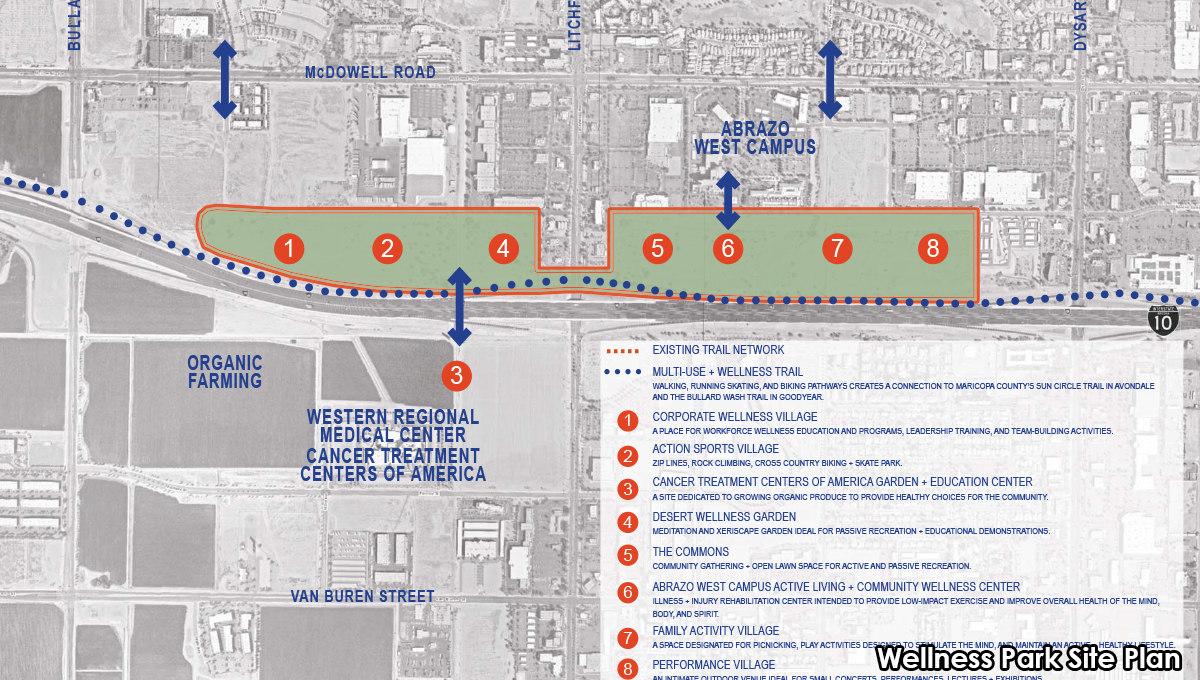
Designing healthier communities requires a new way of thinking. For example, the way a city zones can affect how easy it is to get physical activity.  The tough part is connecting all of the right people to sit in on the conversation together. The zoning people might not talk to the health people, who may not talk to the transportation folks. But where can community residents start? One place to start is with a recently developed Toolkit put together by ADHS and other members of the Healthy Community Design Collaborative

This toolkit is really designed to help cities, towns and counties strategically think about how to enhance health through changing the built environment, like through adding sidewalks or bike lanes. It’s basically a guide for local residents who want to participate in their community planning process. The Toolkit provides a general overview of the process, explains the purpose of city General Plans, and gives guidance regarding who to talk to in local government- and presents ways to get involved. There’s also a checklist for what policy topics should be addressed in a plan and even some examples of policies for residents to consider for incorporation into their city’s General Plan. It also provides coaching for community residents to build relationships that facilitate implementing policy language. 

Our team recently created the azhealthcommunities.org website, which is another tool that provides information on the influence of community design, accessibility and transportation on health. You can even find some recent examples of how communities in Arizona are working to create healthier environments and learn to create a Health Impact Assessment, which can be used to help city projects improve population health. These are just some examples of how we can work to promote healthy and safe community environments – one of our priority areas of our Strategic Map.

Data Shows Progress… but Obesity is Still Rising

March 19th, 2013

Here’s some good news about the battle against the obesity epidemic: national data shows the average intake of calories has decreased for boys and girls over the last 12 years.  While the news is encouraging, our work to promote nutrition and physical activity to reduce obesity remains important. Reducing obesity is a Winnable Battle both nationally and in Arizona

There are lots of resources to help you and your family eat healthier meals and become more active. Check out the Arizona Nutrition Network’s Champions for Change for simple ways to eat better. Find more ideas for healthy eating and active living at ChooseMyPlate.gov, where you can sign up for healthy recipes that are emailed every week.

Show Your Love

February 14th, 2013

Valentine’s Day isn’t just a day of romance, flowers and candy.  The CDC Preconception Health and Health Care Initiative launched a campaign asking all women of childbearing age to Show Your Love by taking good care of themselves.  It’s a national initiative to educate women and couples on the importance of preconception health. Preconception health refers to a woman’s health during the years she can have a child.  A mother’s health before she gets pregnant can affect the health of her baby.  

Women who’d like to become pregnant are urged to “Show Your Love” to your future baby by adopting healthy behaviors now.   Women who are not planning a pregnancy now are encouraged to “Show Your Love” to themselves so they’ll be healthy and have a fulfilling future.  About half of all pregnancies in our country are unplanned, which increases the chances of having a poor birth outcome such as preterm birth, low birth weight, high birth weight, or stillbirth.  Many women become pregnant when they’re not in the best health or while engaging in behaviors that could harm a pregnant woman or her baby.  It makes sense to be healthy at all stages of life. 

The Show Your Love website includes posters, educational videos, TV PSAs and health checklists for use by health care providers and community partners who want to educate the women and couples they work with about the importance of preconception health.  Preconception health is impacted by a number of health issues addressed by various ADHS programs – chronic disease, oral health, nutrition, physical activity, smoking, STD’s, immunizations and mental health.  The Bureau of Women’s and Children’s Health website includes additional preconception health tools. Also, please feel free to email the Bureau at: preconceptionhealth@azdhs.gov .

Workin’ Out

February 11th, 2013

Student participation in PE and sports has lots of benefits like improved social skills, confidence, general health, well-being and healthier weight.  According to the CDC rates for obesity among students with disabilities are 38% higher than for students without disabilities.  Students who have intellectual disabilities, learning disabilities and mobility limitations have the highest obesity rates. Ensuring that students with disabilities are afforded their right to participate in physical education and sports can be an effective strategy in making progress toward achieving our winnable battles.  

Last week, in a letter to school districts, the US Department of Education provided sample scenarios and guidance for increasing participation of students with disabilities in PE and extracurricular activities, including sports. The guidance includes examples of reasonable modifications which may help schools in providing physical activities for all students.  Under section 504, of the Rehabilitation Act of 1973, students with disabilities are ensured access to educational and extracurricular activities available to other students; however sports opportunities have been limited.  For more information you may contact our Office for Children with Special Health Care Needs.

Mealtime

February 7th, 2013

Does when you eat make a difference in how much you weigh? A new study in the International Journal of Obesity indicates eating late may make it less likely you will lose weight as quickly. The five-month study was done in Spain and included 420 people in a weight loss program using the Mediterranean Diet. People in the study were grouped into early-eaters and late-eaters (lunch before/after 3pm). The late-lunch eaters lost less weight even though their calorie intake and other factors (like amount of sleep) were similar in the two groups. 

Does this mean you should eat your big meal earlier in the day? Maybe and maybe not.  Remember, the people in the study were in a supervised weight loss program and eating a diet rich in good-for-you fats (like olive oil) and with lots of fruits and vegetables. For you, a good place to start is taking a look at how much and when you eat along with how much physical activity you get each day. Try out the Choose MyPlateSupertracker. It’s a great tool to use to track your progress on eating healthy and moving more. You can switch up the size and timing of when you eat and see if being an “early-eater” makes a difference for you.

Maintain- Don’t Gain!

November 28th, 2012

Join me and challenge yourself this holiday season. Give yourselves the most important holiday gift, the gift of health. Visit North Carolina’s Eat Smart, Move More website to get started today! Not only will you be provided with easy and fun ways to stay on top of the seasons’ calories, but you can also join the Eat Smart, Move More Holiday Challenge for free. This is a Self-Challenge to help you be more mindful of your nutrition and physical activity during the time of the year that is always the biggest challenge.  This year,  maintain, don’t gain. 

Remember: You don’t have to do it alone. Stay motivated and support one another. How about being sure to offer some healthy choices during office holiday celebrations?  Instead of bringing in cookies and candy, you can bring a fruit dessert or healthy veggies with low-fat dip.  Please visit Healthy Recipes for Eating Smart for great recipes to help you  along the way.  How you participate is up to you — follow along with other participants just like you on the Holiday Challenge BlogSign up today!


Guest Blog by Sheila Sjolander

October 26th, 2012

It’s that time of year again.  It is October, the pink ribbon shows up and you can find opportunities to buy just about anything created in pink; even small appliances.  You know pink has truly taken hold when you see men at the gym wearing pink workout gear and football players wearing pink shoes.  There can be so much promotion of the pink items that there is a danger of losing sight of what that pink ribbon actually represents. 

October as Breast Cancer Awareness Month is a month dedicated to remembrance and awareness.  As you go about your daily lives this month please take a few moments to remember . . .

Please remember loved ones we lost to breast cancer and the valiant families and loved ones who supported them.  Please spend some extra time with a survivor.  I am grateful that my grandma, my aunt, and my dear friend from high school, all survived their battles with breast cancer.

Remember that over 3,900 mothers, sisters, wives, girlfriends and daughters in Arizona were diagnosed with breast cancer in 2009.   And know that men also get breast cancer; 64 men were diagnosed in 2009. 

Remember that while the race to a cure continues, we still lose too many Arizonans to breast cancer each year.  During 2009 Arizona lost 701 women and 8 men to breast cancer.

Be aware that getting screened regularly is key; early detection of cancer saves lives.  Lack of health insurance does not have to get in the way of getting screened.  The Well Woman HealthCheck Program provides breast cancer screening and diagnostics to uninsured women in Arizona. 

Be aware that you can lower your risk of getting breast cancer through eating vegetables and fruits, maintaining a healthy weight, and being physically active.  Research has shown increasing evidence for physical activity as a cancer prevention strategy, along with avoiding postmenopausal weight gain.[1]

Be aware of resources that you can use and share with your family and friends. 

Be aware that as of August 2, 2012, uninsured women in Arizona who have been diagnosed with breast or cervical cancer may be eligible for help through the Breast and Cervical Cancer Treatment Program.

In addition to taking care of yourself and your loved ones, you can take an active role in multiple events throughout Arizona that focus on breast cancer.  Many ADHS staff will participate in the upcoming Making Strides Against Breast Cancer at Tempe Beach Park on October 27.  If taking a walk with thousands of other dedicated people is just not your style, there is something you can do to support getting uninsured Arizona women screened for breast cancer.  A pink ribbon license plate was created several years ago to support the Well Woman HealthCheck Program.  The license plate costs $25, and $17 of that supports breast and cervical cancer screening for Arizona’s uninsured women. 

October is no longer just the month for falling temperatures and Halloween decorations; it has become the month of pink.  I invite you to take a moment to remember the significance of all those pink ribbons and to be aware of active steps you can take to make a difference; for you, your family and Arizona.


[1] Fat or fit:  The joint effects of physical activity, weight gain, and body size on breast cancer risk.  Cancer, Volume 118, Issue 19, pages 4860-4868, October 2012

Even Healthier AZ Preschools on the Way

October 23rd, 2012

AZ was selected to be one of only six states to participate in a new national initiative to help preschools to adopt evidence-based practices in nutrition, breastfeeding support, physical activity, and “screen time” policies and practices. The project begins this month when a company called Nemours (that’s who’s been hired by the CDC) begins establishing and training state teams to lead preschool quality improvement learning collaboratives.  Nemours will provide ongoing technical assistance for participating child care providers, and provide access to tools, resources, materials, and curricula.  This nicely augments and complements the training and technical assistance we provide through our Empower standards.

We’ll be notifying the other major partner agencies that will be involved in this and provided letters of support next week like First Things First.  I suspect it was the Empower Program that brought us this national recognition.  Jeanette Shea and Sheila Sjolander had presented Empower on a panel with Nemours at an Association of Maternal and Child Health Program conference a couple of years ago.  Congratulation to our entire Empower team!


Improving Physical Activity & Nutrition for Folks with Special Needs

October 10th, 2012

Special Olympics Arizona’s (SOAz) has been a core partner for improving the health of folks with disabilities in Arizona for a long time.  They’ll have an opportunity to take their mission even further as a result of our new partnership between Special Olympics and our Office for Children with Special Health Care Needs to better integrate kids with special health care needs and developmental disabilities into community based sports and recreational and wellness activities like nutrition, physical activity, injury prevention and health advocacy. The initiative tackles and nicely integrates our Winnable Battle of promoting nutrition and physical activity, and the Title V priority of promoting inclusion of children with special health care needs in all aspects of life. 

The new grant award will fund Special Olympics Arizona’s (SOAz) about $440K to execute an evidence-based program called Healthy LEAP (Lifestyle, Education and Practice). It’s a nationally recognized Health Promotion curriculum that focuses on nutrition, physical activity, injury prevention and health advocacy. The new contract builds on the existing capacity of Special Olympics to provide quality physical activity and healthy lifestyle activities for children with cognitive impairment and expand their capacity for collecting and reporting data regarding participant outcomes. Nice leverage point… congratulations!


Menu Labeling & the ACA

October 4th, 2012

You might have noticed that more and more restaurants and fast food places are starting to put calorie and other nutrition information on their menus.  That’s not a coincidence or accident- they’re getting ready for the upcoming menu nutrition labeling requirements in the Affordable Care Act.  Section 4205 of the new law requires restaurants with 20 or more locations to post calorie content information for standard menu items directly on the menu and menu boards.  Vending machine operators with 20 or more machines are also required to disclose calorie content for certain items. 

This kind of upcoming nutrition clarity is a real opportunity for public health change.  Not only will the new labels give the public key information to help them make better decisions about what they buy for themselves and their families- it’ll give pause to restaurants before they label their menus- giving them an opportunity to change ingredients to lower calorie counts.  It may even spur a trend away from “super-sizes” and toward more appropriate and reasonable serving sizes.  With 32% of the calories consumed in the US tied to eating outside the home- this is an important opportunity.  

But it’ll only help if people know what to look for and how to make informed decisions with the new info.  That’s where the Arizona and national public health systems come in.  We’ll have an opportunity over the next couple of years to take advantage of this new information and maximize its utility.  A great way to get ready to use the information that is appearing on restaurant menus is to know more about what and how much you need to eat to be at your best. Check out the USDA SuperTracker to get your personalized nutrition and physical activity plan, track your foods and physical activities to see how they stack up, and  get tips to help you make healthier choices. 

For many of us, making sure that we enjoy our food, but eat less is a good first step.  Avoiding over-sized portions is another one. Check out our SNAP-Ed Champions for Change – Arizona Nutrition Network website for tips on healthy eating and active living, great videos, fun games, easy-to-make recipes, and more.