
Posts Tagged ‘measles’

Measles & International Travel

April 30th, 2013

Guest Blog from Ken Komatsu, State Epidemiologist

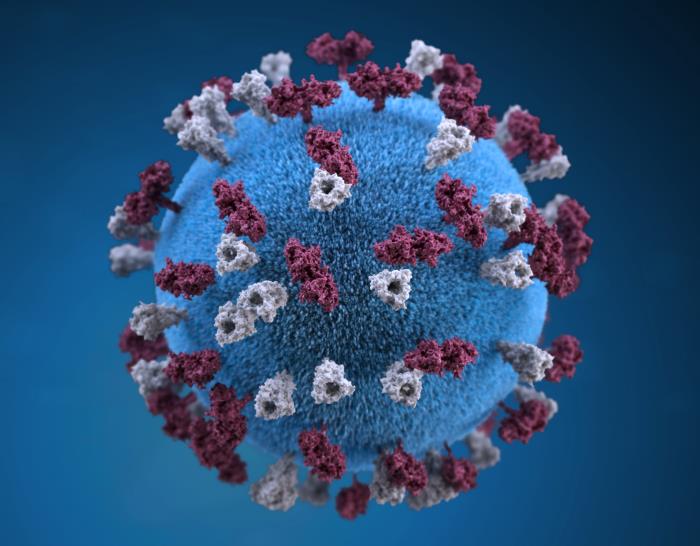
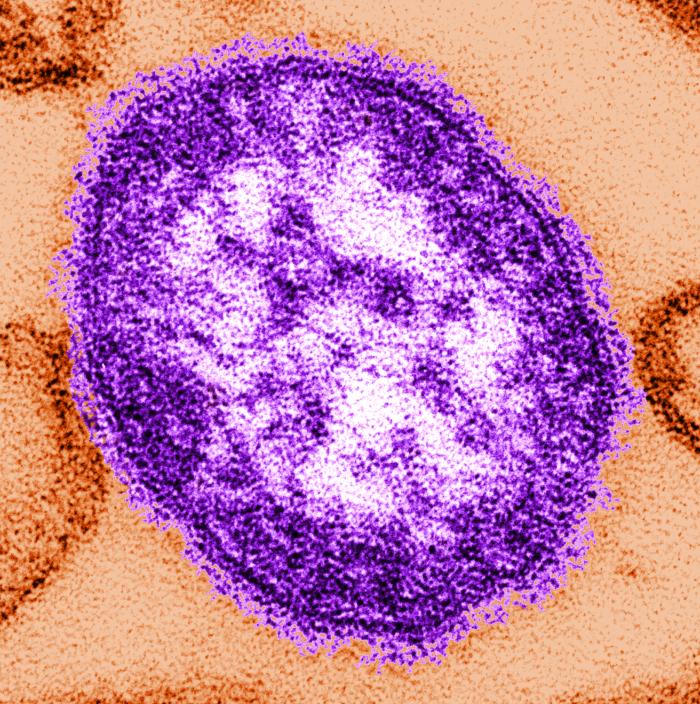
With over 1 billion people crossing international borders each year, vaccine preventable diseases not usually found in Arizona, can arrive at any time.  Earlier this month a young child from Pima County became ill with a rash illness while visiting Asia.  This region of the world has had over a thousand cases of measles reported in the last six months as shown on this world map of measles.  Also, there was a community outbreak of measles in the town the child was visiting at the time.  While her older siblings were already immunized, the child did not receive measles vaccine prior to travel because of age.  The child was diagnosed with measles while in Asia, but continued traveling to London, New York and finally to Phoenix.


The child’s diagnosis was confirmed by our state public health laboratory after arrival, our epidemiologists followed up with the Centers for Disease Control and Prevention (CDC) Division of Global Migration and Quarantine.  CDC worked with the airlines to get names of all the passengers exposed on the two flights to the state health departments where each lives.  Health departments followed up on 53 passengers with possible exposure across the country:  5 from Arizona, 3 from Florida, 1 from Maryland, 1 from Massachusetts, 1 from Michigan, 12 from New Jersey, 24 from New York and 1 from North Carolina.


Luckily, no new measles cases among the exposed have been reported and the child was probably less infectious since he/she had already been ill for a few days during travel.  While our routine vaccination schedule does not recommend measles vaccination until 12 months of age, infants as young as 6 months should receive measles vaccine prior to international travel.  This child’s illness and all the hours of follow up by our epidemiologists, CDC, and seven other states, could have been prevented with one shot.  Another great reason for immunizing our children and adolescents since these diseases are still only a plane ride away.  For more information on health issues during international travel, please see the CDC Yellow Book.


19 Kids to Miss a Month of School

February 15th, 2012

A 4th grader in Gilbert was diagnosed with the mumps last week. Had all the staff and faculty in the school been previously vaccinated for the mumps at the school- it really would’ve been no big deal. But, it turns out that 19 kids at the school hadn’t been vaccinated for the mumps (mainly because their parents chose to sign exemptions from our vaccination requirements).

As a result, the 19 previously unvaccinated kids can’t go to class for about a month. Of course- the public health system doesn’t want to exclude the unvaccinated kids from school, but there’s really no other choice at this point- because it’s the only tool left to stop a potential cascade of new cases. Mumps can be pretty serious and spreads easily. It’s a virus that causes swelling in the salivary glands, high fever, loss of appetite and fatigue. There can be a lot of serious complications including meningitis, spontaneous abortions in pregnant women, and sterility in males. It’s spread by sneezing, coughing, contact with mucus membrane secretions, etc. My mom says it almost killed me in 1962.

Our official rules for this kind of situation say: “When a mumps case has been at a school or child care establishment, the administrator of the school or child care establishment, either personally or through a representative shall: a) Consult with the local health agency to determine who shall be excluded and how long each individual shall be excluded from the school or child care establishment, and b) Comply with the local health agency’s recommendations for exclusion.” The 26 day exclusion period ordered by Maricopa County represents a full “incubation period” after exposure- the minimum needed to ensure that mumps won’t spread to additional people in the school.

Dr. Bob England from Maricopa County Public Health said it best in the paper this week; “It matters whether people around you have been vaccinated. It matters at least as much as it matters whether you’ve been vaccinated. No vaccine is perfect. Even people who have been vaccinated can contract diseases if they’re exposed to them. The key is to never be exposed. That’s how we’ve made all those previously common childhood diseases so rare. It’s not that the vaccine is so perfect. It’s that you get enough people vaccinated that when one person comes in with a disease that germ has a hard time finding another person to jump to. It’s called the herd effect.

Overall, 95% of Maricopa County elementary school kids are up to speed on the mumps vaccine, but it’s not evenly distributed. Some schools are at 100%, but one Maricopa County school is only at about 50%! Our team does a detailed annual analysis of immunization rates by school and gives that info to each of the county health departments every year- so they can do some intervention work.

Maricopa County Measles Case

February 15th, 2011

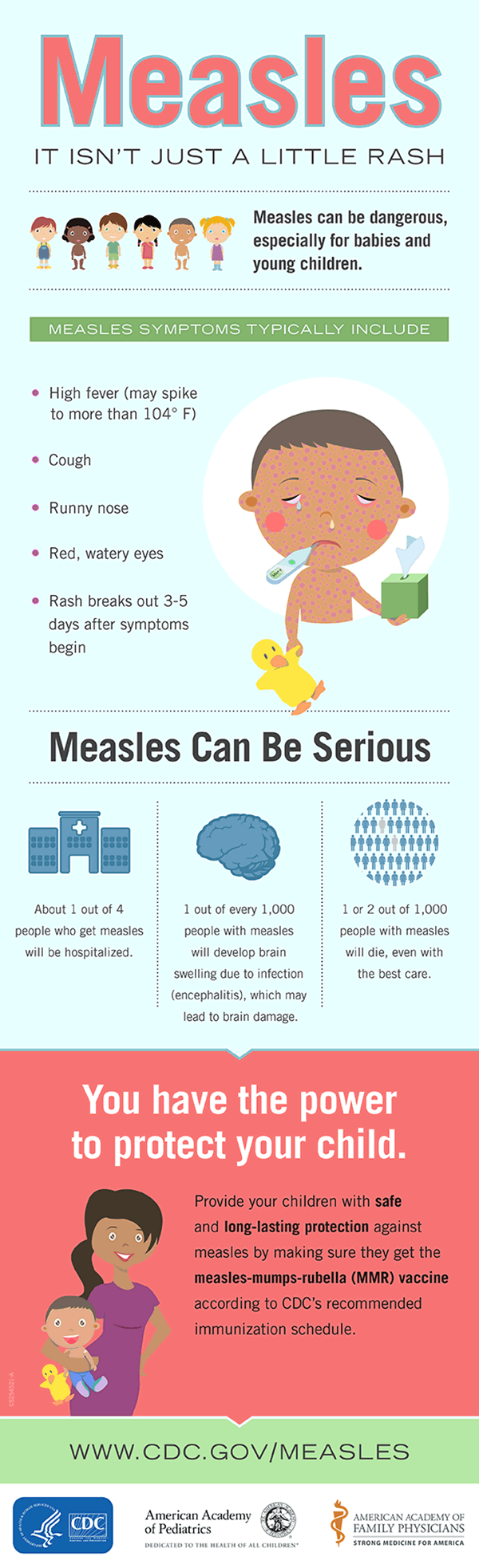
Maricopa County Department of Public Health (and our Lab) confirmed a case of measles in an Arizona resident this week.  Measles is one of the most communicable diseases there is (next to chicken pox).  It’s a viral disease of the upper respiratory system that’s spread in the air via droplets.  Measles starts with a fever and cough, eye irritation and a unique rash.  The MMR vaccine introduced in the 1960s pretty much wiped out measles in the US.  Around WW II the US had about 900,000 cases annually, but these days its usually less than 100 or so cases per year in the US.

When cases do show up, it’s usually among people that live overseas (in endemic areas) and visit the US or among US residents that travel overseas to areas with endemic measles (about 20 million people get measles globally every year).

The primary public health interventions are to identify contacts of cases and make sure that healthcare providers know exactly what to do when a patient presents with what could be measles, like implementing standard precautions and placing suspect cases in airborne precautions as soon as possible. If a patient calls a doctor and says that they’re sick and may have been exposed to measles we encourage the doctor to make sure that patients in the waiting room won’t be exposed and that all your staff are adequately vaccinated.  Of course, the best intervention of all is to keep our vaccination rates up.

Lancet Withdraws 12 Year Old Flawed Autism Article

February 3rd, 2010

An article published in the journal Lancet nearly 12 years ago set the public health world on fire.  The article published by Wakefield and 12 other authors suggested that they had found a link between the MMR (measles mumps rubella) vaccine and autism and bowel disease.  Since that time, a great deal of research has been conducted and numerous articles have been written, but none found a link.  Nevertheless, the rumor has persisted in some circles that there is some kind of association- usually citing the 1998 Lancet article.

On Tuesday this week, the authors of The Lancet finally retracted the article that they published in 1998 from the public record, stating that should never have published the research because the study was seriously flawed.  In fact, 10 of Wakefield’s 13 co-authors renounced the study’s conclusions several years ago.  In addition, Britain’s General Medical Council ruled that the authors of the study had shown a “callous disregard” for the children used in his study and had even acted unethically.

Here’s the full retraction statement from The Lancet:

“Following the judgment of the UK General Medical Council’s Fitness to Practise Panel on Jan 28, 2010, it has become clear that several elements of the 1998 paper by Wakefield et al are incorrect, contrary to the findings of an earlier investigation.  In particular, the claims in the original paper that children were “consecutively referred” and that investigations were “approved” by the local ethics committee have been proven to be false. Therefore we fully retract this paper from the published record.”

You need to register to get access to the site, but the introduction is posted at: http://www.lancet.com/journals/lancet/article/PIIS0140-6736(10)60175-7/fulltext#bib1.  Registration is free.