Posts Tagged ‘environmental health’

Home Baked Goods & Empowering Opportunity

May 9th, 2013

Last year I blogged about a grant sponsored by the Arizona Developmental Disabilities Planning Council to help folks with developmental disabilities and their families become self-employed by starting their own cottage industry food business. At the end of last year, this funding was awarded to the Southwest Autism Research & Resource Center, which has developed a 10-week training course to support adults with autism and their families in creating a small business selling home baked goods. 

Recently, staff from our Environmental Health shop were able to tour the SARRC facility and answer questions about the Home Baked and Confectionary Goods Program for staff and participants in the program. We even had the privilege of sampling some of their baked goods! This is just another example of ways that multiple statewide agencies and organizations can collaborate to make a positive difference in the lives of Arizonans.

2012 Environmental Health Annual Report

December 5th, 2012

I started my career in public health inspecting restaurants, motels and the like in the mid- 1980s.  My area was right around here down toward South Mountain-  and I inspected the cafeteria in the basement of the Executive Tower and the cafeteria that used to be on the 4th floor of the 1740 building.  It doesn’t seem like that was 25 years ago- but life is funny that way.  

Our core environmental health responsibilities include administering the statewide public health sanitation program for food safety, bottled water, hotels and motels, children’s camps, public schools, and public and semi-public swimming pools.  We delegate the actual inspection work to the county health departments.  Statewide, there are about 208 Sanitarians employed by the counties to inspect the restaurants and food stores in AZ.  

We finished our 2012 statewide Annual Report last week.  Last fiscal year the system completed about 64,000 food safety inspections among the 33,300 food establishments in AZ.  The report gives us an annual benchmark about basic performance measures like inspections but also inspection distribution.  For example, our statewide goal is to do 2 inspections per year at each food establishment…  but we separate facilities into complex, moderate and limited categories with the goal of inspecting complex places more frequently than simple ones.  That’s because the public health return on our time investment is higher in places with complex menus or that serve high-risk populations (like assisted living centers).

The Public Health of Weather

October 30th, 2012

Our Office of Environmental Health is one of only 8 states awarded a cooperative agreement with the CDC for adapting to extreme weather and its effects on public health. Heat is the number one killer among all weather related causes of death across the country and in Arizona… more than tornadoes, hurricanes, floods, and wildfires combined. It doesn’t get much attention because it’s hard to take a picture of heat- but it’s easy to take a picture of hurricanes and tropical storms.

Photo Courtesy AP Gerry Broome

Our Extreme Weather and Public Health program focuses on heat related illnesses.   In addition to enhancing surveillance and strengthening ADHS’ communication plan during Extreme Heat Advisory Days, the program is developing innovative toolkits targeting identified vulnerable populations.  Our School and Older Adult toolkits are already done and our Outdoor Worker toolkit is on the way.

During a recent site-visit, the CDC showed tons of interest in our toolkits… and our program is meeting with CDC to develop a method to evaluate them.  The current body of literature on state level interventions for heat related illness is relatively weak… and we’ve become a pioneering state in developing a viable approach to evaluate the effectiveness of interventions aimed at reducing the impact of extreme weather on public health.  Well Done.

Celebrate Healthy & Sustainable Food

October 22nd, 2012

October 24th is the 2nd annual Food Day in the US.  It’s a nationwide celebration and movement towards more healthy, affordable and sustainable food. We’ve been collaboratively planning a “Phoenix Real Food Tour” with Maricopa County Department of Public Health, the The Orchard Community Learning Center garden, Tiger Mountain Foundation, Central Farmers’ Market, and the Arizona Department of Education.  Our main focus this year is promoting community and school gardens and farmers markets. 

Wednesday’s tour includes a visit to the Orchard Community Learning Center garden adjacent to Valley View Elementary School of the Roosevelt School District, a community garden tour at the Tiger Mountain Foundations’ Garden of Tomorrow, and amazing local food activities at the Central Farmers’ Market.

You can see the information that we’ve posted on the AZ Food Day Website. Join us and the other amazing Food Day activities happening throughout Arizona on Wednesday.  By the way, if you’re interested in how your school can get involved with a community garden, our Environmental Health team has written some guidance to help schools develop their own educational school garden while following food safety principles.

Our New e-Public Health Classroom

September 6th, 2012

I’ve mentioned in previous posts about how I’d like to build more bridges between the Arizona’s academic public health infrastructure and Arizona’s public health system.  After all- our goal is to use evidence-based practices to drive our interventions- and the U of A’s expertise at the Mel & Enid Zuckerman College of Public Health is a key resource within AZ’s public health system to accomplish those goals. 

We reached an important milestone this week when we turned the key on our new electronic public health classroom- in Room 411 in the 1740 Building.  The on-line learning center will allow our employees (and staff from the local health departments) to continue their education and obtain a degree in Public Health or complete advance degrees.  In addition, we’ll be working to develop distance learning classes on specific areas such as Quality Improvement to help us gain the knowledge and skill necessary to become accredited and assist our local public health departments as well.  The possibilities are unlimited. I’ll kick off the use of the classroom next week by using it for a lecture on Environmental and Occupational Health for students in Tucson. 

My blog post from March has more information about the host of career training and development opportunities available through the U of A’s College of Public Health.  You can book the new classroom with America Coles.  We’re also planning to have it on the Intranet/e-mail system to reserve room like all the other conference rooms- along with its own web page which will include a calendar of events.

Fire Season Here Already

May 21st, 2012

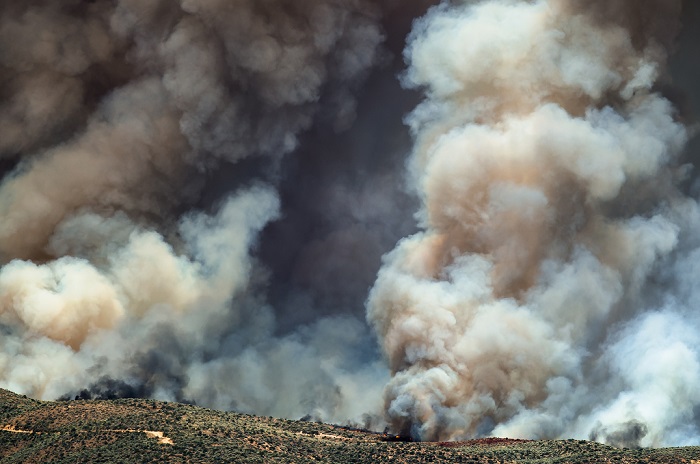
Our Department plays a significant role in the response for major wildland fires… and we’re monitoring the current fires closely to make sure that we cover our bases.  Our initial roles mostly include environmental health functions, especially surrounding health risks from smoke, sanitary conditions and food safety in shelters and ensuring that all of our licensed facilities are OK. You can read more in our Wildfire Smoke and Your Health brochure and in our ADHS Wildfire Plan.


Implementing Our Strategic Plan- Prioritize and Address Public Health Risks

April 26th, 2012

Our team from Environmental Health was in the Dewey-Humboldt area at their elementary school gym providing free blood lead tests for area kids.  There’s been some community concerns about possible lead poisoning in children because of the nearby Iron King Mine and a smelter that once operated in the area.  

Lead poisoning in AZ (we have about 300 cases per year) tends to be in certain Zip Codes where the houses were built when lead based paint was still being used. Here’s our latest surveillance report with the information.  Our Targeted Childhood Lead Poisoning Screening Plan provides a listing of Arizona’s high-risk ZIP Codes to help physicians decide which kids to test.  We’re working on an update to the targeted screening plan- which should be available later this year.

ADHS Receives Award to Participate in National Quality Improvement Demonstration Initiative

March 15th, 2012

We just received a new grant award from the Association of State and Territorial Health Officials to participate in the Robert Wood Johnson Foundation’s National Quality Improvement Demonstration Initiative!  Arizona was only one of only 5 states with a successful application.  This is great for Arizona for a number of reasons.  

First, it’ll help prepare our agency for national accreditation as a state public health agency.  The grant will fund a quality improvement project that is a collaboration of Women’s & Children’s Health, Chronic Disease, and Environmental Health.  Key public health staff will go through a quality improvement process to review and standardize home safety assessment and referral protocols between ADHS- funded programs.  Conducting continuous quality improvement is a focus of accreditation, so this is a fabulous opportunity to learn by doing!  

Second, this serves as another example of how we’re implementing our Strategic Map.  This Quality Improvement Initiative fits perfectly with the strategic areas of developing and prioritizing resources to maximize results, as well as strengthen internal processes using continuous quality improvement.   

Third, it serves as an example of a successful grant application that was put together quickly with existing staff resources.   The grant announcement was issued in early December, with a due date of January 9.  You can imagine that putting a grant application together at this time of year was no small task.  We quickly assembled a team to consider applying; Sheila Sjolander came up with a concept for the grant, and the team finessed the concept to ensure it fit the intention and specifications in the grant guidance.   Credit goes to Toni Means, Tim Vaske, Diane Eckles, Bre Thomas, and Neelima Gabriel for their hard work pulling the application together.  Check out the original grant guidance and Arizona’s response on our Managing for Excellence webpage.


Arizona’s Food Safety Network

October 11th, 2011

The Listeria monocytogenes outbreak has captured the public’s attention these days- so I thought I’d do a piece on Arizona’s food safety network. Let’s start at the farm & ranch.  The Arizona Department of Agriculture is responsible for ensuring that the base of the food safety pyramid is solid in Arizona.  They have several divisions that are responsible for everything from Arizona farm-grown fruits and vegetables to livestock and poultry.  They also work with the USDA & the FDA to ensure that imported foods are safe and from an approved source.  So, basically, the AZ Dept. of Agriculture is responsible for food safety from the farm or ranch until the food hits the wholesaler or “jobber’s” warehouse. 

Once foods hit the middleman- it’s our job to ensure that food is safely handled until it makes it to your plate at a restaurant or leaves the grocery store in your cart. While our environmental health shop has the overall responsibility for ensuring that your food is safe from the warehouse to you- it’s our partnerships with the local health departments and departments of environmental services that make the system work.  We use the framework outlined in state law and our food safety rules to help guide the counties to make effective decisions in the field.  You can see a more detailed summary of the statewide activities in our latest annual food safety report (the new report is due out in a month or so). 

We delegate our food safety authority to the local health departments who use our authority do the actual inspections for restaurants and food retailers.  But, some of the counties actually act on their own- using authority granted from their board of supervisors.  For example, Maricopa County Environmental Services acts under their county authority rather than using our statewide authority.  All the inspections are done by people called Registered Sanitarians, who are required to have at least 30 hours of college credits in the natural sciences and pass a registration test

Of course, no food safety network would be complete without a robust foodborne illness surveillance system including the laboratory capacity to identify and track foodborne illnesses.  This part of the network also includes collaboration with the local health departments.  Physicians and private labs that identify or diagnose foodborne illness infections report that info to their local health department.  By pulling together the statewide data- we’re able to identify trends and sources- and along with the CDC’s resources, the public health system provides the feedback loop to the food safety network- allowing the system to track down and stop sources.

Cottage Industry Foods Taking Off

October 7th, 2011

A few weeks ago, I wrote about our new Home Baked and Confectionary Goods Program. Since then, the program has really taken off.  About 700 people have registered with the program since we turned the key a few weeks ago, baking a variety of snacks, ranging from cookies and cupcakes to healthy goodies.  Bakers who want to sell their products from their home can register for their certificate on our website. All they need is a food handlers’ card (if required by their county) a product they want to sell, and some elbow grease. Once they’re registered and have their certificate, they can sell their goods in a variety of shops and markets. 

Here’s a brand-new dynamite 6 minute video that our team put together that walks folks through the basics of the new program including showing home-based bakers at work. The video was a collaborative project across the agency including our offices of children with special health care needs and environmental health and our bureau of nutrition and physical activity.  The team was led by Marta Urbina, Rita Aitken, Diane Eckles, Dallas Teat, and Adrienne Udarbe.  Check it out when you have a few minutes. 

P.S. Our admin council team put together a package of rules to flesh out the provisions for the new cottage industry program.  The close of public comment was last week- and our folks are working on final rules- which will be ready shortly.