Posts Tagged ‘Arizona Biomedical Research Commission’

ABRC Strategic Plan

December 17th, 2012

The Arizona Biomedical Research Commission was created several years ago as a mechanism to fund biomedical research in Arizona.  Core projects include research that digs into the causes, the epidemiology and diagnosis, the formulation of cures, the medically accepted treatment or the prevention of diseases, including new drug discovery and development.  Funding comes from tobacco and lottery money. 

The Commission became a part of ADHS on July 1, 2011… and since then, we’ve been working to ensure that it’s financially sustainable, operating effectively, and is strategic about its future investments in research.  We just reached a milestone on the strategic part last week, when the Commissioners met and developed a draft Strategic Map to help guide the future of the Commission.

The  Commissioners and Executive Director (Tracey Sotelo) felt that a strategic map would assist the ABRC in setting priorities and mechanisms for awarding monies to deserving applicants.  I’d talked with the Commission during earlier meetings and had expressed my vision for the future of the ABRC, and I think the draft strategic map has captured our shared vision and mission.  The mission statement is “Identify and support innovative biomedical research to improve the health of all Arizonans”.  Primary tasks include identifying, funding and supporting biomedical research, maximizing collaborations and communications to build a strong Arizona presence, and establishing the Commission infrastructure to maximize the ADHS partnership.  Once finalized through a vote at the next public meeting, the map can then be deployed.

This was a classic case of community partnership and bringing diverse stakeholders together for a common cause.  Thanks go out to Tracey Sotelo, and the ABRC Commissioners for their active and helpful participation in getting a draft map put together.

New Folks

November 8th, 2012

I’m happy to announce that Tracey Sotelo has agreed to serve as the Executive Director of our Arizona Biomedical Research Commission.  She comes to us from ADOA where she was a Manager in the Benefit Services Division. She has also served as a legal contracts specialist for Banner Research Institute where she reviewed, drafted, revised and negotiated research contracts for clinical trials and device studies.  Please welcome Tracey. 

Also, Lynda Hoffman, MNS, RN, NE-BC joined us a couple of months ago as the Chief Nursing Officer at the Hospital.  She received her psych training at the Ohio State Psychiatric Hospital in Columbus Ohio and has 24 years of nursing experience in various medical facilities as a Chief Nursing Officer or leadership positions. In the few short months she has been here Lynda has: 1) Realigned Nurse Executive Team to address current department needs; 2) Provided Team-building to Nursing Leadership and unit staff; 3) Revitalized the Nursing Executive Team; 4) Implemented Desert Sage team efforts to improve patient care and unit stability; and 5) Coordinated difficult case consultations.  Thanks!

New AZ Biomedical Research Commission Kick-off

May 1st, 2012

You might remember that the Arizona Biomedical Research Commission was transferred to the ADHS last legislative session.  We officially became responsible for the Commission in July of 2011.  My first priorities were to get a clear analysis of the “books” (e.g. the financial records etc.), get a handle on the outstanding research projects that the Commission had been funding, transition the existing staff to our shop, recruit Commissioners (several of the Commissioners were serving in expired appointments), and to find a new Executive Director. 

I’m glad to say that we’ve accomplished each of these objectives (except that we haven’t hired a new Executive Director yet)…  and we’re ready to kick off the activities of the new Commission.  We held our first meeting last week to introduce the old and new Commissioners to the vision of how the new ABRC will work, examine the “books”, discuss the audit we conducted, review the current research projects, discuss the Executive Director position, and strategize about next steps- including setting up a retreat once we have an Executive director on-board.

Thanks to all that have been involved so far making this transition a success- including Alex Percival and Kurt Schulte from Auditing, Jim Humble and John Lake from Finance, Chris Ruth from Procurement, and Julie Smee from HR, and of course Shoana Anderson for filling in as the Interim Executive Director (in addition to her regular duties).

AZ Biomedical Research Commission Roadmap

December 28th, 2011

Last legislative session, the Legislature and Governor made a statutory change that moved the AZ Biomedical Research Commission to our agency.   The Commission basically awards contracts for research projects that translate into interventions to save lives.  Our funding (a few million dollars per year) comes from tobacco taxes and some lottery funds.  Shoana Anderson has volunteered to serve as the Acting Executive Director for the Commission during the transition. 

Our first priorities were to get a good handle on the financial “books” and make some recommendations to replace several expired Commission slots.  We’ve made some progress in both areas.  To ensure we understand everything the Commission has done, we awarded a contract to an outside auditor to give us a full financial assessment – and we’ve been working throughout the fall to identify new Commissioners.  Early in 2012, we expect to begin recruiting for a permanent Executive Director and begin working with the new Commissioners (after they’re confirmed by the AZ State Senate) to put together a strategic roadmap for the Commission by working with statewide biomedical research Stakeholders. 

We expect to continue honoring the current research contracts as long as they’re performing well and meeting their contractual obligations- but we don’t expect to award any new research projects until after we’ve seated and confirmed new Commissioners, selected an Executive Director, and developed a strategic roadmap for the Commission.

The Arizona Biomedical Research Commission Patent Factoid

September 1st, 2011

The ADHS’ Arizona Biomedical Research Commission has submitted over 66 patent requests worldwide, and has been granted 9 patents within the US in collaboration with ASU and the U of A. The Commission has 22 patent requests published or pending in 7 different countries. Many of the granted patents are anti-cancer compounds. The ABRC continues to collaborate with Arizona researchers to provide insight into diseases and work towards finding treatments and cures for these diseases. 

Last week the FDA approved Anascorp® which is an anti-venom partially funded by our Arizona Biomedical Research Commission. This anti-venom has been shown to help children recover from life-threatening, severe reactions due to scorpion stings. This antidote is produced in Mexico and clinical trials were conducted through the U of A.  This will likely be the next application for patent for an ABRC funded project.

Umbilical Cord Blood is Liquid Gold

August 15th, 2011

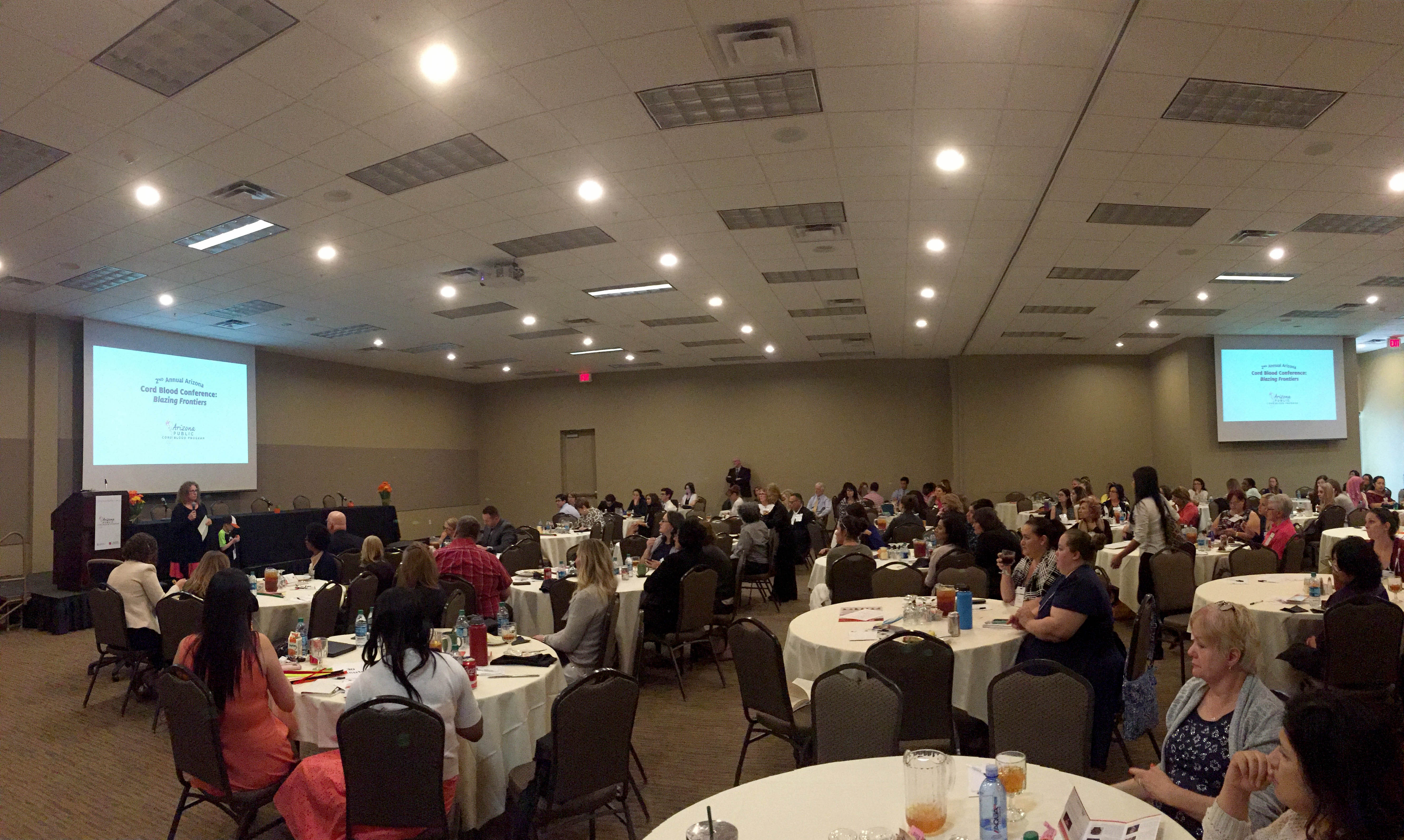
After your baby is born, the umbilical cord is clamped and cut but some blood remains in the cord. It turns out that this umbilical cord blood is actually liquid gold.  The stem cells in cord blood are very flexible biologically and can be transplanted in people to treat a number of life-threatening diseases. In fact, cord blood can be used as a treatment for more than 60 diseases- including various kinds of cancers, inherited metabolism disorders and immune system diseases. 

Families have three options when it comes to cord blood.  They can decide to discard the blood, donate it to a public cord bank, or keep it in a family cord blood bank (the family bank costs about $1K plus some annual storage charges).  Cord blood that’s collected can be stored at either a public cord blood bank or family cord blood bank.  The cells are stored in liquid Nitrogen- and remain good for at least 25 years. 

Nationally and in Arizona there’s a shortage of cord blood being collected from Native American and Hispanic folks, meaning that they aren’t as able to find a good match in public banks and can’t benefit from treatment to the same extent as other folks.  If a patient is Native American and does not have a family member match, the chance of finding matching cord blood is only 1% and Hispanics the chance of a match is 7%.  The percentage is much higher for other populations.  That’s where a successful new program comes in that is being funded by our Arizona Biomedical Research Commission.  

Two years ago the Commission conducted a national survey looking for a partner to create an Arizona public cord blood collection and banking. They picked ClinImmune Labs at the University of Colorado Denver as its collaborator. The program kicked off last month with its first donation into the bank.  Over the coming years, ClinImmune will process and store the cord blood collected from 3 hospitals that deliver a large percentage of Native American and Hispanic babies- Maricopa Medical Center, St. Josephs, and Phoenix Baptist. 

The Commission has committed $560K per year for the next three years to support this project as seed money.  Half of the proceeds of cord blood from Arizona that are shipped to transplant centers will come back to the program to support the project in future years.  The federal government is also pitching in about $2M per year for the first 3 years. 

By the way- check out our revamped Arizona Biomedical Research Commission  webpages.  Thanks go out to Jeff Burgess, Jesse Lewis, Gannon Wegner, Jennifer Tweedy and Shoana Anderson for overhauling the site and making it user friendly.

Scorpions!

August 10th, 2011

Here in the Sonoran Desert monsoon season = scorpion season.  There are more than 56 species of scorpions in Arizona- but only one- the bark scorpion is of any public health significance.  The problem is that it’s the most common scorpion found in Arizona homes.  Since you live in the bark scorpion’s territory, you probably have them around or maybe even inside your home.  The Arizona Poison and Drug Information Center and Banner Good Samaritan Poison & Drug Information Center answer thousands of calls every year about scorpion stings- and last year they recorded more than 10,000 scorpion stings in AZ.

Scorpion stings are super painful but usually don’t require special medical treatment. Washing the sting area and using a cool compress along with over the counter pain medication handles the injury. The pain and numbness can last several days.  But… sometimes a scorpion sting causes severe symptoms that require fast and expert medical care. Symptoms to look for are difficulty breathing, uncontrolled jerking, drooling and wild eye movements.  Small kids are the highest risk group for these more severe reactions.  Each year there are about 200 kids in Arizona end up needing intensive medical treatment.   A recent study by the Banner Good Samaritan Poison and Drug Information Center showed that 33% of scorpion stings happen in the bedroom with 24% in the living room and 6% in bathroom.

OK… but what should you do in scorpion season? Here are some simple precautions:

  • To prevent scorpions from either climbing or falling into a baby’s crib- move the crib away from the wall, and take off any crib skirts that reach to the floor.
  • Roll back bed linens and check for scorpions before getting into bed.
  • Shake or examine all clothing and shoes before putting them on.
  • Move furniture and beds away from the walls.
  • Wear shoes when outdoors, especially at night around swimming pools.
  • Be especially careful of wet/damp towels in the bathroom and pool area.

We got some good news this week regarding scorpion sting treatment.  The FDA approved Anascorp® which is an antivenin produced in Mexico and tested in clinical trials conducted through the U of A for use in treating patients suffering the effects of scorpion stings.  Getting FDA approval took a lot of perseverance (12 years) partly because the antivenin process happens in Mexico… but it’s a good example of collaboration among academic and clinical researchers with partners in business and industry from both sides of the U.S.-Mexico border. Our own Arizona Biomedical Research Commission provided some of the funding for this research (P.S. check out our new ABRC Website).  You can read more about the research that went into the approval in a recent article in the New England Journal of Medicine.

Welcome Our New Teammates

August 1st, 2011

Please join me in welcoming three folks from the Arizona Biomedical Research Commission to the ADHS team today.  The Legislature and Governor made a statutory change last cycle that moved the Commission to us, and their mission is a good fit.  The Commission basically awards contracts for projects researching the causes, epidemiology and diagnosis, formulation of cures, medically accepted treatment and prevention of diseases, including drug discovery and development and provides some oversight of the projects that they approve.  Their funding (a few million dollars per year) comes from tobacco taxes and some lottery funds.

There had been some uncertainty about whether the Commission would actually move to our team because of a lawsuit that was filed several weeks ago asking the court to stop the move, but that suit was dismissed.  One of the Commissioners filed an appeal, but we don’t expect that action to change anything.

Shoana Anderson has volunteered to serve as the acting Executive Director for the Commission.  Cara Christ will also help out.  Both will continue with their other Department duties, but will add the Commission work to their responsibilities.  Please take a little time to welcome the 3 folks from the Commission staff that will be joining us.  They’ll be located on the NE side of 1st floor of the 150 Building.  Our first priorities will be to get a good handle on the “books” and make some recommendations to replace several expired Commission slots.

Sir, You are Served

June 20th, 2011

There’ve been 3 lawsuits filed against the Department in the last few days.  On June 10th, the Arizona Biomedical Research Commission filed suit against the state (including me) to stop the enactment of the portion of SB1615, which transfers the Commission to ADHS next month.  We have someone from the Attorney General’s office working on this case.  We expect there to be some activity on this case shortly because the Commission was due to be transferred on July 21 (although there is a retroactive clause in the law to July 1).

Last Tuesday I was served with another lawsuit arguing that we should implement the dispensary portion of the Arizona Medical Marijuana Act.  On Wednesday I was served on a similar case also relating to licensing dispensaries.  Both of these cases ask the court to order us to follow the rules that we published on April 14 and begin accepting and processing dispensary applications.  As you’ll recall, the Governor and I (with the advice of attorneys) decided not to continue implementing the Arizona Medical Marijuana Act dispensary portions of the Act until we receive clarification about whether it’s legal from the federal court.  We’re still accepting and processing applications for Qualifying Patients and Designated Caregivers.  So far we’ve approved more than 6,000 Patient cards.

AZ Public Health Laboratory Capacity

December 21st, 2010

A few years ago it became pretty clear that we were facing some budget reductions.  At the time, we had no idea that our budget reductions would be as extensive as they turned out to be.  However, we did know that if we were going to maintain our laboratory capacity to protect the folks of AZ, we’d have to diversify our funding sources.  We looked toward the federal government primarily (mostly the FDA), but also toward places like the Arizona Biomedical Research Commission.  We’ve been quite successful on both fronts in the laboratory, and we’ve been able to just about break even in terms of capacity after our steep state budget reductions.

A couple of weeks ago our Lab found out that we’ve been awarded a new cooperative agreement from the USDA Food Safety Inspection Service, which is part of the Food Emergency Response Network.  The new grant will support the development of new methods and validation of new technologies to rapidly detect pathogens like Salmonella and E. coli in food allowing for more rapid recalls in instances where food is contaminated.  We recently used some of these technologies to isolate E. coli from certain kinds of cheese.

Our new funding will also cover training activities as part of the FERN Regional Training Program where laboratory professionals and National Guard Civil Support Teams from other states come to Arizona to be trained on new state of the art instruments and methods developed to detect not only dangerous pathogens in food but also toxins and poisons in food. Finally, we were one of the few states selected to participate in developing methods to detect melamine in pig tissues as part of an ongoing USDA surveillance program for melamine in the food supply. Thanks to laboratory staff  who participate in these very important FERN programs as we have been able to secure this funding and more importantly contribute to better food safety not only in Arizona but across the nation.